

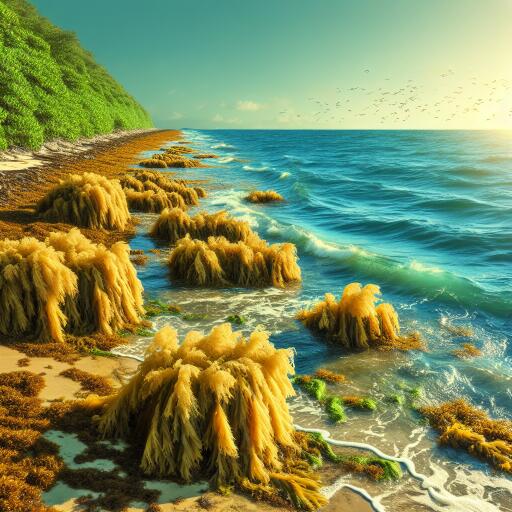
Is sargassum getting better? – Curious Expeditions
Short answer: not really. Although some coastlines experience brief reprieves, the broader trend points toward continued—and at times intensifying—sargassum arrivals across the tropical Atlantic, Caribbean, and Gulf of Mexico. A mix of climate-driven ocean changes and excess nutrients flowing from land is feeding vast mats of floating seaweed, making seasonal inundations more routine than exceptional.
What is sargassum and why is it surging?
Sargassum is a buoyant brown seaweed, mainly the species Sargassum natans and Sargassum fluitans, that floats in ribbons and rafts across the ocean surface. Historically, it functioned as drifting nurseries for fish, sea turtles, and invertebrates. In the past decade, however, the scale has exploded: a broad, shifting band of seaweed spanning thousands of kilometers—often called the Great Atlantic Sargassum Belt—now forms nearly every year, with pulses that can blanket beaches from West Africa to the Caribbean.
What’s different today? Several forces are converging:
- Warmer surface waters speed growth and alter currents that steer floating mats.
- Nutrient enrichment from rivers, agriculture, wastewater, and urban runoff fertilizes blooms far offshore.
- Dust from the Sahara can deliver iron and other micronutrients that further boost productivity.
- Changes in Atlantic circulation and rainfall patterns shift where and when mats accumulate.
Is “better” the right question?
Improvement is relative. A decline in one bay can coincide with a surge a few kilometers away, and even modest landings can cause outsized harm if they pile onto sensitive habitats or tourism hotspots. What matters is not only how much arrives, but where and how consistently it does. The distribution, timing, and management capacity of local communities shape the severity of impacts.
Ecological and economic fallout
When thick mats arrive, they can smother coral reefs, seagrass beds, and mangrove fringes, shading out light and robbing waters of oxygen as the seaweed decomposes. Fish kills can follow. On beaches, rotting sargassum releases hydrogen sulfide and other gases that produce strong odors and can irritate eyes and airways—especially for workers and residents near heavy accumulations.
The costs are substantial. Tourism-dependent economies face canceled trips, daily cleanup bills, and damaged reputations. Fisheries can suffer when nets clog and nearshore areas become hypoxic. Municipalities spend heavily on mechanical removal and disposal, and mismanaged cleanups can erode dunes or compact turtle nesting habitat.
Can we predict it?
Satellite monitoring and ocean–atmosphere models now provide seasonal outlooks and near-term alerts. Yet long-term precision is tough: blooms reflect a moving target of temperatures, currents, winds, nutrients, and dust. The clearest signal is that sargassum is now a recurring, often seasonal phenomenon, with peaks typically in late spring through summer, and the capacity for anomalous surges in other months.
Near-term management that helps
- Early warning: combine satellite data with local observations to plan staffing, equipment, and public advisories.
- Offshore interception: booms and skimmers can divert or collect mats before landfall in select locations with careful siting to avoid bycatch and habitat damage.
- Beach protocols: manual or low-impact mechanical removal that protects dunes and turtle nests, paired with designated access points to minimize erosion.
- Safe handling: worker training and monitoring for hydrogen sulfide exposure; staging areas downwind of homes and hotels.
- Responsible disposal: composting and soil amendment after desalination and contaminant testing; controlled landfilling where necessary.
Finding value in a nuisance
Turning waste into resource won’t solve the problem basin-wide, but it can offset costs:
- Composts and soil amendments after washing to reduce salts; careful testing for heavy metals and arsenic is essential.
- Bioenergy production via anaerobic digestion or pyrolysis, with nutrient recovery from byproducts.
- Biobased materials, including paper, packaging, construction composites, and certain bioplastics.
- Animal feeds in limited, screened applications to avoid contaminant risks.
What can communities and individuals do?
- Cut nutrient pollution: improve wastewater treatment, fix septic systems, curb fertilizer use, and adopt agricultural best practices.
- Restore natural filters: wetlands, mangroves, and riparian buffers capture nutrients before they reach the sea.
- Back climate action: reducing greenhouse gas emissions helps limit warming that favors blooms.
- Support monitoring: community science and reporting strengthen early-warning networks and response.
Who is most exposed?
Coasts influenced by prevailing currents and sheltered shorelines—many in the Caribbean, Gulf of Mexico, and parts of West Africa—see the most frequent beaching events. Shallow bays, inlets, and tourist-heavy strands often bear the brunt, with impacts magnified where cleanup capacity is limited.
The long game: prevention over perpetual cleanup
Mechanical removal will remain necessary, but it is a bandage on a structural wound. Reducing the drivers—excess nutrients and a warming, shifting ocean—offers the only durable relief. That means coordinated action across the Atlantic basin: modernizing sewage infrastructure, managing agricultural runoff, safeguarding forests and wetlands that retain nutrients, and accelerating decarbonization. Regional cooperation among island states and continental neighbors is vital, because the seaweed does not respect borders.
Bottom line
Sargassum inundations are unlikely to “get better” on their own. Expect variability year to year, with occasional lulls, but plan for recurring arrivals. Communities that invest in early warning, low-impact cleanup, safe reuse, and root-cause prevention will be best positioned to protect ecosystems, public health, and local economies in the years ahead.



Leave a Reply