

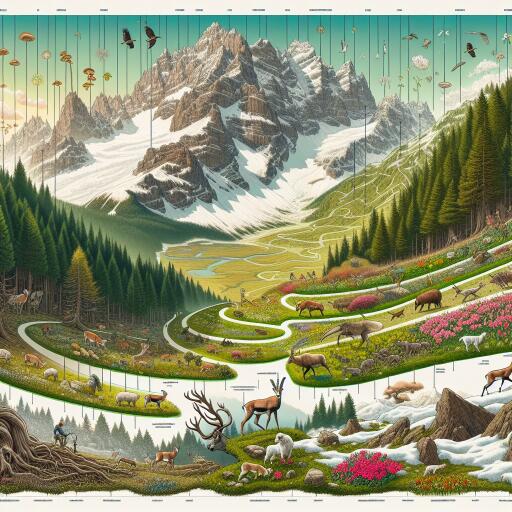
Decades of Habitat Dynamics Explored in Gran Paradiso
Deep in the Italian Alps, Gran Paradiso National Park has quietly recorded a century of ecological change. A new synthesis of multi-decade data reveals how climate, land use, and human presence are reshaping this emblematic protected area—and what that means for conservation in a rapidly warming world.
A living laboratory in the Alps
Established to shelter the Alpine ibex, Gran Paradiso now serves as a refuge for a mosaic of alpine and subalpine habitats, from larch and spruce forests to high-elevation grasslands and scree. Its steep gradients and varied microclimates make it an exceptional place to track how species and landscapes respond to shifting environmental pressures.
A hierarchical lens on change
Researchers assembled long-term ecological records, maps, and environmental measurements and analyzed them using a tiered, hierarchical framework. This approach layers plot-level observations with landscape-scale patterns and regional climate signals. By blending field data, archival imagery, and advanced modeling, the analysis disentangles cause-and-effect relationships that often hide in complex mountain systems.
What the data say
- Rising to stay cool: Warmer temperatures and altered snowpack have pushed many species upslope. Cold-adapted plants and invertebrates are retreating to higher elevations and north-facing slopes, compressing their range into shrinking climatic niches. Some populations are showing signs of local disappearance where suitable microrefugia are scarce.
- Shifting green frontiers: Vegetation cover has not been static. Forest edges have advanced into former pastures in some valleys—partly due to rural depopulation and the abandonment of traditional grazing—while other sectors show canopy stress linked to drought, heat extremes, and late-spring frosts. The net result is a patchwork of woody encroachment, dieback, and altered understory communities.
- Water on a new schedule: Earlier snowmelt and more erratic precipitation are changing soil moisture and stream regimes. Alpine meadows that rely on steady meltwater are experiencing shorter growing seasons or episodic drying, reshaping plant assemblages and the pollinator networks they support.
- Wildlife on the move: Habitat reconfiguration is cascading through animal communities. Generalist species exploit expanding edge habitats, while specialists tied to cold, open environments lose ground. Corridors that once linked seasonal ranges are narrowing, intensifying the importance of permeability between habitat patches.
People and the park
Although the park is protected, human influence still filters in. Trails, recreation pressure, and changing pastoral practices create localized impacts that interact with climate stress. Conversely, traditional land uses—when thoughtfully managed—can help maintain biodiversity-rich mosaics. Adaptive, place-based stewardship is pivotal to balancing visitor access, cultural heritage, and ecological integrity.
Tools that make the invisible visible
Remote sensing, repeat photography, and Geographic Information Systems are central to this work. Time series of satellite and aerial data reveal subtle vegetation shifts and snow dynamics over large areas. Coupled with species distribution models and climate projections, these tools help forecast where habitat suitability is likely to grow, contract, or fragment in coming decades.
From static protection to dynamic management
The findings argue for fluid, responsive conservation. Fixed boundaries and one-size-fits-all plans are ill-suited to landscapes in motion. Instead, managers can:
- Prioritize climate refugia such as north-facing cirques, cold-air drainage zones, and high-elevation wetlands.
- Strengthen ecological connectivity across altitudinal gradients to facilitate species movement.
- Use controlled grazing, mowing, or prescribed fire where appropriate to preserve open habitats threatened by woody encroachment.
- Adjust zoning and seasonal access in response to breeding seasons, heatwaves, or drought stress.
Monitoring as a long game
Long-term, consistent monitoring is the backbone of effective adaptation. Standardized plots, automated climate stations, biodiversity surveys, and community science observations together build a high-resolution picture of change. Iterative assessments allow managers to test interventions, learn quickly, and recalibrate.
Knowledge rooted in place
Local knowledge enriches science-based management. Insights from rangers, pastoralists, guides, and residents—on snow patterns, wildlife behavior, and land use history—help interpret data and design workable solutions. Co-creating management actions with communities fosters stewardship and ensures that conservation benefits and cultural values move together.
A message that travels
What’s unfolding in Gran Paradiso echoes across mountain parks worldwide. Rapid warming in high elevations, the tug-of-war between forest expansion and open-habitat loss, and the challenge of keeping ecosystems connected are shared stories from the Pyrenees to the Rockies. The park’s experience underscores a broader shift: protecting biodiversity now means anticipating change, not just guarding the status quo.
The road ahead
Gran Paradiso’s resilience is real—but not limitless. As temperatures climb and precipitation patterns wobble, the difference between persistence and decline will hinge on timely, adaptive decisions. By integrating robust data, innovative modeling, local experience, and flexible policies, protected areas can remain havens for species and safeguards for ecosystem services.
Decades of evidence from this Alpine stronghold point to a clear imperative: act early, connect habitats, protect refuges, and keep learning. In a century defined by environmental volatility, dynamic conservation is not an option—it is the path forward.



Leave a Reply