

China’s power paradox: record renewables, continued coal
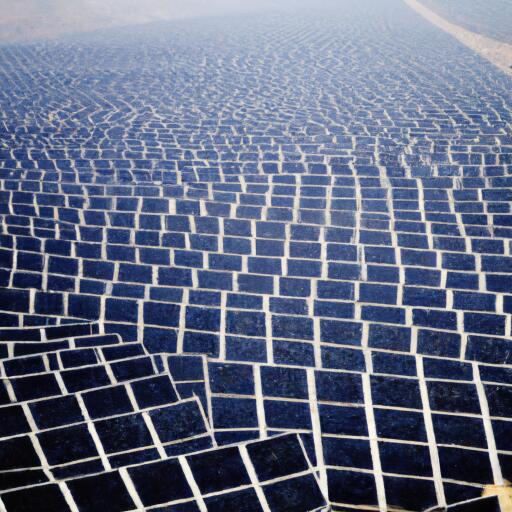
China is racing ahead on clean energy while keeping a firm grip on coal. In 2024, the country installed more renewable capacity than the entire existing power fleet of the United States, and clean energy industries—from solar and wind to batteries, hydropower, nuclear and electric vehicles—were estimated to contribute about 10 percent of national GDP and roughly a quarter of economic growth. Yet, even as solar arrays carpet deserts and turbines rise across grasslands, new coal projects have surged, underscoring a strategic tension with global consequences for the climate.
Renewables race ahead
China’s clean energy buildout is without precedent. Massive photovoltaic bases and sprawling wind hubs have come online at record pace, and the country has made formal commitments to bring emissions down. In the first half of 2025, renewable generation appears to have covered the increase in electricity demand—an important milestone that hints at a turning point.
Clean technology has also become an industrial engine. The manufacture and deployment of panels, turbines, storage systems and EVs now underpin jobs, exports and domestic investment. That momentum is central to meeting growth targets and enhancing energy security by reducing exposure to imported fuels.
Coal keeps coming
Despite that progress, coal capacity continues to expand. New and revived proposals hit their highest level in a decade, and independent trackers estimate China accounted for around 93 percent of global coal power construction in 2024. The logic is partly strategic: a “build before break” approach aims to ensure reliability while the grid adapts to variable wind and solar output.
The memory of power shortages in 2021–22—triggered by pricing misalignments, extreme weather, surging demand and grid bottlenecks—still looms large. To avoid a repeat, officials have approved additional coal units as a buffer, even if many run infrequently. It is, in effect, an insurance policy against volatility while reforms mature.
Grid constraints drive cautious choices
China’s richest renewable resources lie far from its biggest consumers. Transmitting power from sparsely populated, energy-rich regions to coastal industry centers raises costs and strains a system not yet fully optimized for long-distance, high-volume power flows. The country is expanding long-distance lines and improving interprovincial trading, but the network is still catching up to the rapid growth in wind and solar.
Coal’s appeal endures because it is dispatchable—operators can dial output up or down on demand—unlike weather-dependent sources. Making room for more renewables means changing how the system runs: coal plants must operate more flexibly, market signals should reward fast response and balancing services, and storage needs to be scaled to smooth peaks and troughs. Until those tools are fully in place, the system remains conservative.
Demand, markets and profitability
For years, electricity consumption rose faster than even China’s blistering pace of renewable additions. While that gap narrowed in early 2025, it owed something to slower demand growth, and utilities still see value in coal assets. Market dynamics matter: the phase-out of guaranteed feed-in tariffs means new renewable projects must compete more directly, and voluntary buying of “green power” alone may not keep investment at record levels.
Public policy can shift the balance. Stronger renewable portfolio requirements, capacity payments that favor flexible resources, time-of-use pricing, and incentives for storage and demand response would accelerate the transition. Even with an ambitious target of 3,600 gigawatts of wind and solar by 2035, analysts warn future demand could outpace clean supply without such measures—risking continued coal additions.
Emissions and the utilization puzzle
More coal plants do not automatically mean more coal emissions. China’s coal fleet operates at roughly half of its potential output on average, indicating substantial slack. New units could be used as backstop capacity while overall coal generation declines, provided renewables, storage and grid flexibility continue to scale and displace fossil output during most hours.
The crucial test is utilization: if coal plants increasingly run at lower capacity factors and serve mainly as peaking or reserve resources, the country can keep the lights on while bending the emissions curve down. If, instead, demand surges without parallel clean-energy reforms, coal burn could rise.
How to resolve the paradox
- Expand and upgrade transmission: accelerate ultra-high-voltage lines and interprovincial trading to move renewable power to load centers efficiently.
- Make the grid flexible: compensate fast-ramping plants and storage, reform dispatch to prioritize low-cost clean power, and require coal units to operate flexibly.
- Scale storage and demand response: deploy batteries, pumped hydro and industrial load-shifting to smooth variability and reduce peak coal reliance.
- Strengthen market signals: use time-of-use rates, capacity mechanisms and renewable procurement mandates to keep clean investment attractive.
- Hedge smartly, not heavily: treat new coal as transitional capacity with strict utilization limits and clear timelines for declining operation.
China has proven it can build clean energy at astonishing speed. The next phase—aligning grids, markets and operations with a high-renewables system—will determine whether the coal surge is a temporary hedge or a lasting detour. The stakes are global: as the world’s largest emitter and clean-tech producer, China’s choices over the next few years will shape the trajectory of climate risk and the economics of the energy transition far beyond its borders.



Leave a Reply