

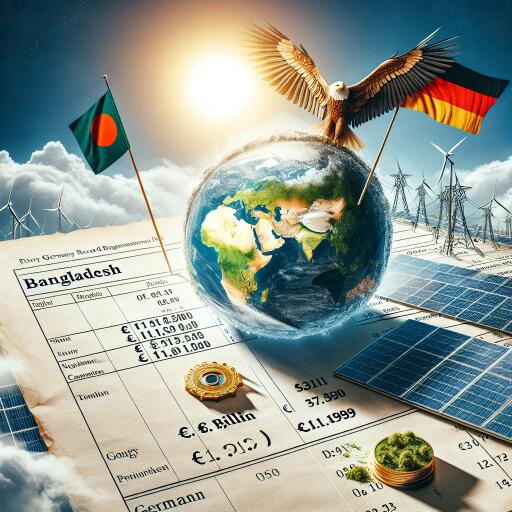
Bangladesh among beneficiaries as Germany makes record €11.8 b climate contribution
Germany has set a new benchmark for international climate finance, reporting a record €11.8 billion in 2024 to support mitigation and adaptation efforts worldwide. The package, relayed to the European Commission, directs funds to protect ecosystems, expand clean energy, and build resilience in climate-vulnerable nations — with Bangladesh among those benefiting.
Key figures at a glance
- Total international climate finance in 2024: €11.8 billion
- From the federal budget: €6.1 billion
- For nature and ecosystem protection (forests, peatlands, oceans): nearly €1.5 billion
- Private capital mobilized for the first time above €1 billion
Germany’s package blends public funding with growing private investment, signaling a shift toward scalable finance for the energy transition and climate resilience. In addition to renewables and low-carbon technologies, a substantial share is earmarked for conserving natural carbon sinks and buffers — efforts considered indispensable to meeting global climate goals.
What it means for Bangladesh
Bangladesh, often identified among the world’s most climate-exposed countries, is already receiving support and remains eligible for further assistance. With rising sea levels, intensifying cyclones, and salinity intrusion affecting agriculture and livelihoods, finance targeted at adaptation is crucial. Depending on program design, support can help strengthen early warning systems, expand climate-resilient infrastructure, restore protective ecosystems such as coastal forests, and advance community-based adaptation.
Nature-based solutions play a dual role: they shield communities from storm surges and floods while storing carbon. The allocation for forests, peatlands, and marine ecosystems is therefore significant for low-lying delta nations, where healthy natural systems can lower risks and costs over time. The new injection of private capital also signals a maturing landscape for investment in resilient infrastructure and clean energy — a potential boost for countries working to expand solar, wind, and distributed energy while keeping costs in check.
Momentum ahead of global talks
Germany’s environment and climate minister, Carsten Schneider, emphasized that credibility and solidarity underpin effective international climate cooperation. He pointed to encouraging trends in private-sector participation and the rapidly improving economics of wind and solar power, which are easing pressure on public budgets. As these technologies become cheaper, public funds can be steered more deliberately toward adaptation — an area likely to feature prominently at the upcoming United Nations climate talks in Belém.
This recalibration reflects an emerging consensus: while the clean energy transition increasingly attracts market-driven investment, public finance remains essential for adaptation and for communities that face the greatest impacts yet have contributed least to global emissions.
The path forward
For Bangladesh and other vulnerable countries, the priority is turning commitments into durable outcomes on the ground — from resilient infrastructure and climate-smart agriculture to ecosystem restoration and risk reduction. Germany’s record contribution indicates a broader recognition that climate finance must grow in both scale and effectiveness, with transparent tracking and stronger partnerships between governments, development banks, and private investors.
As the negotiations in Belém approach, two trends stand out: the rising role of private capital in clean energy and the renewed push to direct scarce public funds toward adaptation and nature. For frontline nations, progress on both fronts will determine how quickly they can build resilience, protect livelihoods, and sustain development in a warming world.



Leave a Reply