

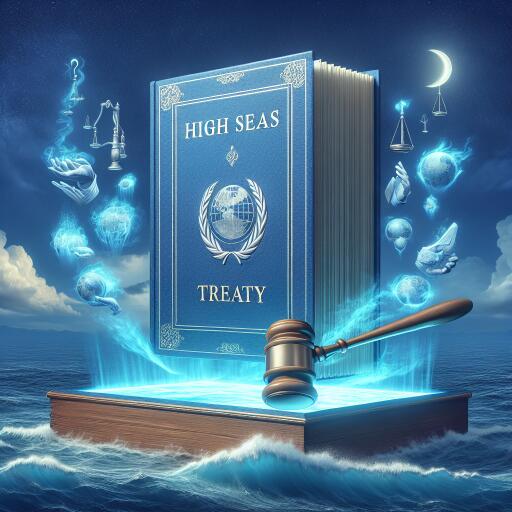
High Seas Treaty to Enter into Force
Global ocean governance reached a historic turning point with the 60th state ratification of the High Seas Treaty, unlocking its entry into force and setting the stage for the first legally binding protections of marine life in international waters. The agreement is slated to take effect on January 17, 2026—120 days after the decisive 60th instrument of ratification was deposited.
The breakthrough came as Sri Lanka, St. Vincent and the Grenadines, Sierra Leone, and Morocco delivered their ratifications during the United Nations General Assembly on September 19. Their move pushes forward the Agreement under the United Nations Convention on the Law of the Sea on the Conservation and Sustainable Use of Marine Biological Diversity of Areas Beyond National Jurisdiction—better known as the BBNJ Agreement.
What the Treaty Changes
Covering areas of the ocean beyond national jurisdiction—roughly two-thirds of the global ocean—the Treaty creates the first comprehensive framework to conserve and sustainably use biodiversity in the High Seas. Key tools include:
- Mechanisms to designate and manage marine protected areas (MPAs) in international waters, safeguarding ecologically important regions and migratory corridors.
- Mandatory environmental impact assessments for human activities that could harm ocean ecosystems, from industrial development to bioprospecting.
- Provisions to enhance equity by sharing benefits from marine genetic resources and expanding access to marine science, technology, and capacity building for developing countries.
These measures are designed to slow biodiversity loss, bolster ocean resilience, and support global environmental goals—especially the 30×30 target in the Kunming-Montreal Global Biodiversity Framework to protect 30% of land and sea by 2030. They also complement climate objectives by strengthening protections for the High Seas, a critical regulator of planetary heat and carbon.
A Long Road to Agreement
The Treaty was adopted in June 2023 after nearly two decades of negotiations and opened for signature on September 20, 2023. Palau became the first country to ratify on January 22, 2024, and momentum built steadily, with countries from all regions joining. To date, 142 nations and the European Union have signed, signaling their intent to ratify.
With the threshold now met, the Treaty will formally enter into force in early 2026. Under its terms, the first Conference of the Parties (CoP) must convene within a year of that date, likely toward the end of 2026. That meeting will be pivotal for turning the Treaty’s legal provisions into practice—adopting rules, agreeing on procedures for environmental assessments, and initiating the process to identify and establish High Seas MPAs.
Sites in the Spotlight
Governments, scientists, and civil society are already preparing proposals to safeguard biodiversity hotspots once the Treaty machinery is running. Among the priority areas under discussion:
- Salas y Gómez and Nazca Ridges in the Southeast Pacific
- Lord Howe Rise and the South Tasman Sea
- The Sargasso Sea in the North Atlantic
- The Thermal Dome in the Eastern Pacific
These regions host unique assemblages of species, serve as critical spawning or feeding grounds, and support migratory routes for tuna, sharks, marine mammals, and seabirds—making them high-impact candidates for early protection.
Momentum and What Comes Next
More ratifications are anticipated during the UN General Assembly High-Level Week in New York. Several major players—including China, India, the United States, the European Union, Australia, and the United Kingdom—have signed but not yet ratified, and their participation will be decisive for the Treaty’s reach and resources.
Implementation will demand swift work to operationalize core elements: establishing an institutional home and funding, formalizing guidelines for environmental assessments, and building a transparent system for benefit-sharing of marine genetic resources. Just as important will be ramping up scientific collaboration and technology transfer so that all regions can participate in monitoring, management, and enforcement.
Conservation groups and many governments have hailed the milestone as proof that multilateral cooperation can deliver for the planet’s largest commons. With the High Seas poised to gain lasting protections, what happens over the next two years—especially at the first CoP—will determine how quickly the world can convert legal commitments into thriving blue sanctuaries and healthier, more resilient oceans.



Leave a Reply