

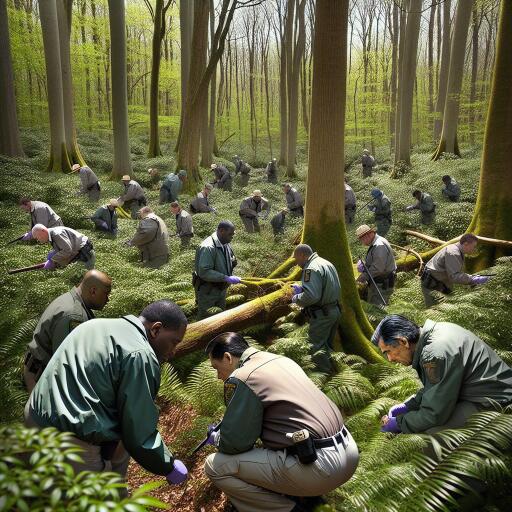
Officials unleash unconventional method to fend off invasive species before it takes over forest: ‘Sort of like an Easter egg hunt’
Massachusetts is closing in on a rare win against the Asian longhorned beetle, a destructive wood-boring pest that can hollow out hardwoods from the inside. The state’s strategy is as old-fashioned as it is effective: send skilled climbers into the canopy to inspect trees one by one, a painstaking sweep that some describe as feeling “like an Easter egg hunt.” The payoff is tangible—healthier forests, safer streets, and industries shielded from catastrophic loss.
An eye-level fight in the treetops
Instead of relying solely on traps or broad chemical treatments, crews rope into the canopy and methodically scan trunks and branches for subtle clues. They look for shallow depressions in the bark where eggs are tucked, and for neat, dime-sized exit holes that indicate adult beetles have chewed their way out after feeding on the tree’s interior. The insect’s striking black-and-white antennae might catch the eye, but it’s the faint scars that tell the true story of infestation.
When beetles and their larvae burrow through a tree, they compromise its structure. Weakened trunks and limbs are more likely to snap under wind or heavy rain—turning a forest health issue into a public safety risk.
A statewide sweep years in the making
Since 2008, conservation crews have been climbing, surveying, and, when necessary, removing infested trees to cut off the beetle’s advance. The scale is vast: more than 8 million maples, willows, poplars, and elms have been examined, and roughly 30,000 trees confirmed as infested have been taken down to prevent the pest from spreading.
The work is physically demanding. Teams navigate dense thickets and swampy lowlands, swat away ticks, and haul climbing gear through difficult terrain. Yet the “boots-and-ropes” approach has delivered results that broad surveys from the ground cannot match—precision, early detection, and decisive action.
Signs of progress—and a path to eradication
Encouragingly, no infested trees have been detected in Massachusetts since 2021. The town of Holden has already been declared free of the beetle, and officials are cautiously optimistic that the insect can be eradicated statewide. That optimism rests on disciplined surveillance and rapid response, both of which have reduced the pest’s foothold and limited the need for future removals.
Why this matters for forests, communities, and economies
Unchecked, the Asian longhorned beetle can decimate hardwood stands, hollowing out iconic species like maple and elm. For Massachusetts, that would mean more than ecological loss. The maple and timber sectors—along with the jobs and local economies they support—are on the line. Removing a single mature street tree is costly; removing thousands, across multiple towns, exacts an even steeper price. Prevention is the more affordable path, and it protects wildlife habitat, carbon storage, and the shade and cooling benefits that healthy urban and rural forests provide.
There’s also a regional dimension. Keeping the beetle in check within Massachusetts reduces the risk of infestations spilling into neighboring states, where eradication would mean years of expensive surveying and removal.
What residents can do
- Plant native species to build resilient landscapes. Native plants are adapted to local conditions, often needing less water and maintenance than non-native ornamentals.
- Diversify your yard. Introducing mixes of native perennials, shrubs, and grasses—along with options like clover, buffalo grass, or sections of xeriscaping—can reduce stress on trees and improve overall ecosystem health.
- Start small. Even partially replacing turf with native plantings can cut water bills, reduce mowing, and create habitat for pollinators that support food systems.
- Rewild where you can. Allowing areas to grow more naturally increases biodiversity, supports beneficial insects, and buffers your property against pest pressures.
Unconventional, methodical—and effective
From swampy forests to thick understories, the state’s climbing crews have tackled challenging ground to get ahead of a pest that often hides in plain sight. Their methodical canopy-by-canopy inspections—and the tough decisions to remove compromised trees—have given forests room to recover and communities greater safety. With no detections since 2021 and a growing list of beetle-free zones, Massachusetts is demonstrating that persistence, precision, and hands-on stewardship can turn the tide against a formidable invader.



Leave a Reply