

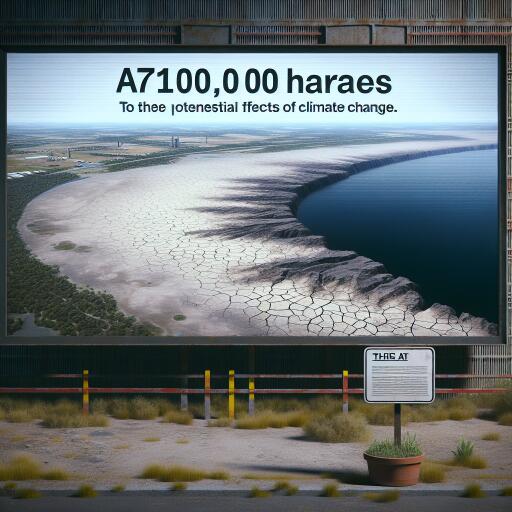
Over 710,000ha Could Disappear Due to Climate Change, Reports EPA
In a grim projection, the Environmental Protection Agency (EPA) warns that over 710,000 hectares of land could be either lost or severely damaged due to advancing climate change. A significant portion of land in coastal zones is at particular risk.
As part of a recent comprehensive climate risk assessment, the EPA presented a worst-case scenario indicating that nearly 10% of the nation’s total area might be critically affected. This assessment marks Ireland’s inaugural attempt to evaluate climate risks, involving crucial insights into how various sectors might be impacted over the coming years.
Detailed Assessments and Scenarios
The EPA’s report includes several risk scenarios that provide different perspectives based on the severity of anticipated impacts. Even under the most optimistic scenario, known as ‘limited,’ approximately 7,100 hectares or 1% of the landmass could see adverse effects. The ‘substantial’ scenario paints a grimmer picture, forecasting potential losses ranging from 7,100 to 71,000 hectares. Meanwhile, the ‘critical’ scenario anticipates the possibility of losing up to 710,000 hectares.
While the report does not contain specific regional maps, it provides a comprehensive understanding of how these risks vary regionally, with coastal areas being particularly susceptible. These predictions stem from data extrapolated and localized from a European-scale climate risk assessment.
Threats to Coastal Regions
Dr. Conor Quinlan from the EPA elaborated that coastal and estuarine floodplain regions are at heightened risk of damage or loss. Such assessments focus on evaluating the broader regional impact rather than offering project-level details. Comprehensive flood adaptation strategies will eventually address these specifics.
Furthermore, the methodology involved downscaling from European data, ensuring a proportionate assessment reflective of Ireland’s context.
Agricultural Vulnerabilities
The report underscores significant threats to agricultural productivity, particularly in terms of crop yields. Increasing temperatures can place stress on crops, hampering growth and diminishing yields. Such thermal stress affects vital plant processes, including photosynthesis and nutrient uptake.
Moreover, shifting precipitation patterns could exacerbate the situation, promoting drought conditions or excess rainfall. Droughts lead to limited water resources, degraded soils, and heightened pest vulnerabilities, whereas heavy rainfall results in flooding, soil erosion, and nutrient loss.
The compounding impacts of extreme weather could in turn jeopardize food security and elevate food costs, with rippling effects on farmers’ livelihoods and communities dependent on agriculture.
A Call for Urgent Action
Offering the nation’s first detailed overview of anticipated climate challenges, the National Climate Change Risk Assessment outlines crucial threats. Immediate priority over the next five years includes addressing infrastructure damage brought by intense winds. Buildings, transport networks, and energy systems particularly face substantial risks due to looming coastal erosion and floods.
The EPA’s comprehensive study draws on collaboration with governmental bodies, state agencies, and myriad stakeholders, reinforcing a unified, cohesive effort to assess and address these emerging challenges.
A total of 115 risks were identified tied to anticipated climatic shifts, with 43 categorized as significant needing urgent attention. These risks encompass critical sectors from energy, transport, and communication to water supplies, public health, food security, and the safeguarding of vital ecosystems.
Through this detailed risk appraisal, Ireland is primed for strategic planning and response measures, aiming to tackle impending climate adversities head-on.



Leave a Reply