

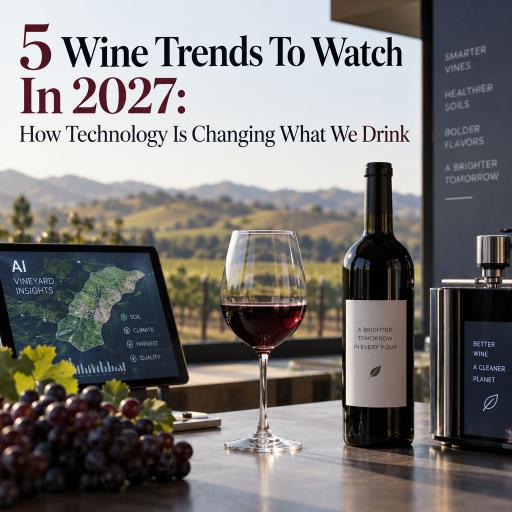
5 Wine Trends To Watch In 2027: How Technology Is Changing What We Drink
Wine is entering a period of rapid reinvention. Falling consumption, labor shortages and increasingly erratic weather are forcing producers to reconsider how grapes are grown, bottles are sold and visitors are welcomed.
In 2027, technology will become more visible across the sector—but innovation will not replace the importance of soil, climate or human expertise. Its most valuable role will be helping wineries use fewer resources, adapt to environmental disruption and respond more precisely to changing consumer habits.
1. Drinking Less Will Change How Wineries Define Value
Moderation is reshaping alcohol markets. As some consumers reduce how often they drink, wineries can no longer assume that lower volume will automatically lead customers toward more expensive bottles. Producers will need to explain why a wine deserves attention, whether through quality, regional identity, responsible farming or a memorable experience.
Customer data and artificial intelligence will increasingly guide these decisions. Digital tools can identify purchasing patterns, forecast demand and generate more relevant recommendations. Better forecasting may also reduce overproduction, excess packaging and the environmental cost of storing or disposing of wine that remains unsold.
However, personalization must be handled carefully. Useful suggestions can strengthen loyalty; relentless automated marketing can quickly drive customers away. The wineries that succeed will combine analytical insight with restraint and authenticity.
2. Tourism Will Become A Central Part Of The Wine Business
For many estates, the tasting room is evolving from a promotional extra into a major source of revenue. Vineyard walks, food pairings, harvest activities and educational tastings give visitors something online retail cannot reproduce: direct contact with the landscape and the people responsible for the wine.
Digital booking platforms will make these experiences easier to manage, while customer systems can help wineries maintain relationships after a visit. Some properties may introduce virtual previews, multilingual digital guides or personalized tasting itineraries.
The environmental challenge will be to expand tourism without damaging the places visitors have come to enjoy. Water use, transport emissions, waste and pressure on rural communities will require careful management. Smaller groups, seasonal scheduling, local food partnerships and low-carbon transport options could help hospitality grow more responsibly.
3. AI And Remote Sensing Will Help Vineyards Adapt To Climate Change
Wine grapes are highly sensitive to temperature, rainfall and sunlight. Warmer growing seasons can accelerate ripening, raise sugar and alcohol levels, and reduce the acidity that gives many wines freshness. At the same time, intense rain, drought, hail, wildfire smoke and fungal diseases can destroy a crop before harvest.
In 2027, more growers are likely to combine weather stations, soil probes, canopy sensors and AI forecasting. These systems can reveal which parts of a vineyard need irrigation, where disease risk is rising and when intervention is most effective. Applying water or treatments only where required can lower costs and reduce ecological pressure.
Satellite and drone imagery will add another layer of observation. Advanced cameras can detect subtle changes in plant health before symptoms become obvious from the ground. Growers may then investigate individual vineyard blocks rather than treating an entire estate.
Technology is also influencing vineyard design. Computer modeling can help determine row orientation, canopy structure and shade management, protecting berries from extreme afternoon heat. Smoke-monitoring systems may meanwhile help growers assess wildfire exposure and decide whether laboratory analysis is necessary before investing further in a threatened crop.
4. Electric Robots Will Move From Experiments To Everyday Tools
Finding seasonal vineyard labor is becoming difficult in many regions. The work is physically demanding, and steep or uneven sites can be hazardous. Electric robots and drones are emerging as practical assistants for repetitive jobs such as mowing, mechanical weeding, soil cultivation and crop monitoring.
These machines may offer environmental advantages when they replace diesel equipment or reduce reliance on herbicides. Lightweight models could also limit soil compaction, although their batteries, manufacturing footprint and energy source must be included in any honest sustainability assessment.
Fully autonomous vineyards remain unlikely in the immediate future. Vines are irregular, weather changes quickly and delicate tasks still require skilled judgment. Specialized machines designed for clearly defined jobs are more likely to spread than human-shaped robots attempting to perform everything.
The decisive questions will be simple: Can the equipment operate safely, deliver reliable results and save enough time or resources to justify its price? Technology that fails those tests will remain a demonstration rather than a solution.
5. Low- And No-Alcohol Wine Must Improve Its Flavor
Demand for moderation is creating space for wines with little or no alcohol. Yet the category faces a fundamental technical problem: alcohol contributes aroma, texture, weight and balance. Removing it can leave a drink thin, overly sweet or dominated by simple fruit flavors.
Producers are refining processes such as membrane filtration and low-temperature separation to retain more of a wine’s original character. Improvements may also come from selecting suitable grape varieties, harvesting with greater acidity and designing wines specifically for dealcoholization instead of removing alcohol from a conventional finished product.
Environmental performance will matter as the market grows. Additional processing requires energy and equipment, while heavy glass bottles can account for a substantial share of a wine’s transport footprint. Renewable power, lighter packaging and efficient distribution could prevent lower-alcohol products from carrying an unnecessarily high climate cost.
Ultimately, consumers may try these wines because they are curious or seeking healthier drinking habits, but repeat sales will depend on enjoyment. By 2027, taste—not novelty—will determine which brands endure.
Technology Must Serve The Vineyard
The most promising wine innovations are not those that make farming look futuristic. They are the ones that conserve water, cut emissions, reduce chemical inputs, protect workers and help vineyards survive climatic instability.
Wine will always depend on living landscapes and human decisions. In 2027, technology’s task will be to support both—while helping producers create drinks that people still genuinely want to share.



Leave a Reply