

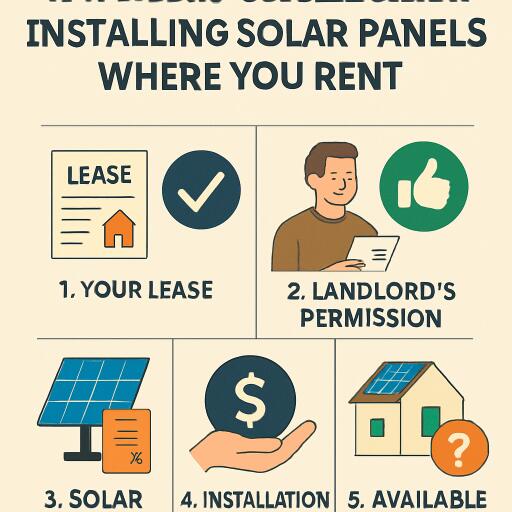
5 Things To Consider Before Installing Solar Panels Where You Rent
Solar power is no longer just for homeowners with suburban rooftops. Renters are increasingly looking for ways to shrink their energy bills and carbon footprints, too. But turning a rental into a solar-powered dwelling comes with extra fine print and logistical hurdles. Before you start calling installers, work through these five essentials to decide what kind of solar solution fits your lease, your building, and your budget.
1) Start With Your Lease—and Your Landlord
Most leases restrict structural changes, roof access, and electrical work. That doesn’t make solar impossible, but it does mean you need explicit, written permission before moving ahead.
- Check alteration clauses, roof usage rules, and any HOA or historic-district limits.
- Discuss ownership: Will you own the system, or will the landlord install and own it? Ownership determines who receives incentives and who is responsible for repairs.
- Clarify costs and benefits: How are savings shared? Will rent change? Who pays for interconnection fees, permits, and engineering?
- Define end-of-lease terms: If you move, who removes the system and restores the property? Set this in writing.
- Verify insurance and liability: Confirm coverage for roof penetrations, wind and hail damage, and worker access.
Pro tip: Propose a short “green addendum” to your lease that covers installation, access for maintenance, incentive ownership, and decommissioning. Clear documentation upfront prevents disputes later.
2) Assess the Building: Roof, Wiring, and Metering
Even with approval, the site must be suitable. A quick reality check can save time and money.
- Roof condition and structure: A roof near the end of its life or with limited load capacity may require replacement or engineering upgrades before installation.
- Orientation and shading: South-facing roofs with minimal shade produce best; trees, neighboring buildings, and dormers reduce output. Ask for a shade analysis.
- Electrical capacity: The main panel must have space and rating for a solar backfeed; older panels may need upgrades.
- Metering: If your building is master-metered (one meter for multiple units), sharing solar savings fairly can be complex. Individually metered units are simpler.
- Access and safety: Installers need safe roof access and a place for inverters and disconnects that meets code.
If rooftop space is a no-go, explore alternatives: carport or shed-mounted arrays (with owner approval), or small, non-penetrating balcony systems where allowed by code and building rules.
3) Understand the Money: Incentives, Billing, and Contracts
Solar savings hinge on policy and paperwork. As a renter, the structure you choose will affect what incentives you can use and how you get credited for power.
- Incentives: Credits and rebates usually go to the system owner. If your landlord owns the system, negotiate how benefits translate into rent or utility savings for you.
- Net metering and credits: Some utilities credit excess solar at the retail rate, others at a lower value or via time-of-use rates. Ask how credits appear on your bill and whether you can roll them over.
- Leases and PPAs: Third-party ownership can reduce upfront cost, but contracts may limit portability if you move. Confirm transfer options, early termination fees, and credit requirements.
- Interconnection and permitting costs: These can be minor or significant, depending on your utility and jurisdiction. Decide who pays and how that affects your expected payback.
If rooftop solar isn’t feasible, consider community solar. With a subscription model, you support a local solar project and receive bill credits—no construction, no roof access, and you can often take the subscription with you when you move within the utility’s territory.
4) Renter-Friendly Hardware: Portable, Modular, and Low-Impact Options
Not every solar setup requires roof penetrations or long-term contracts. Modular options can bring meaningful savings and resilience without major construction.
- Balcony or patio modules: Compact panels with microinverters can plug into a dedicated outdoor circuit where permitted. Always confirm electrical code compliance and lease approval.
- Portable kits and power stations: Foldable panels paired with a battery keep essentials running during outages and can move with you. They don’t offset your whole bill, but they provide resilience and flexible savings.
- Microinverters vs. string inverters: Microinverters on each panel improve performance in partial shade and make systems more modular—useful if roof space is limited or you plan to expand later.
- Monitoring access: Ensure you have app access to track production and usage so savings don’t disappear into a billing black box.
Pair small-scale solar with efficiency upgrades—LEDs, smart thermostats, weatherstripping—to amplify savings without altering the building.
5) Plan for Maintenance, Insurance, and Move-Out
Solar runs quietly for decades, but it isn’t “set and forget.” Planning reduces headaches down the road, especially for renters.
- Maintenance responsibilities: Who handles monitoring, warranty claims, inverter replacement, and roof checks? Spell it out.
- Insurance: Confirm what’s covered by the landlord’s policy, the installer’s workmanship warranty, and your renter’s insurance. Document equipment serial numbers and photos.
- Decommissioning: Define removal procedures, repair standards for roof penetrations, and timelines. If you own the system, budget for safe removal or transfer at the end of the lease.
- Contract transfer: If you signed a lease or PPA with a provider, verify how to transfer it to the next tenant or terminate if you relocate.
Bottom Line
Solar and renting can coexist, but the right choice depends on your lease, your building’s layout, and your appetite for contracts and coordination. If a permanent rooftop system isn’t practical, community solar or portable options still deliver meaningful climate impact and bill relief. Start with landlord approval, verify the site and metering, run the numbers on incentives and billing, and choose hardware that fits your timeline. With a little planning, you can plug into clean power—without owning the roof above you.



Leave a Reply