

2025 poised to match 2023 as second‑warmest year, says EU climate monitor
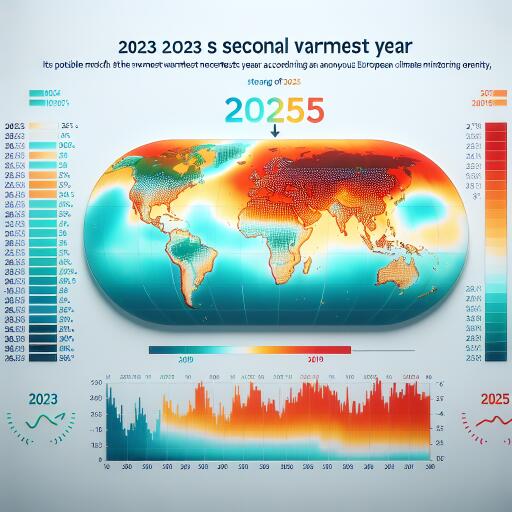
Europe’s climate service says the planet is barreling toward another exceptional year of heat: 2025 is now expected to end up alongside 2023 as the second‑warmest year in the modern record, trailing only 2024. The latest snapshot shows last month ranked among the hottest Novembers ever observed, underscoring how persistent, record‑level warmth has carried through the year.
From January through November, the global average temperature ran 1.48°C above the pre‑industrial benchmark—matching the full‑year average for 2023. That leaves little doubt, according to the European Union’s Copernicus Climate Change Service (C3S), that 2025 will close out as either the second‑ or third‑warmest year since reliable measurements began.
A milestone three‑year average
While 2025 on its own may not exceed 1.5°C above pre‑industrial levels—the temperature limit governments pledged to pursue under the Paris Agreement—the three‑year mean across 2023–2025 is on course to cross that threshold for the first time. Scientists note that such multi‑year averages provide a clearer read on the climate system’s trajectory, smoothing out the noise of month‑to‑month variability while revealing the strength of the underlying warming trend.
November’s heat in context
November 2025 clocked an average global surface air temperature of 14.02°C. That was just 0.20°C shy of the record‑setting November of 2023, and 0.08°C cooler than November 2024—both emblematic of how unusual warmth has stacked up in recent years. The persistence of near‑record monthly anomalies through 2025 helps explain why the year is lining up so high in the rankings.
Oceans still running hot
Sea surface temperatures remain a defining feature of the current climate. Across the broad swath of ocean between 60°S and 60°N, November’s average was 20.42°C—an exceptionally warm value for the time of year and the fourth‑highest November in the dataset. Elevated ocean temperatures not only drive marine heatwaves and stress ecosystems, they also reinforce atmospheric warmth by releasing heat and moisture, fueling more intense weather.
Polar seas show continued ice deficits
The cryosphere offered little relief. Arctic sea ice extent in November was 12% below the long‑term average, the second‑lowest on record for the month. Around Antarctica, sea ice came in 7% below average, the fourth‑lowest November extent. These deficits align with a multiyear pattern of thin and retreating ice cover that affects polar ecosystems, alters heat exchange between ocean and atmosphere, and can reshape weather far beyond the poles.
What the trajectory signals
Climate experts stress that these numbers reflect momentum built up over decades of greenhouse gas emissions. The steady climb in global temperatures—and the emerging likelihood that multi‑year averages now flirt with or exceed 1.5°C—illustrates how quickly the remaining carbon budget is being consumed. The path to limiting further warming, they emphasize, hinges on steep, sustained cuts in emissions alongside accelerated deployment of clean energy, improved efficiency, and protection and restoration of carbon‑rich ecosystems.
Why this matters now
- Health and safety: Higher baseline temperatures amplify heatwaves, elevate nighttime minimums, and increase risks to vulnerable communities.
- Water and food security: Warmer oceans and air intensify drought–deluge cycles, threatening crops, fisheries, and freshwater supplies.
- Ecosystems: Marine heat and low sea ice disrupt food webs, coral reefs, and polar species; terrestrial habitats face shifting seasons and expanding wildfire seasons.
- Economy and infrastructure: Extreme heat and storms strain grids, transport, and buildings, with rising costs for adaptation and recovery.
The latest reading from Europe’s climate monitor adds to a stark run of records. With 2024 locked in as the warmest year and 2025 pressing close behind 2023, the world is experiencing an extended period of unprecedented warmth. The signal is clear: the longer emissions remain high, the more frequent and intense these records—and their impacts—will become.



Leave a Reply