

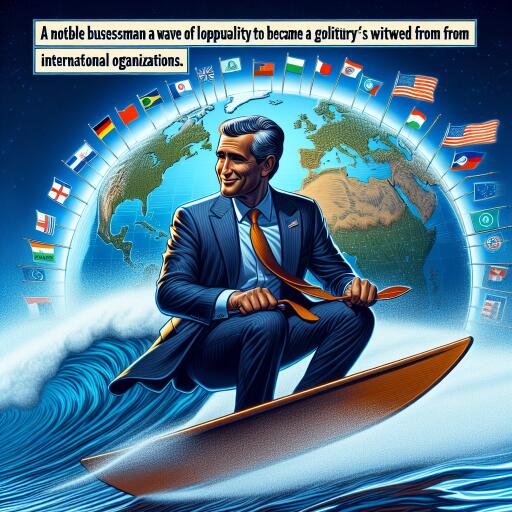
Donald Trump: After US Withdraws From 66 Organisations, Will Climate Change Take a Worldwide Hit? Consequences Explained
The United States is moving to disengage from 66 international organisations, nearly half connected to the United Nations system. Among the institutions affected are key climate forums, including the UN Framework Convention on Climate Change (UNFCCC) and the Intergovernmental Panel on Climate Change (IPCC)—cornerstones of the global climate architecture. The shift reflects an approach prioritising national control and domestic economic aims over multilateral commitments, and it raises urgent questions about how the world will coordinate to cut emissions and protect the most vulnerable from climate impacts.
What is changing—and why it matters
For decades, U.S. participation in multilateral bodies has shaped climate science, diplomacy, and finance. The UNFCCC underpins the annual COP summits, where nearly 200 nations negotiate emissions targets and accountability. The IPCC compiles the state of climate science, guiding policy and investment worldwide. Reduced U.S. engagement with these institutions could weaken the connective tissue that keeps climate efforts coordinated, transparent, and funded.
At home, the move is framed as reclaiming policy flexibility and shielding domestic industries from perceived constraints. Abroad, it signals a recalibration of U.S. influence at the very moment when global emissions must decline swiftly to limit warming and avoid escalating loss and damage.
Potential climate fallout
- Weaker diplomatic momentum: The U.S. has historically steered ambition during climate talks. Stepping back risks slowing consensus-building at COPs and splintering negotiating blocs just as countries are due to strengthen their targets.
- Gaps in climate finance: International bodies help mobilise and channel funds for mitigation and adaptation, especially for developing countries. A diminished U.S. role can translate into budget shortfalls, delayed projects, and reduced capacity on the ground.
- Strain on climate science: The IPCC’s assessments rely on broad scientific collaboration and government engagement. Reduced participation can hinder data sharing, peer review, and the uptake of scientific guidance in policy.
- Reduced accountability: Multilateral frameworks provide common rules, monitoring, and reporting. Without strong participation, transparency and trust may erode, complicating efforts to verify progress and close ambition gaps.
Who is most at risk?
Low-income and climate-vulnerable nations are likely to feel the effects first and most intensely. These countries depend on predictable support to build resilience—strengthening early warning systems, securing water and food supplies, and protecting coastlines. Any slowdown in funding or coordination can magnify climate hazards, from heat stress and drought to extreme rainfall and sea-level rise.
Beyond climate: cross-cutting repercussions
The organisations affected span public health, human rights, biodiversity, and development. Climate action is intertwined with these areas. Less engagement could mean:
- Public health setbacks as climate-related diseases, heatwaves, and air pollution intensify.
- Biodiversity and ecosystem protection losing critical coordination and reporting mechanisms.
- Development goals—energy access, food security, and disaster preparedness—becoming harder to finance and implement.
Can others fill the gap?
Regional alliances, the European Union, major emerging economies, and coalitions of states, cities, and businesses will try to shore up climate cooperation. Subnational U.S. actors have shown they can drive decarbonisation domestically, and private capital is increasingly aligned with clean technologies. Yet these efforts, while significant, rarely replace the comprehensive reach of multilateral institutions that set common standards, verify progress, and mobilise resources at scale.
What to watch next
- Climate finance delivery: Whether other countries and institutions step up to close funding gaps for adaptation, loss and damage, and clean energy deployment.
- Negotiation dynamics: How the balance of power shifts in global talks and whether new leadership coalitions emerge to maintain ambition and transparency.
- Scientific collaboration: The continuity of global research networks and the integrity of upcoming climate assessments.
- Domestic spillovers: The extent to which U.S. federal and subnational policies can stay aligned with global decarbonisation pathways without strong multilateral ties.
The bottom line
This is one of the most sweeping retrenchments of U.S. engagement with international institutions in recent memory. Exiting major climate bodies raises the risk of a fragmented response to a borderless crisis. Whether the world can maintain momentum will depend on how quickly other actors move to safeguard cooperation, financing, and science. The stakes are clear: without cohesive global action, cutting emissions and protecting vulnerable communities becomes slower, costlier, and far less certain.



Leave a Reply