

Rs 203-cr VMRDA’s coastal protection plan enters final stage of clearance
As rising seas, stronger storms, and decades of shoreline alteration converge along India’s east coast, Visakhapatnam is moving toward a landmark intervention. The Visakhapatnam Metropolitan Region Development Authority (VMRDA) has advanced a Rs 203-crore coastal protection package to its final round of clearances, aiming to stabilize some of the city’s most erosion-prone beaches and safeguard nearby neighborhoods and infrastructure.
Why Visakhapatnam’s shore is under pressure
The city’s coastline, particularly the arc between Coastal Battery and Bheemunipatnam, has been losing ground to a combination of natural processes and human activities. Seasonal monsoon waves, cyclone-driven storm surges, and longshore currents continually rearrange sand. Over time, hard structures, urban expansion, and altered sediment flow have reduced the coast’s ability to recover between storm seasons, leaving stretches of shore thinner and more fragile. In some locations, the scouring effect of existing walls and roads has further accelerated sand loss.
What the plan proposes
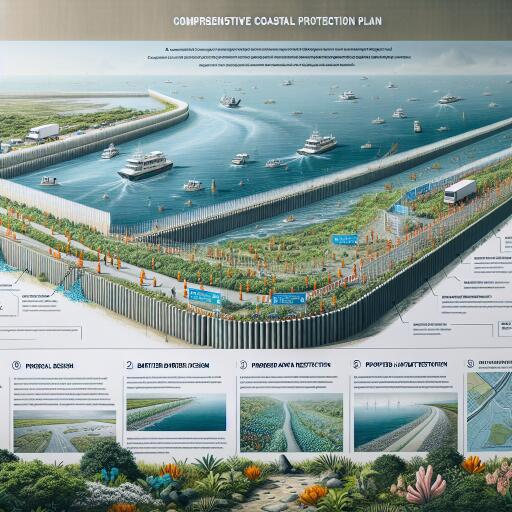
VMRDA’s blueprint blends built defenses with nature-based measures, guided by scientific input from the National Centre for Coastal Research (NCCR). The approach prioritizes buffering energy before it reaches vulnerable assets, while restoring natural features that help beaches heal after high-energy events. Key components include:
- Targeted retaining structures near Gokul Park and Kursura (estimated Rs 71 crore): Engineered walls and revetments to protect critical public assets and transport corridors, designed to reduce backwash and limit scouring at the base.
- Dune enhancement at Peda Jalari Peta (estimated Rs 27 crore): Rebuilding and stabilizing sand dunes as living barriers, with native vegetation, fencing to control trampling, and gentle dune profiles that dissipate wave energy.
- Hybrid solutions at Mangamaripeta (estimated Rs 43 crore): A mix of softer interventions—dune and beach reshaping, vegetation, and nourishment—paired with low-crested or buried structural elements where necessary.
- Hybrid solutions at Bheemunipatnam (estimated Rs 37 crore): Similar layered defenses adapted to local shoreline dynamics, intended to protect both heritage zones and residential areas while maintaining beach access.
Altogether, the package is designed to reduce the risk of episodic erosion during extreme weather and to improve day-to-day shoreline stability, without walling off the sea or undermining the recreational value of the beaches.
Science-led design and monitoring
NCCR’s technical assessments have informed where structures are warranted and where softer measures will provide better long-term outcomes. Modeling wave climate, sediment transport, and storm surge scenarios allows the plan to be calibrated to local conditions. This means dune reinforcement and nourishment can be placed where they are most likely to persist, and hard defenses can be set to minimize downstream erosion.
Just as crucial is the commitment to post-construction monitoring. Regular beach profiling, vegetation surveys, and checks on structural performance can flag hotspots early, allowing for adaptive maintenance—especially important as climate signals amplify variability in wave patterns and rainfall intensity.
Community and ecological benefits
Well-designed dunes and hybrid buffers provide co-benefits beyond erosion control. Native plants stabilize sand, support coastal biodiversity, and create cooler microclimates. Keeping beaches wide and walkable sustains tourism and daily recreation. By focusing hard defenses on high-risk assets while restoring nature-based buffers elsewhere, the plan aims to reduce future repair costs and maintain livelihoods for communities that rely on the waterfront.
For fisher families and small businesses along the shore, the works could mean fewer disruptions during storm seasons and safer access points. Careful staging—timing construction outside peak fishing and monsoon periods—will be vital to minimize short-term impacts.
What “final stage of clearance” means
With design and budgeting consolidated at Rs 203 crore, the project has moved into the last leg of approvals required before tenders and site work. This phase typically covers environmental and technical vetting, securing right-of-way where needed, and coordinating utilities. Once clearances are completed, VMRDA can sequence execution in zones—starting with the most vulnerable stretches—to align with seasonal windows and logistical constraints.
Looking ahead
Coasts are dynamic by nature, and no single intervention is a permanent fix. The durability of this plan will hinge on maintenance, periodic beach nourishment where warranted, and vigilance against new stressors—from unregulated construction to sand mining. Still, by combining structural protection with restored dunes and adaptive monitoring, Visakhapatnam is positioning itself to live with a more energetic sea while keeping its shoreline open, functional, and ecologically alive.



Leave a Reply