

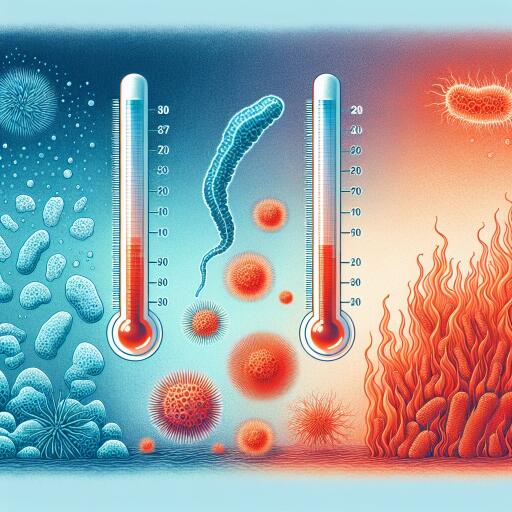
GSE282360 Adaptability of Cobetia marina to growth at different temperatures
As oceans warm and fluctuate more intensely, understanding how marine microbes cope with thermal stress has become urgent. Cobetia marina, a cosmopolitan bacterium found from polar to tropical waters, offers an unusually clear window into that resilience. Capable of thriving from near-freezing to 41°C, with fastest growth around 35°C, this microbe embodies the kind of flexibility that will shape future marine ecosystems—and our capacity to protect them.
A heat-tolerant generalist with ecological punch
Cobetia marina is more than a hardy survivor. It forms robust biofilms, secretes biosurfactants, and can metabolize petroleum-derived hydrocarbons, making it relevant to both ecological health and environmental remediation. Those traits matter at scales that touch fisheries, aquaculture, and coastal infrastructure: biofilms influence nutrient cycling and colonization on submerged surfaces, biosurfactants can aid pollutant dispersion and recovery, and petroleum degradation hints at bioremediation potential after spills.
What the dataset explores
The dataset associated with GSE282360 examines how this bacterium modulates its biology at different temperatures, focusing on gene activity and regulatory shifts that enable survival and growth. Cultures were grown at 16°C, 35°C, 38°C, and 41°C—spanning cool seawater to near the upper bound of its tolerance—and profiled using high-throughput RNA sequencing to map which genes turn on or off as temperatures rise.
By comparing these transcriptomes, the work highlights the cellular strategies that permit thermal agility. While the precise gene lists are extensive, the overarching patterns speak to a classic thermal playbook fine-tuned for a marine lifestyle.
Thermal adaptation, decoded
Across temperature regimes, several themes emerge that help explain how Cobetia marina copes with stress while protecting its core machinery:
- Protein stability and repair: Warmer conditions typically drive higher demand for chaperones and proteases—molecules that refold or recycle damaged proteins—helping cells maintain function when heat destabilizes structures.
- Membrane remodeling: To keep membranes at the right fluidity as water warms or cools, bacteria adjust fatty acid composition. Shifts in genes involved in lipid synthesis can reflect this “membrane tuning,” preserving permeability and transport.
- Energy management: Temperature affects respiration and metabolism. Differential expression in pathways tied to carbon use and electron transport often signals an energetic recalibration that balances growth with stress defense.
- Biofilm dynamics: Changes in surface adhesion and extracellular matrix production can alter how readily cells form protective communities—an advantage during stress and a key factor in colonizing marine surfaces.
- Regulatory control: Transcription factors and small RNAs frequently act as temperature-sensitive switches, coordinating genomic responses so cells don’t overcommit resources as conditions shift.
Why this matters in a warming ocean
Marine microbes underpin ocean health. They drive biogeochemical cycles, stabilize food webs, and mediate the fate of pollutants. As marine heatwaves intensify and temperature variability becomes the norm, species with adaptable toolkits like Cobetia marina may reshape microbial communities, with downstream effects on nutrient availability and ecosystem resilience.
The insights from this dataset extend beyond basic biology:
- Bioremediation readiness: Understanding how temperature influences hydrocarbon metabolism can guide the deployment of microbial strategies after spills in warm or cold waters.
- Biofilm management: Knowledge of temperature-linked biofilm genes can inform efforts to manage fouling on ships, aquaculture gear, and coastal infrastructure.
- Health-relevant biomolecules: Biosurfactants and other microbial products are candidates for pharmaceutical, veterinary, and industrial uses; temperature optimization could boost yields and stability.
- Evolution under pressure: Tracking gene regulation across a thermal gradient offers a living example of how selection pressures sculpt microbial genomes in real time.
How the study approached the question
The research grew Cobetia marina at four temperatures—16°C, 35°C (near optimal), 38°C, and 41°C—then captured the global snapshot of gene activity using RNA sequencing. Comparing expression profiles across these conditions identifies sets of genes and regulatory circuits associated with cooler stress, optimal performance, and heat stress. This approach moves beyond cataloging which genes exist, revealing how they are orchestrated under changing environmental conditions.
From genomes to solutions
These thermal response maps can be leveraged in multiple ways. In applied settings, they can inform engineering of strains for specific temperature regimes or guide process controls in biotechnological applications. In ecology, they offer predictive clues: as coastlines warm, we can anticipate which functions might become more prevalent—enhanced biofilm formation, altered hydrocarbon degradation profiles, or shifts in energy allocation—affecting how microbial communities interact with pollutants and hosts.
The bigger climate picture
Not all marine microbes will adapt equally to rapid change. Cobetia marina’s broad thermal tolerance suggests it could be a winner in many scenarios, potentially expanding its footprint or influence in certain habitats. By connecting temperature to gene regulation, the dataset behind GSE282360 provides a framework to assess resilience at the molecular level—an essential step toward forecasting microbial futures in a hotter, more volatile ocean.
Ultimately, the story here is one of preparedness: organisms that can quickly rewire their biology to meet the moment will shape tomorrow’s seas. Understanding that rewiring, gene by gene, brings us closer to managing the risks and harnessing the opportunities that come with a changing climate.



Leave a Reply