

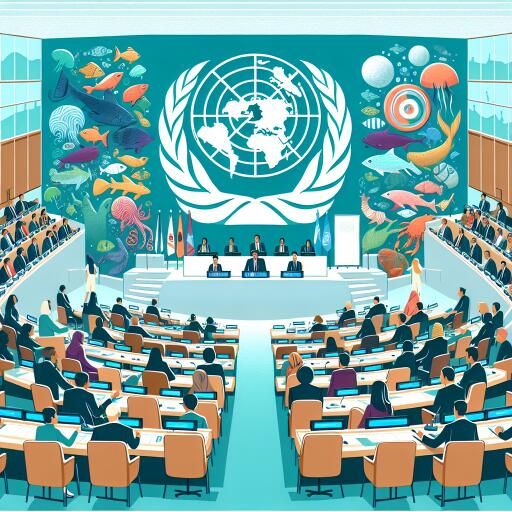
“The UN Ocean Conference Brings Together More Than Just Countries”
The UN Ocean Conference recently convened in Nice, fostering critical dialogue on marine conservation efforts and the sustainable management of international waters. Among the many voices at the conference was Katja Matthes, Director at the GEOMAR Helmholtz Centre for Ocean Research Kiel. Her insights offer a glimpse into the pressing challenges facing our oceans and the collaborative efforts required to address them.
Urgent Marine Challenges
The world’s oceans are facing a multi-faceted crisis. As they continue to warm, lose oxygen, and become increasingly acidic, the delicate balance of marine ecosystems is being disrupted, posing significant threats to marine life and humanity alike. Three primary challenges stand out:
Firstly, the unprotected expanse of the high seas begins a mere 200 kilometers from the coast. These vast areas do not fall under any nation’s jurisdiction, leaving them susceptible to environmental threats. The Biodiversity Beyond National Jurisdiction (BBNJ) Agreement aims to counteract this by advocating for at least 30 percent of marine areas to be protected by 2030. However, progress has been slow, and geopolitical tensions are hindering the necessary close observation of the oceans, leading to a loss of crucial data sets.
Secondly, the growing interest in deep-sea mining presents another threat. Despite prolonged efforts, a binding code for such activities has yet to be adopted by the International Seabed Authority. Research indicates that mining resources like manganese could devastate deep-sea ecosystems for centuries. In a worrying development, the first mining licenses are being granted without comprehensive ecological risk assessments.
Thirdly, the ocean serves as a vital carbon sink, covering 70 percent of the Earth’s surface and sequestering about a quarter of carbon dioxide emissions. There’s an urgent need for more intensive research into safe extraction and storage options, ensuring that this natural service is preserved and enhanced.
Outcomes and Impacts of the Conference
Significant strides were made during the conference. Over 20 nations ratified the High Seas Protection Agreement, with Germany poised to join the ranks soon, bringing the treaty’s enactment and the establishment of marine protected areas closer to reality. This treaty champions the creation and expansion of protected marine areas, a goal strongly supported by many nations and by key figures such as President Emmanuel Macron and Federal Environment Minister Carsten Schneider. Furthermore, there was reinforced support for a moratorium on deep-sea mining, with Germany and the European Union playing pivotal roles against countries intent on exploiting raw materials in the short term. These events send a robust signal leading up to the forthcoming UN negotiations.
The UN Ocean Conference transcended the mere gathering of countries, fostering an environment ripe for cross-sectoral exchanges and the development of new alliances through various side events. A collaborative effort with international marine scientists yielded recommendations that aim to bolster mission-oriented research, gaining inclusion in the negotiation process. This comprehensive focus also highlighted the enhancement of ocean observation as an essential foundation for sustainable ecosystem governance. These outcomes underscore the durability of multilateral collaboration, even amidst current geopolitical challenges.
Inspirations and Personal Highlights
The German research vessel Meteor hosted an energetic atmosphere, offering a melting pot of ideas and cooperative efforts over a five-day period. Research institutions and key stakeholders assembled to showcase projects and brainstorm initiatives. A notable collaboration was the continued development of the FUTURO research campaign, aiming to implement sustainable ecosystem management off West Africa—an area crucial to countless livelihoods but lacking substantial data.
A memorable highlight of the conference for many participants was the journey aboard the Malizia Explorer. This high-tech sailing ship, helmed by Boris Herrmann, features cutting-edge measurement technology. It will soon provide valuable data from remote regions for institutions like GEOMAR and the Alfred Wegener Institute Helmholtz Centre for Polar and Marine Research. The inspiration and scientific insights gathered during these days on the water stand as testament to the power of collaboration and innovation in marine conservation.
The UN Ocean Conference demonstrated that it does more than just bring nations together. It acts as a catalyst for cross-disciplinary actions, fostering partnerships, and driving forward the global agenda for marine protection and sustainability. With such international cooperative efforts, there is hope that the urgent challenges facing our oceans will be met with effective, lasting solutions.



Leave a Reply