

Characteristics of strontium adsorption onto aquatic sediments in Southwest China – Scientific Reports
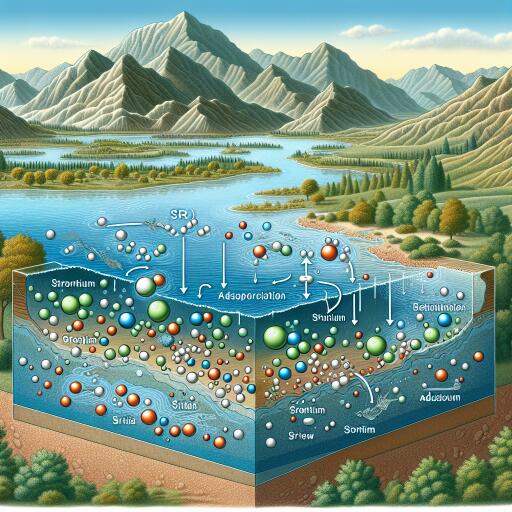
How strontium behaves in rivers, lakes, and reservoirs matters for ecosystems and public health—especially where radionuclide contamination is a concern. New laboratory evidence from aquatic sediments in Southwest China shows that sediments can act as dynamic sinks for strontium (Sr), with their capacity to hold Sr strongly influenced by temperature, water chemistry, and pH. The findings help clarify when strontium remains trapped in sediments and when it may be released back into the water column, informing cleanup strategies and risk assessments.
What the experiments reveal
Using batch equilibrium tests on selected sediments, researchers examined how Sr adheres to particle surfaces. The adsorption patterns fit two widely used isotherm models—Langmuir and Freundlich—suggesting that Sr can form a near-monolayer on sites with a finite capacity (Langmuir) while also interacting with a range of surface energies and site types (Freundlich). This dual fit indicates complex sediment surfaces with both uniform and heterogeneous binding behaviors.
Temperature emerged as a key driver. Across 277.15–308.15 K, the maximum adsorption capacity (Q) increased markedly, from 2,926 to 12,628 mg·kg, representing a 1.03- to 2.10-fold rise. Statistical analysis showed a positive correlation between temperature and Q (R: 0.78–0.88). In practical terms, warmer conditions enhance molecular motion, improving Sr diffusion through pore waters and opening access to more active sites on sediment grains. This translates into greater loadings of Sr on sediment at higher temperatures.
Water hardness—and specifically calcium (Ca2+)—was another powerful factor. Because Ca and Sr are chemically similar, they compete for the same adsorption sites. When calcium concentrations increased from 0 to 0.05 mol·L, Sr uptake by sediments dropped sharply; in the most pronounced cases, the maximum adsorption capacity decreased by up to 19.38 times. This competitive effect underscores that ionic strength and major cations can override other favorable conditions, curbing the ability of sediments to immobilize Sr.
pH conditions also shifted during equilibration. As the equilibrium concentration of Sr in solution rose, pH declined from 7.05 to 6.35, a change that can affect surface charge and the chemistry of binding sites. Adsorption removal efficiency (R%) increased with higher initial pH, ranging from 2.17% to 49.65% across tested conditions. In general, more neutral to slightly alkaline starting conditions supported stronger Sr uptake, while more acidic conditions weakened it.
Why it matters for ecosystems and remediation
These results carry practical implications for sediment-rich waters exposed to strontium, including areas concerned with radionuclide isotopes. The temperature dependence suggests that seasonal or climate-driven warming could, to a point, enhance sedimentary trapping of Sr by boosting adsorption rates and site availability. However, this benefit may be offset in waters with high calcium or elevated salinity, which can outcompete Sr and diminish sediment retention.
For river reaches and reservoirs downstream of industrial discharges, mines, or legacy contamination, managing co-occurring ions becomes as important as addressing the contaminant itself. Elevated calcium—common in hard waters or during certain hydrological events—could mobilize Sr by squeezing it off adsorption sites or preventing it from binding in the first place. Likewise, pH management emerges as a lever for remediation: maintaining pH near neutral or slightly alkaline ranges may significantly increase removal performance, based on the observed gains in R%.
From a risk perspective, the interplay between temperature, ionic strength, and pH determines how much Sr stays sequestered in sediments versus circulating in the water column—where it is more likely to be taken up by organisms or enter drinking water pathways. Strategies that reduce ionic competition and stabilize pH could improve the long-term effectiveness of sediment-based containment in lakes and riverbeds of Southwest China and similar settings.
Methodological notes
Batch equilibrium experiments provide a controlled framework to isolate how specific variables alter adsorption, but real-world environments are more complex. Field conditions introduce fluctuating flows, organic matter, fine particle transport, and microbial processes that also influence adsorption and desorption cycles. Even so, the strong fits to both Langmuir and Freundlich models, combined with clear temperature and ionic-strength signals, offer a robust basis for anticipating how Sr behaves across a range of conditions.
Key takeaways
- Sr adsorption onto aquatic sediments is well described by both Langmuir and Freundlich isotherms, indicating a mix of uniform and heterogeneous binding sites.
- Warming enhances adsorption: from 277.15 to 308.15 K, maximum capacity increased from 2,926 to 12,628 mg·kg (1.03–2.10×; R: 0.78–0.88).
- Calcium competes directly with Sr. Raising Ca2+ from 0 to 0.05 mol·L can cut Sr adsorption dramatically, with up to a 19.38-fold reduction in capacity.
- As equilibrium concentration increased, pH drifted downward (7.05 to 6.35), while higher initial pH improved removal efficiency (2.17% to 49.65%).
Together, these findings point to a clear message for water managers and remediation teams: sediment can be a powerful ally in limiting strontium mobility, but its effectiveness hinges on temperature, major ion composition—especially calcium—and pH. Accounting for these factors can strengthen intervention strategies and reduce ecological risk in sediment-dominated waters of Southwest China and beyond.



Leave a Reply