

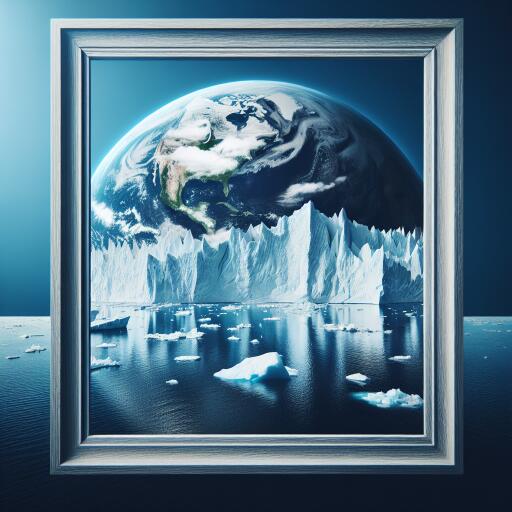
Earth Today | Thawing Threat
As global temperatures rise, the Earth’s frozen regions are experiencing significant thawing, potentially reawakening ancient microorganisms that may pose risks to health and ecosystems. A recent report from the United Nations Environment Programme highlights this growing concern.
Between 1994 and 2017, an estimated 28 trillion tonnes of ice disappeared from the Earth’s cryosphere. During the same period, the rate at which ice is lost increased by 57% compared to the 1990s. Projections for 2100 are even more alarming, indicating that even at a controlled 1.5-degree Celsius rise in temperature, half of the world’s glaciers may vanish. Similarly, experts estimate that 24% to 69% of near-surface permafrost could thaw by century’s end.
The ramifications of these changes are significant. The warming cryosphere might reinvigorate ancient microorganisms and spread them to terrestrial and aquatic environments previously free of such species. Once released, these microorganisms could integrate into current ecosystems, altering their balance and possibly leading to the revival of ancient pathogens capable of causing illness in plants, animals, and humans. Although the likelihood of widespread outbreaks is low, scientists are advancing methods to evaluate potential threats from these ancient life forms.
Historical instances offer insight into the potential outcomes of such thawing processes. For example, coliform bacteria were isolated from Arctic ice samples thousands of years old, and strains of Bacillus anthracis were reanimated from ancient Siberian sediments. A 2016 Anthrax outbreak in Russia, linked to extreme temperatures and permafrost thaw, resulted in considerable reindeer fatalities and human hospitalizations.
The threat is not limited to bacteria alone. Fungi, including pathogenic ones, have been extracted from icy environments. Recently, researchers reactivated viruses from Siberian permafrost, proving that ancient viruses can indeed return to active states and potentially infect hosts.
Another concern linked to the cryosphere’s warming is the potential for gene transfer among microorganisms. The exchange of genetic material through horizontal gene transfer can lead to bacteria acquiring increased pathogenic capacities or antibiotic resistance. Recent studies uncovered numerous virulence factors in microbes from Tibetan glaciers, underscoring this risk.
The melting ice also threatens carbon sinks, essential in regulating atmospheric carbon dioxide levels. Thawed soils release stored organic matter, transitioning from carbon sinks to carbon sources. This release, primarily in the form of carbon dioxide, methane, and nitrous oxide, exacerbates global warming.
Efforts to address climate change must prioritize reducing greenhouse gas emissions and preserving vital carbon sinks such as forests and soil. The Arctic’s permafrost contains vast organic carbon reserves that, once thawed, become susceptible to microbial decomposition, releasing significant greenhouse gases. Meanwhile, some microorganisms consume these gases, highlighting the complexity of permafrost-related carbon dynamics.
In conclusion, as the cryosphere continues to warm, understanding and mitigating the implications of ancient microorganism revival, pathogen risk, and carbon balance disruption becomes increasingly urgent.



Leave a Reply