

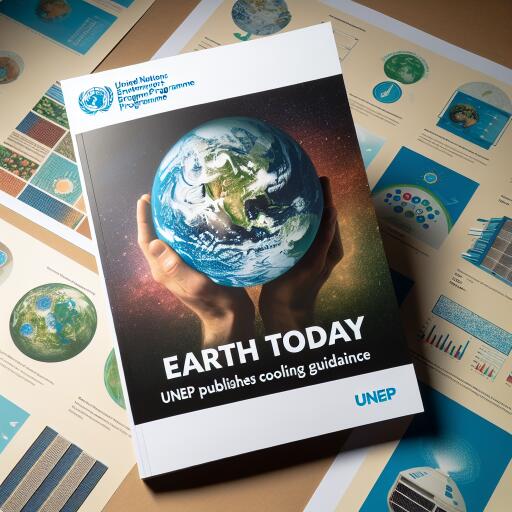
Earth Today | UNEP Publishes Cooling Guidance
A banana field in Maldon, St James, that was damaged during Hurricane Beryl.
The United Nations Environment Programme (UNEP) recently unveiled new guidance focused on the crucial yet often underestimated issue of cooling, which stands as a significant challenge in the global battle against climate change.
The release of this report comes at a critical juncture, with approximately 1.1 billion individuals currently lacking access to adequate cooling. This deficiency increases the risks to public health, food security, and economic stability amidst escalating global temperatures. Additionally, the cooling sector contributes around seven percent of worldwide greenhouse gas emissions, a figure anticipated to double by 2050 if current trends continue.
The report emphasizes that inadequate cooling disproportionately affects women, particularly in low-income and rural communities, who encounter unique challenges and vulnerabilities. Confronting this dual challenge—reducing emissions while broadening access—demands the swift integration of sustainable cooling practices into Nationally Determined Contributions (NDCs) and national climate policies.
Sustainable cooling presents a valuable dual advantage: mitigating climate change while enhancing resilience. Transitioning to energy-efficient technologies, adopting refrigerants with low global warming potential, and employing passive cooling strategies could curtail cooling-related emissions by as much as 60% by 2050.
The guidance underscores that expanding access to sustainable cooling simultaneously safeguards vulnerable communities from extreme heat threats, reduces food waste by up to 30%, and reinforces healthcare systems by maintaining reliable cold chains.
For maximum impact, integrating gender-responsive approaches into cooling strategies is crucial to ensuring equitable access and boosting resilience.
To achieve this, the report advocates for a six-stage methodology to effectively and sustainably incorporate cooling into NDCs. These NDCs represent individual country commitments to lowering greenhouse gas emissions, which drive climate change.
Climate change, induced by the warming of the planet from increased emissions of substances like carbon dioxide from fossil fuel usage, presents a vast array of risks and impacts. These concerns are particularly pressing for small island developing states such as those in the Caribbean.
These nations are already encountering severe droughts, hurricanes, rising sea levels, and coastal erosion, with projections indicating worsened conditions if emissions are not adequately controlled.



Leave a Reply