

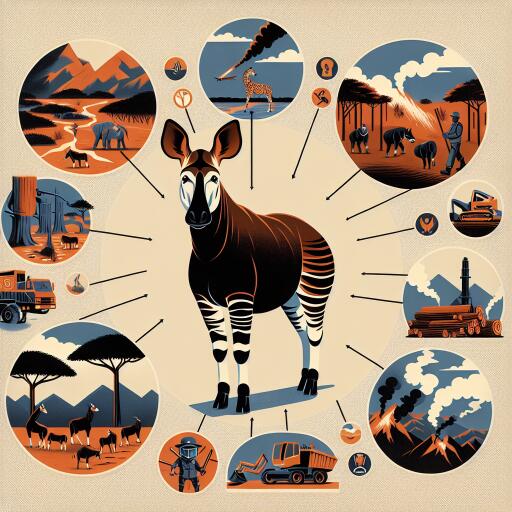
Deep in the Ituri rainforest of the Democratic Republic of Congo, the Okapi Wildlife Reserve safeguards one of Earth’s most singular creatures—the elusive okapi—alongside forest elephants, chimpanzees, leopards, and a kaleidoscope of birds and plants. As a World Heritage–listed sanctuary, it anchors regional climate, water, and carbon cycles. Yet this lifeline is strained by a tangle of human pressures, from insecurity and poaching to illegal mining and accelerating deforestation.
Insecurity that disrupts protection
Persistent instability and the presence of armed groups undercut day-to-day conservation. Rangers face threats that restrict patrols, while communities endure violence and uncertainty. Such conditions create cover for criminal activity—poaching, illegal mining, and illicit timber—to flourish and make long-term planning perilous.
Wildlife targeted by a lucrative trade
Poaching remains relentless. Elephants are killed for ivory; okapi are hunted for meat and skins; great apes can fall victim to the bushmeat trade or trafficking. Wire snares and crude traps indiscriminately injure countless species. The profits attract organized networks that move wildlife and parts far beyond the forest.
Minerals powering modern life, at a cost
The reserve region contains gold and coltan—minerals essential to electronics. Illegal extraction, often unregulated and destructive, strips habitat, pollutes waterways, and displaces wildlife. Mining camps can heighten tension, draw in armed actors, and feed parallel economies that undermine law and order. The global appetite for technology links distant consumers to these local impacts, highlighting the need for responsible supply chains.
Forests thinning under multiple pressures
Deforestation stems from small-scale agriculture, logging, charcoal production, and expansion of illicit mining. As canopy cover disappears, soils erode, streams silt up, and microclimates shift. Forest loss also reduces carbon storage, amplifying climate risks that rebound on wildlife and people alike.
Limited resources in a vast landscape
Conservation teams operate with scarce funding, uneven salaries, and insufficient equipment. Rugged terrain and weak infrastructure—few passable roads, patchy communications—slow response times and leave remote zones vulnerable.
How many okapi remain?
Dense forest makes precise counts difficult, but field reports suggest a population in the low thousands across the wider landscape, with numbers believed to be declining due to habitat loss and hunting. The trend underscores the urgency of scaled, sustained protection.
Climate is an added stress multiplier
Shifts in rainfall, hotter dry seasons, and more extreme storms threaten to intensify existing pressures. Drought can push communities toward forest conversion and wildlife toward human-dominated areas, while severe rains can damage already fragile infrastructure.
Tools and tactics that show promise
A blend of community partnership, smart enforcement, and targeted technology is making inroads:
- Community-led stewardship: Local reporting networks, education, and benefit-sharing build trust and deter illegal activity.
- Livelihood alternatives: Agroforestry, shade-grown crops, beekeeping, sustainable timber and non-timber products, improved cookstoves, and small-scale solar reduce reliance on destructive practices.
- Modern monitoring: Camera traps, drones, and acoustic sensors detect wildlife and intrusions; satellite imagery flags new clearings; SMART patrol software guides ranger deployments; secure communications improve response.
- Targeted enforcement: Professionalized, well-equipped ranger units, backed by judicial follow-through, can dismantle poaching and mining networks when security conditions allow.
Governance and the rule of law
The reserve is protected under national legislation and recognized internationally, but those frameworks only work with transparent enforcement, anti-corruption measures, and consistent funding. In the mining sector, clear regulations, traceability, and independent audits can reduce the footprint of supply chains on critical habitats.
Communities at the center
People living in and around the forest are the reserve’s first line of defense. Inclusive management, revenue-sharing from legal activities, and respect for local rights foster long-term stewardship. When residents see tangible benefits from conservation—jobs, services, safer access to resources—forest protection becomes a shared objective.
What individuals can do
- Support reputable conservation and community-development groups working in the Ituri region through donations or skills-based volunteering.
- Choose products that avoid illegal timber and charcoal; favor goods certified for responsible forest and wildlife practices.
- Back responsible electronics: buy durable devices, repair when possible, and recycle properly; prefer brands committed to conflict-free and traceable minerals.
- Amplify awareness of the reserve’s challenges and the importance of intact tropical forests for climate, water, and biodiversity.
- Advocate for policies that fund ranger training, protect environmental defenders, and require supply-chain due diligence.
- Travel responsibly if and when conditions are safe: seek community-based, conservation-positive experiences that uphold local rights.
The path forward
Saving the Okapi Wildlife Reserve demands coordinated action: restored security, steady investment, skilled rangers, empowered communities, and technology that makes protection faster and fairer. With these elements in place, this living laboratory of Central African biodiversity can endure—safeguarding the okapi’s shadow-striped world and the rainforest systems that sustain far more than the forest itself.



Leave a Reply