

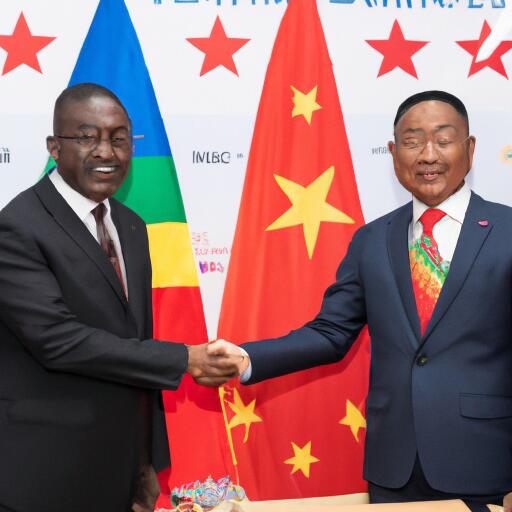
Vice President urges stronger Ghana-China partnership to benefit youth and drive sustainable growth
Ghana has signaled a fresh push to deepen cooperation with China, with an emphasis on job creation for young people and a decisive shift toward a greener, more resilient economy. Speaking at a commemorative event in Accra marking both the 76th anniversary of the founding of the People’s Republic of China and 65 years of Ghana–China diplomatic ties, Vice President Professor Naana Jane Opoku-Agyemang called for a new phase of collaboration anchored in innovation, clean energy and inclusive trade.
She acknowledged that Chinese support has already been visible in hard infrastructure—roads, hospitals and schools—but argued the next chapter should prioritize transformative sectors that can expand opportunity for Ghana’s growing youth population while cutting emissions and strengthening competitiveness.
Jobs at the center: building a 24-hour economy
The Vice President highlighted Ghana’s 24-hour economy initiative as a practical lever to create employment across services, manufacturing, logistics and health. By extending operating hours in critical sectors and supporting businesses to adopt shift systems, the program aims to unlock productivity, reduce downtime and enable more people—especially young Ghanaians—to access stable, dignified work.
Delivering on that vision, she said, will require a coordinated package: reliable and affordable energy, modernized transport and warehousing, digital tools to manage round-the-clock operations, and robust training programs. Partnerships with Chinese institutions and enterprises could accelerate this effort through technology exchange, concessional finance and new market access for Ghanaian firms.
Clean power and resilient grids
With energy demand set to rise alongside industrial growth, the Vice President urged expanded cooperation in renewables and grid modernization. Priority areas include utility-scale and rooftop solar, wind resource mapping, battery storage to firm up intermittent generation, and mini-grids for underserved communities. She also pointed to opportunities in local assembly of components—from panels and inverters to smart meters—paired with skills transfer to build a Ghanaian workforce for the clean energy economy.
Such projects, she noted, must embed rigorous environmental and social safeguards, from responsible sourcing of materials to safe management of electronic waste. Aligning investment with these standards can drive down emissions, improve air quality, and deliver reliable power that supports 24-hour production and services.
Digital trade and AfCFTA as a launchpad
On trade, the Vice President called for a refreshed approach that leverages the African Continental Free Trade Area to turn Ghana into a gateway for value addition and light manufacturing. This includes harnessing digital technology—e-commerce platforms, electronic customs, and cross-border payment systems—to help small and medium-sized enterprises reach new customers and integrate into regional value chains.
She encouraged Ghanaian businesses to explore opportunities in China, while inviting Chinese partners to develop mutually beneficial ventures in Ghana that anchor production locally and export across the continent under AfCFTA preferences.
65 years of ties—and a mandate for responsible partnership
Ghana and China formalized diplomatic relations on July 5, 1960, making Ghana the first Sub-Saharan African nation to do so. The Vice President framed today’s milestones as a chance to refresh that legacy with a focus on transparent practices, fair labor, and community benefits.
China’s Ambassador to Ghana, Tong Defa, reaffirmed his country’s commitment to a stronger partnership that yields concrete gains for people in both nations. He commended the contributions of Chinese enterprises operating in Ghana and urged them to uphold local laws, prioritize safety and environmental standards, and invest in social projects that align with national development goals.
What progress looks like on the ground
- Thousands of new apprenticeships and technical roles for young people across renewable energy, construction, manufacturing and ICT.
- Expanded clean power capacity with stable grids that support shift work, cold-chain logistics and 24/7 essential services.
- Local assembly of solar and storage components and the growth of maintenance and recycling industries to retain more value in-country.
- Digital trade tools that lower costs for SMEs, streamline customs and improve market intelligence across AfCFTA markets.
- Clear procurement and community engagement frameworks to ensure projects are transparent, inclusive and environmentally sound.
As both countries mark a historic relationship, the message from Accra was forward-looking: channel cooperation into sectors that protect the climate, catalyze innovation and expand prospects for the next generation. With careful stewardship—responsible finance, strong standards, and genuine technology transfer—Ghana and China can co-create a pathway that turns anniversaries into measurable outcomes for people, the economy and the environment.



Leave a Reply