

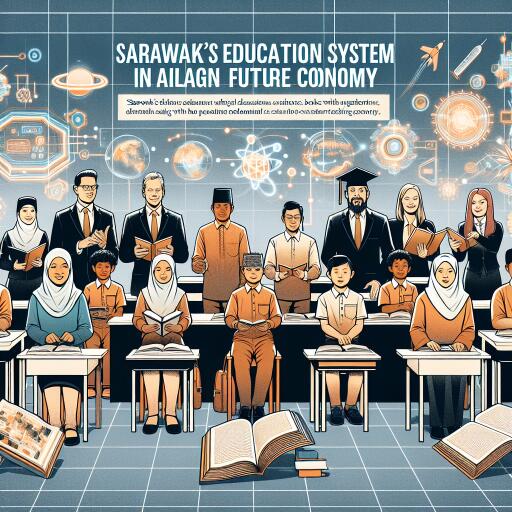
Abang Johari: Sarawak’s education system must align with future economy | Borneo Post Online
Bintulu, Aug 24 — Sarawak’s Premier has called for an education reset to equip the next generation for a rapidly changing economy shaped by artificial intelligence, renewable energy and climate solutions. Speaking at a cultural night marking 25 years since SM Kai Dee’s relocation to Bintulu, he urged schools to cultivate skills for an era defined by data, automation and the clean-energy transition, including hydrogen technologies.
Why it matters for Sarawak’s green economy
The Premier’s message was clear: future-ready talent is the foundation of Sarawak’s development strategy. Preparing students to work with AI, harness renewable power, and engineer low-carbon systems is central to diversifying the state’s economy beyond fossil fuels. By nurturing capabilities in areas like hydrogen production, grid integration, and climate-resilient infrastructure, Sarawak can build a workforce that accelerates decarbonisation while drawing investment into high-value industries.
Community institutions adapting to growth in Bintulu
SM Kai Dee’s move from Sibu to Bintulu a quarter-century ago was lauded as a strategic decision that anticipated the town’s emergence as a powerhouse for business and industry. Bintulu has since been cited among a select group of new industrial clusters globally, a recognition that reflects its rising significance in international supply chains and its potential role in the energy transition.
The school’s contribution to the local education landscape was highlighted as an example of how community institutions can help shape inclusive growth. The call was for schools, families, and industry to continue partnering so students can thrive in a fast-evolving economy—whether in advanced manufacturing, digital services, or clean energy.
Backed by policy: support for Chinese education and multilingualism
The state government’s financial backing for Chinese education was reiterated, with cumulative support reaching RM92 million to date. This includes RM10 million in grants provided last year to 14 Chinese independent schools and RM22 million allocated to aided Chinese primary and secondary schools up to 2024. Such investments aim to strengthen learning environments across urban and rural areas alike.
In a distinctive policy marker, Sarawak continues to recognise the Unified Examination Certificate (UEC), underscoring a commitment to inclusive education pathways. The Premier noted that many rural Chinese schools now serve majority Bumiputera cohorts, and that proficiency in Mandarin among Bumiputera students is expected to grow substantially over the next decade. Multilingual skills—Malay, English, Mandarin—are increasingly seen as an economic advantage for trade, technology exchange, and participation in regional markets.
From classrooms to careers: aligning skills with opportunity
Linking education to jobs was a recurring theme. The Premier urged early exposure to digital literacy, AI fundamentals, engineering, and environmental sciences, paired with practical learning and industry engagement. By matching curriculum design with sectors set to expand—such as hydrogen, solar, and sustainable logistics—Sarawak can create a pipeline of talent ready to fill specialised roles while fostering local entrepreneurship.
Opening doors to higher education
The Premier reaffirmed the state’s intention to provide free tertiary education in universities owned by Sarawak, ensuring that students—including those from Chinese schools—have equitable access to advanced study. He framed education as the most effective tool to reduce poverty: as the state’s revenues grow, expanding access to knowledge is seen as a way to uplift household incomes and create intergenerational benefits.
Also attending the event was the federal Minister of Tourism, Arts and Culture, signaling cross-government interest in education as a driver of economic diversification and cultural vitality.
As Bintulu cements its role in global industry and the clean-energy transition accelerates, Sarawak’s schools are being asked to do more than deliver good grades; they are being positioned as catalysts for a resilient, innovative, and low-carbon economy—one classroom at a time.



Leave a Reply