

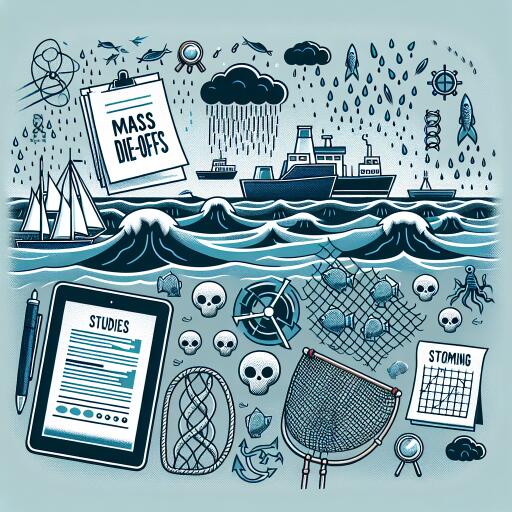
Concerning study uncovers looming threat to seafood industry: ‘Mass die-offs’
A sweeping new analysis warns that South Korea’s aquaculture sector faces an escalating climate risk that could trigger “mass die-offs” of farmed species as ocean temperatures climb. Without rapid adaptation and deep emissions cuts, the study projects damage costs on the order of hundreds of billions of won, with ripple effects across ecosystems, coastal livelihoods, and the national economy.
Rising seas, rising risks
Marine heat is surging in frequency and intensity across the Northwest Pacific. Warmer water holds less oxygen, favors disease outbreaks, and fuels harmful algal blooms—three overlapping stressors that can turn a hot spell into a mass mortality event at farms. Many of Korea’s staple species already operate within narrow thermal comfort zones. When temperatures inch above the upper thresholds for even short periods, mortality spikes; beyond those limits, production can collapse outright.
The toll in numbers—and species on the front line
The study estimates aggregate losses of roughly 689.9 billion won—about 482 million U.S. dollars—under projected warming scenarios. High-value abalone faces the steepest potential damages, reflecting both its sensitivity to heat stress and its economic importance. Other keystone species and crops—including rockfish, sea bass, kelp, and laver—also show significant vulnerability.
Why these species? Abalone, a premium delicacy, has a relatively tight thermal window; as summer peaks intensify, heat stress and disease can surge. Kelp and laver depend on cooler, nutrient-rich waters; prolonged warming and marine heatwaves can stunt growth, reduce yields, and shift optimal growing seasons. Finfish such as rockfish and sea bass can experience reduced feed intake, slower growth, and higher susceptibility to pathogens as waters warm and oxygen levels fall.
Beyond the farm gate
These changes reverberate beyond individual operators. Aquaculture anchors jobs in many coastal communities and helps stabilize seafood supplies amid pressures on wild fisheries. Losses at this scale threaten processors, distributors, and exporters, with higher prices and supply volatility likely to follow. Ecologically, a downturn in seaweed cultivation reduces habitat complexity and carbon uptake, while increased reliance on wild stocks to fill gaps could deepen pressure on already stressed ecosystems.
What others are trying—and what can work here
Globally, aquaculture regions are racing to adapt: investing in smarter farm monitoring, improving fish health management, and testing circular approaches to feed—such as upcycling food-industry byproducts—so production is less exposed to volatile inputs and environmental shocks. Korea has made notable technical strides, including controlled breeding breakthroughs for sensitive species. But the climate signal is strengthening, and incremental improvements will not be enough on their own.
A practical roadmap for resilience
Short-term actions (1–3 years):
- Dynamic farm management: Shift stocking calendars to avoid peak-heat windows; reduce densities during high-risk periods; prioritize heat-tolerant life stages when possible.
- Smarter siting and infrastructure: Move or extend lines and cages to deeper, cooler layers; add shading and aeration; deploy upwelling pumps where feasible to relieve heat and oxygen stress.
- Real-time monitoring: Install temperature, dissolved oxygen, and pH sensors networked to early-warning dashboards. Pair with heatwave and harmful algal bloom forecasts to trigger rapid response plans.
- Health and biosecurity: Enhance vaccination and parasite control, tighten biosecurity protocols, and establish rapid diagnostics to curb outbreaks intensified by warm water.
- Integrated multi-trophic aquaculture (IMTA): Co-culture seaweeds and bivalves with finfish to recycle nutrients, improve water quality, and diversify revenue streams.
- Risk transfer: Expand insurance access and catastrophe funds to buffer farms and coastal SMEs against acute loss events.
Medium-term strategies (3–7 years):
- Selective breeding: Accelerate programs for thermal tolerance and disease resistance in abalone, rockfish, and sea bass; ensure genetic diversity to avoid maladaptation.
- Hybrid systems: Combine nearshore farms with land-based recirculating aquaculture systems (RAS) for vulnerable life stages, reducing exposure to extreme marine conditions.
- Spatial planning: Use fine-scale ocean temperature projections to zone farms away from chronic hot spots and prioritize refugia; coordinate permits and leases accordingly.
- Nutrient management: Cut coastal runoff to curb algal blooms, including upgrades to wastewater treatment and agricultural best practices in adjacent watersheds.
- Habitat restoration: Restore kelp forests and eelgrass meadows to bolster local cooling, habitat quality, and carbon sequestration.
Long-term imperatives (this decade and beyond):
- Deep decarbonization: Electrify farm operations, expand renewable energy use, and reduce upstream emissions in feed supply chains. National climate ambition is directly tied to reducing marine heat risk.
- Offshore and climate-ready design: Develop robust gear and husbandry suited for changing conditions, including offshore zones where stable temperatures may persist longer.
- Data and governance: Build an open, continuous climate-ocean data system for aquaculture, with standardized thresholds that trigger coordinated regional responses during marine heatwaves.
Why urgency matters
The analysis underscores a hard physical limit: so long as future water temperatures remain within the upper edge of species’ optimal ranges, farmers can adapt to maintain stable production. Beyond those limits, mortality accelerates, and production can suddenly become unviable. That cliff edge—where heat turns chronic stress into mass die-offs—defines the risk window for Korean aquaculture in a warming world.
The bottom line
South Korea’s seafood future hinges on a dual track: fast, practical adaptation on the water today, and decisive climate action to limit further ocean warming. With targeted investment, smarter planning, and a push for low-carbon growth, the sector can safeguard iconic species like abalone, protect coastal jobs, and keep nutritious, home-grown seafood on the table—even as the seas change around us.



Leave a Reply