

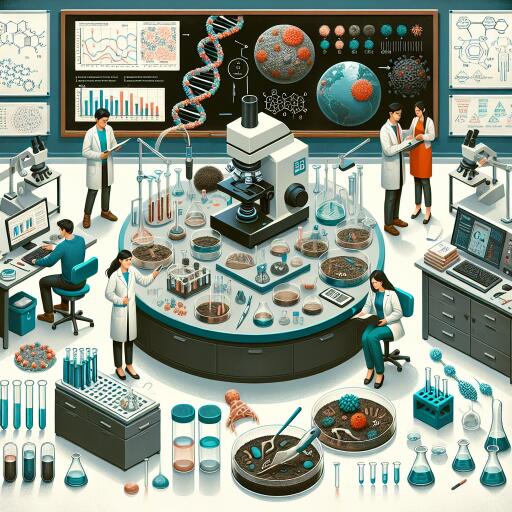
Microbial DNA Sequencing in Environmental Studies
Environmental microbiology is in the midst of a data revolution. High-throughput DNA sequencing now allows scientists to profile countless organisms at once, revealing who is present and what they can do—without the need to culture them in a lab. This shift makes it possible to uncover hidden species, track ecosystem change, and connect microbial activity to environmental challenges, from nutrient pollution to urban water quality. Yet, to fully harness this potential, methods must be continually refined for accuracy, breadth, and real-world usability.
Why sequencing is transforming ecology
Traditional techniques often missed the vast majority of microbes that resist cultivation. Modern sequencing closes that gap by reading genetic markers and entire genomes directly from environmental samples—soils, sediments, oceans, lakes, and stormwater systems. The result is a living census of diversity and function. With careful experimental design, researchers can move beyond simple inventories to understand how microbial communities shift with temperature, salinity, oxygen, and pollutants, and which genes drive key ecosystem processes.
Sharper tools for eukaryotic microbe surveys
One critical advance has been the design of broad-coverage primers for the 18S rRNA gene, a key marker used to detect eukaryotic microbes like protists and microalgae. New primer sets are engineered to minimize taxonomic bias, align with today’s popular short-read platforms, and capitalize on the rapidly expanding reference databases. The payoff is higher-resolution, more representative snapshots of community composition across diverse habitats—an essential foundation for tracking harmful algal blooms, food web dynamics, and climate-sensitive plankton shifts.
Plankton across gradients: a brackish sea case
Sequencing surveys that jointly profile bacteria (via 16S rRNA) and eukaryotic plankton (via 18S rRNA) have mapped community patterns across environmental gradients in a large northern brackish sea. By sampling multiple locations and depths, researchers linked microbial diversity to conditions such as salinity, nutrients, and oxygen. The dual-marker strategy revealed how bacterial and protistan communities co-vary—sometimes in lockstep, sometimes independently—offering clues to how bottom-up forces and seasonal cycles shape aquatic food webs and biogeochemical fluxes. These spatial baselines are invaluable for detecting early signals of ecosystem change in sensitive coastal waters.
Life in the dark: decoding deep sediment activity
Beneath the waves, deep, low-oxygen sediments harbor microbial communities that quietly drive carbon and nutrient cycling. To untangle not just who is present but who is active, researchers are blending multiple -omics layers: metagenomics (what genes exist), metabarcoding (who’s there), and metatranscriptomics (what genes are being expressed). At depths approaching half a kilometer, this integrated view has exposed the protein-synthesis potential of microbes eking out a living in energy-limited conditions. The findings illuminate pathways for methane generation and consumption, nitrogen transformations, and sulfur cycling—processes that influence greenhouse gas fluxes and water quality from the seabed upward.
From plates to pocket sequencers: tracking urban wastewater
In cities, detecting fecal contamination quickly can prevent health risks and protect waterways. Comparative trials have evaluated three approaches: conventional culture-based E. coli testing, benchtop high-throughput sequencing, and portable, real-time sequencing devices. Each method offers distinct strengths:
- Culture assays: low cost and standardized, but limited in scope and slower for source attribution.
- High-throughput sequencing: comprehensive community profiles and precise source tracking, with higher lab demands.
- Portable real-time sequencers: unprecedented mobility and rapid turnaround, enabling near-real-time decision-making in the field.
When benchmarked for accuracy, mobility, and cost, sequencing approaches complemented conventional monitoring by resolving contamination sources and identifying co-occurring pathogens and resistance genes. Validating handheld sequencers for water-quality applications opens the door to rapid diagnostics during storm events and infrastructure failures.
Best practices and pitfalls
As sequencing becomes central to environmental monitoring, rigor matters. Key considerations include:
- Primer selection and benchmarking to reduce taxonomic bias, especially for underrepresented eukaryotes.
- Robust contamination controls and negative/positive standards throughout sampling and library prep.
- Metadata discipline—recording temperature, chemistry, hydrodynamics, and method details to enable reproducibility and modeling.
- Cross-validation across -omics layers to connect community structure with function and activity.
- Transparent pipelines and reference databases that are versioned and well-annotated.
What it means for science, engineering, and policy
Sequencing is redefining how we detect change, diagnose problems, and guide interventions. For coastal managers, improved markers and dual 16S/18S surveys refine harmful algal bloom risk assessments. For climate modelers, deep-sediment -omics constrains microbial controls on greenhouse gas dynamics. For civil engineers and public health officials, portable sequencing augments traditional monitoring with rapid source tracking during critical windows. Collectively, these advances point toward tiered surveillance systems: fast field screening, targeted lab confirmation, and integrative -omics when mechanistic insight is needed.
The road ahead
Microbial DNA sequencing has moved from proof-of-concept to practical toolkit. Continued gains will come from better coverage of eukaryotic diversity, standardized field-to-insight workflows, and democratized instrumentation that brings genomics to the shoreline, the storm drain, and the sediment core. With careful method optimization and data stewardship, the invisible majority of life can become a visible ally in protecting ecosystems and public health.



Leave a Reply