

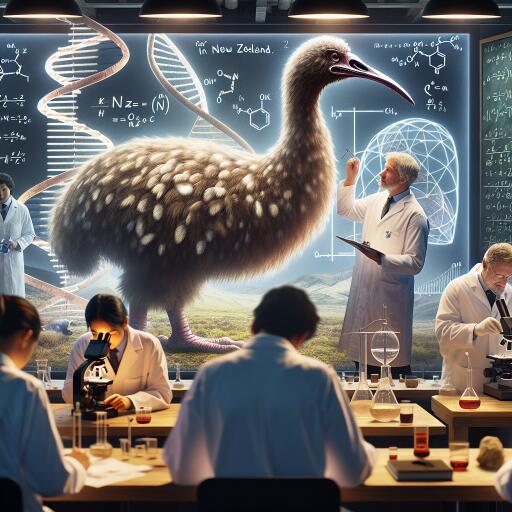
Giant Moa De-Extinction Project Begins in New Zealand
In an exciting new venture, a collaboration between Colossal Biosciences, New Zealand’s Ngāi Tahu, and acclaimed director Peter Jackson is underway to bring back the majestic South Island giant moa within the next decade. This project leverages past efforts on species like the woolly mouse and dire wolf but brings new dimensions to the concept of de-extinction by emphasizing indigenous leadership and cutting-edge genetic science.
Known scientifically as Dinornis robustus, the South Island giant moa was a magnificent creature that stood up to 3.6 meters (12 feet) tall, with a weight of approximately 240 kilograms (530 lbs). For millions of years, these gigantic, flightless herbivores were a dominant presence in New Zealand’s forests. Sadly, about 600 years ago, moa species were driven to extinction due in large part to overhunting and environmental changes initiated by the first Polynesian settlers. The void left by their disappearance has had lasting ecological impacts, and their cultural significance remains deeply intertwined with Māori traditions.
This innovative project aims to bridge the gap left by the moa’s extinction, using advanced technological tools that were unavailable as recently as a decade ago. The Ngāi Tahu Research Centre, based at the University of Canterbury, is at the helm of the initiative, placing indigenous knowledge, or mātauranga Māori, at the forefront of its strategic vision. Rather than leading as the primary scientists, Colossal will contribute its expertise in genetic engineering to support the goals of the Centre. This venture is not solely about bringing an extinct species back to life; it also seeks to enhance biodiversity, advance conservation science, and open new ecological and economic opportunities for Māori communities.
Director Sir Peter Jackson, renowned for his passion for New Zealand’s natural legacy, is backing the project financially and intellectually. Having already contributed $10 million to previous endeavors, Jackson is now providing critical support to the moa project with a significant personal collection of over 400 bone specimens to aid in genome sequencing and analysis. Jackson sees this as a way to protect what Māori call “taonga,” or cultural treasures.
Colossal Biosciences has made headlines with its work on lab-created woolly mice and dire wolf proxies, illustrating that complex genetic editing using technologies like CRISPR is increasingly feasible. The challenge of resurrecting a giant bird introduces a new set of hurdles, primarily due to birds developing inside eggs as opposed to mammals in wombs. This necessitates the creation of novel reproductive technologies, including artificial egg membranes, alongside comprehensive comparative genomics. The strategy entails sequencing the moa’s ancient genome and comparing it with that of living relatives like the emu, thereby identifying critical genetic differences. These insights will guide the gradual editing of a living bird’s genome until it approaches the moa’s genetic blueprint. While this will not produce a perfect clone, it could yield a functional analog to fulfill the ecological role the moa once held.
The complex nature of the moa’s genome means it will need thousands of precise genetic interventions, far surpassing previous projects like the woolly mouse. Nonetheless, Colossal’s commitment to overcome these barriers is a testament to the project’s ambition and the cutting-edge nature of current genetic tools. A full realization of this project may involve up to eight years of intensive research.
If the reintroduction succeeds, the moa’s return could boost biodiversity, education, and ecotourism efforts. The accompanying findings and technologies will be made open-access under Ngāi Tahu’s direction, providing global conservationists with valuable resources.
Skeptics question the allocation of resources toward resurrecting extinct species, citing the urgency of protecting contemporary wildlife battling existential threats. Others wonder whether revived species could thrive in modern environments distinct from the ones they originally inhabited. Nonetheless, proponents insist that such projects stimulate innovation, increase public engagement, and offer profound insights into ecosystems and evolutionary history.
The collaboration represents a rare melding of indigenous ecological wisdom with advanced genomic science, offering crucial insights into extinct ecosystems and informing modern conservation strategies as climate change and habitat loss accelerate. As the collective efforts continue, this bold journey through science and heritage promises to reveal incredible new understandings of New Zealand’s past and future.



Leave a Reply