

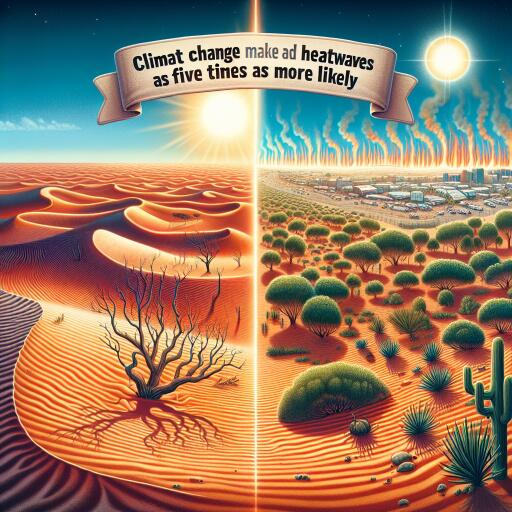
“Total transformation of the Australian summer:” Climate change made January heatwaves five times more likely
Australia has just endured its most punishing hot spell in six years — and scientists warn this is a preview of summers to come under current emissions trajectories. The pattern is unmistakable: summers are being remade by a warming climate, with extreme heat shifting from rare shock to routine feature.
A summer rewritten by heat
In early January, southern states were blasted by scorching conditions, with temperatures soaring well into the 40s across large areas of southeast Australia. The searing run of days was the most intense since the 2019–2020 summer, a season etched in memory for catastrophic bushfires and hazardous smoke. The latest heatwave underscores how deeply warming has altered Australia’s baseline climate and the seasonal extremes layered on top of it.
From rare event to frequent visitor
Attribution scientists who analyze the fingerprint of climate change on extreme weather conclude the recent heatwave was made about five times more likely by human-caused warming. Before industrial-era greenhouse pollution, a spell of this severity — measured over three-day periods — would be expected roughly four times per century. Today, events of similar intensity are projected to occur about once every five years.
That shift is not simply a statistical curiosity; it’s a societal stress test. When heatwaves return more often, recovery windows shrink. Health services, power systems, and emergency responders face higher cumulative strain. Communities have less time to cool down, restock, and prepare for the next blast of heat and fire weather.
Under current policies, the odds worsen
If global temperatures rise around 2.6°C above pre-industrial levels — a plausible outcome under present policy settings — the cadence of extreme heat accelerates again. By late century, heatwaves on par with January’s could strike every other year. That frequency implies a world where heat is the defining feature of the Australian summer, not the exception.
Why it matters
- Health: Heatwaves are Australia’s deadliest weather hazard, compounding risks for older people, children, outdoor workers, and those without reliable cooling. Consecutive hot nights leave little chance for bodies to recover.
- Fire danger: Prolonged heat dries fuels and elevates fire weather indices, heightening the potential for fast-moving, hard-to-control bushfires.
- Energy systems: Demand for cooling spikes just as extreme temperatures stress grid infrastructure. Without planning and efficiency, outages become more likely.
- Water and agriculture: Heat accelerates evaporation, stresses livestock, reduces crop yields, and intensifies competition for scarce water.
- Ecosystems: Native species, already adapted to heat, face thresholds beyond which recovery is difficult, with cascading effects on biodiversity.
Science signals urgency
Climate scientists emphasize that the dramatic jump in heatwave likelihood reflects a broader warming trend that will continue unless emissions fall rapidly. Reducing greenhouse gases curbs the long-term risk, while adaptation is essential to protect communities from the heat already locked in.
What Australia can do now
- Cut emissions quickly: Accelerate clean power, electrify homes and transport, and phase down fossil fuels to limit further warming and extreme heat escalation.
- Design for heat: Expand urban greening, cool roofs and pavements, shaded streets, and building standards that make homes safe during heatwaves without excessive energy use.
- Protect people: Establish heat action plans, targeted support for vulnerable residents, workplace heat safety rules, and accessible cooling centers.
- Strengthen the grid: Improve efficiency, demand response, storage, and transmission to keep electricity reliable during peak heat.
- Prepare for fire: Invest in fuel management, early warning systems, and community readiness tailored to hotter, drier summers.
A new baseline for summer
Australia’s heat is no longer an occasional ordeal; it is becoming a defining feature of the season. The January heatwave shows how quickly the odds have shifted, and how much more disruptive summers could become if warming continues on its current course. The choices made now — to slash emissions and build heat-smart communities — will determine whether future summers are merely uncomfortable or unlivable.



Leave a Reply