

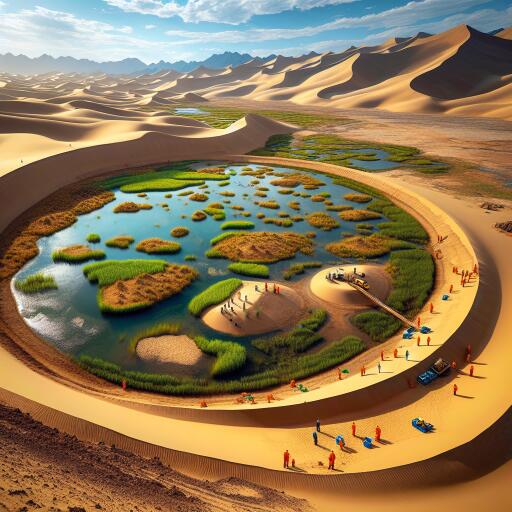
Restoration Boosts Water Storage in China’s Mu Us Sandyland
New evidence from north-central China points to a rare good-news story from the world’s drylands: targeted ecological restoration in the Mu Us Sandyland is turning around losses in terrestrial water storage. In a landscape long defined by dune fields, wind erosion, and creeping desertification, carefully designed interventions are helping the ground act more like a sponge than a sieve—restoring moisture, stabilizing soils, and reinvigorating local livelihoods.
From drifting sand to living soil
The Mu Us Sandyland sits at the intersection of arid and semi-arid climate zones, where decades of overgrazing, deforestation, and land conversion stripped away vegetation and organic matter. With roots gone and soils loosened, rainwater tended to flash across the surface, driving erosion and leaving little behind to recharge groundwater. The ecological and economic consequences were stark: dwindling biodiversity, dust storms, and unreliable water for communities and farms.
In recent years, large-scale restoration programs have sought to reverse that trajectory. The approach blends traditional land stewardship with modern ecological science: re-establishing native grass and shrub communities, strategically expanding tree cover in suitable microsites, stabilizing dunes, and rotating or limiting grazing pressure to allow vegetation recovery. These actions change the physics and biology of the soil—adding structure, shade, and organic inputs that help retain moisture and slow runoff.
What restoration looks like on the ground
- Native vegetation comeback: Drought-adapted grasses and shrubs knit soil together, reduce wind erosion, and trap rainfall where it falls.
- Smarter grazing: Seasonal closures and controlled stocking rates let plants regrow, rebuild root systems, and restore litter layers crucial for water retention.
- Targeted tree planting: Afforestation is focused on sites with sufficient moisture, using species suited to local conditions to avoid overtaxing limited water.
- Surface stabilization: Sand-binding plants and surface roughness elements break wind fetch and slow water flow, reducing erosion and boosting infiltration.
Measuring a hydrological turnaround
To track change across such a large landscape, researchers combined satellite observations with field measurements. Remote-sensing imagery and geographic information systems mapped vegetation recovery, soil exposure, and surface moisture patterns over time. On the ground, soil moisture probes, infiltration tests, and monitoring wells captured how water moved into and through the soil profile. The result: a consistent signal of improved terrestrial water storage coinciding with restoration efforts.
Importantly, the gains arrived on practical time scales. Rather than waiting decades, land managers observed measurable improvements within years of intervention—an encouraging sign for regions seeking fast but durable relief from water stress.
Why more water stays in the system
Vegetation changes the fate of rainfall. Root networks create pathways that let water percolate deeper, while litter and organic matter act like a sponge at the surface. Increased canopy and ground cover reduce the energy of raindrops and slow overland flow, cutting erosion and giving water time to soak in. At the landscape scale, these effects add up: less runoff, lower sediment loads, and steadier recharge of shallow groundwater. As soils regain structure and carbon, they hold more water between rain events—supporting plants, dampening extremes, and buffering against drought.
Co-benefits beyond hydrology
Water storage is only part of the story. Healthier vegetation supports pollinators and wildlife, diversifies forage for pastoralists, and reduces dust emissions that harm human health. For farmers, more reliable soil moisture can improve crop performance and reduce irrigation needs. And as plants rebuild biomass and soils accumulate carbon, restoration contributes to climate mitigation targets.
Technology is a quiet hero here. Satellite data and machine learning help target interventions to the most responsive areas, while field sensors track whether measures are working—and where to adjust. The blend of ecological insight and digital monitoring turns restoration into an adaptive, data-driven practice rather than a one-off project.
Scaling with care
The Mu Us experience offers a playbook for other drylands, but replication demands nuance. Climate, geology, and water budgets differ from region to region, and restoration must fit local constraints. Key principles emerge:
- Use native, drought-adapted species that build soil health without excessive water demand.
- Pair vegetation recovery with grazing management, so gains aren’t undone by pressure on young plants.
- Start with pilots, monitor closely, and scale what works—adjusting species mixes, planting densities, and timing.
- Engage communities; restoration sticks when it supports livelihoods and reflects local knowledge.
What it means for water policy
For decision-makers in arid and semi-arid regions, the signal is clear: restoring ecosystems can strengthen water security. Rather than competing with water management, ecological restoration is water management—using biology and soil processes to store, slow, and share scarce moisture. Investments in restoration can complement engineered solutions such as reservoirs and canals, often at lower cost and with wider benefits.
A blueprint for resilience
As climate change intensifies rainfall variability, landscapes that capture and hold water will outperform those that shed it. The Mu Us Sandyland shows that even heavily degraded systems can pivot toward resilience when interventions are strategic and sustained. Rebuilding living soils and native plant communities is not a luxury—it’s an essential infrastructure upgrade for drylands.
The take-home: if restoration is planned with local ecology in mind, guided by data, and supported over the long term, drylands can convert episodic rains into lasting natural capital. That shift underpins healthier ecosystems, steadier harvests, and communities better equipped for a hotter, drier future.



Leave a Reply