

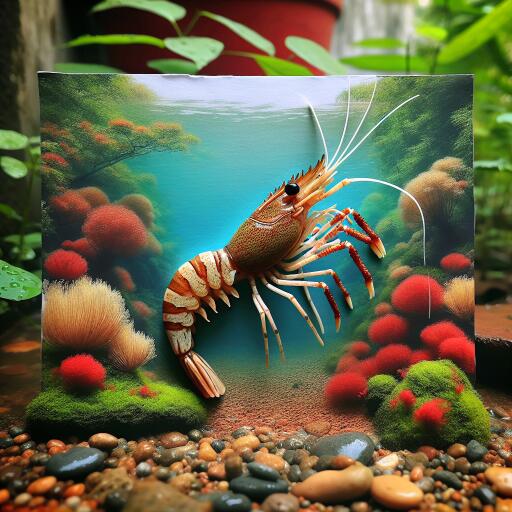
Elusive bamboo shrimp resurfaces in Mangaluru estuary after 70 years
A freshwater oddity with fan-like feeding appendages has quietly returned to the scientific radar. After more than seven decades without a verified record on mainland India, the bamboo shrimp Atyopsis spinipes has been confirmed in the Mulki–Pavanje estuary near Mangaluru and the Kuakhai River in Bhubaneswar, reshaping what we know about the species’ range and the health of India’s estuarine ecosystems.
The find emerged from a blend of classic fieldwork and modern genetics. Researchers surveying rivers and estuaries along the Karnataka and Odisha coasts combined habitat assessments with DNA barcoding to distinguish A. spinipes from lookalike relatives. That genetic signal, replicated across multiple specimens, cuts through a long-standing taxonomic tangle that began with a 1950s-era misidentification. Historical museum material from the Andaman Islands, once attributed to a different species, was reevaluated and reassigned to A. spinipes, further strengthening the case.
What brought this shy crustacean back into focus was a sharp-eyed sighting by an aquarium enthusiast in Odisha in 2022. That tip sparked targeted surveys in Udupi, Karwar, and Mangaluru, where researchers eventually collected four adult females from the Mulki–Pavanje system and one specimen from the Kuakhai. Genetic analyses showed the individuals matched each other and global references for A. spinipes.
Bamboo shrimp are filter feeders, fanning fine particles from flowing water with delicate, comb-like appendages. That lifestyle makes them exquisitely sensitive to water quality, sediment load, and flow patterns—precisely the conditions that are being altered by rapid coastal development. The new records are exciting, but they’re also a warning: the species appears to persist in sparse pockets where suitable microhabitats survive amid expanding human pressure.
Clearing up decades of confusion
For years, Indian records of bamboo shrimp were muddled by misapplied names. The new study reconciles those errors by pairing field identification with DNA evidence, showing that the mainland taxon is indeed Atyopsis spinipes. This matters beyond semantics: accurate names anchor conservation, trade oversight, and ecological baselines. In the age of global aquaculture and aquarium commerce, genetic confirmation helps prevent further mix-ups and enables reliable biodiversity monitoring.
Where it was found—and why it matters
- Mulki–Pavanje estuary, near Mangaluru: four confirmed females from tidally influenced, low-salinity reaches with structured banks and steady current.
- Kuakhai River, Bhubaneswar: one confirmed specimen from a freshwater stretch with similar flow and substrate conditions.
Both sites hint at narrow habitat requirements: clean, well-oxygenated, moderately energetic water with suspended organic matter for filter feeding, and safe refuges from predation and dredging. Such conditions are increasingly rare as rivers are constrained, deepened, or clouded by sand mining, effluent, and infrastructure build-outs.
Technology meets fieldcraft
This rediscovery showcases a toolkit that is transforming biodiversity work. Standard surveys located candidate shrimp; morphological characters narrowed identifications; and DNA barcoding delivered certainty. The same genetic approach could be scaled into eDNA monitoring—screening water samples for species traces—to track bamboo shrimp with minimal disturbance and to map new populations before they vanish.
Fragile foothold, urgent choices
Given the tiny number of confirmed individuals and the patchy distribution, the mainland Indian populations of A. spinipes may be precarious. Key risks include:
- Degraded water quality from sewage, industrial discharge, and agricultural runoff.
- Sand mining that reshapes channels, strips microhabitats, and increases turbidity.
- Hard engineering along riverbanks that eliminates shelter and alters flow.
- Flow disruption from upstream dams and abstractions that change sediment and nutrient dynamics.
Protecting this rediscovered species aligns with broader river-health goals. Measures that would help immediately include enforcing sand-mining limits, improving wastewater treatment, restoring riparian buffers, and maintaining environmental flows during dry months. Simple on-the-ground steps—like leaving coarse woody debris and natural substrates in place—can also enhance feeding and shelter opportunities for filter feeders.
Specimens secured, a baseline set
Verified specimens have been deposited with the Zoological Survey of India, creating a physical and genetic reference for future work. That baseline enables consistent identification in trade and research, and it opens the door to population genetics studies that can reveal connectivity between sites and guide protection priorities.
Citizen science and the next discovery
The chain of events began with a hobbyist’s alert—proof that careful observation outside formal programs can still reshape the scientific map. With streamlined reporting channels and rapid genetic confirmation, future sightings could fill data gaps along India’s coasts and islands, revealing whether the species is quietly holding on in other estuaries or recolonizing improved habitats.
For now, the return of the bamboo shrimp to mainland records is both a rare ecological bright spot and a reminder that our rivers are archives of biodiversity we barely know. Safeguarding the flows, substrates, and water clarity these animals need will determine whether this rediscovery becomes a footnote—or the start of a sustained recovery.



Leave a Reply