

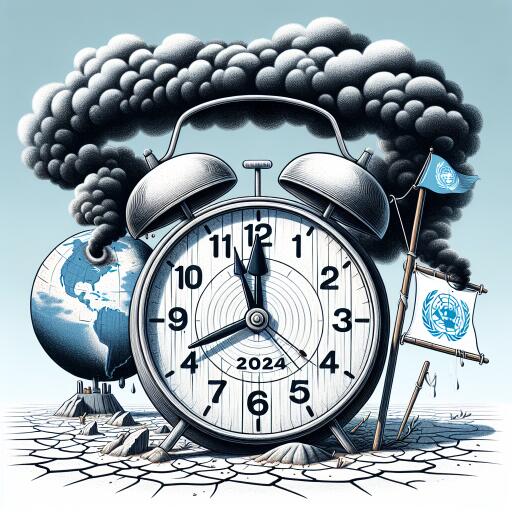
CO₂ Levels Hit Record High in 2024: UN Warns of Climate Tipping Point
Earth’s atmosphere just crossed another unsettling threshold. Global measurements show carbon dioxide climbed to a new peak in 2024, with the steepest annual jump seen in the modern monitoring era. The UN’s weather and climate agency warns that the combined surge of CO₂, methane, and nitrous oxide is accelerating warming and nudging the planet closer to critical tipping points.
Heat-Trapping Gases on the Rise—Together
Three major greenhouse gases—CO₂, methane, and nitrous oxide—each rose to record levels in 2024. Their collective effect is to trap more of the Sun’s heat, intensifying extreme weather, ocean warming, and ice loss. CO₂ remains the dominant driver of climate change, responsible for roughly two-thirds of the warming effect. Methane, although shorter-lived in the atmosphere, packs far greater heat-trapping power molecule for molecule. Nitrous oxide, largely linked to fertilizer use, adds to the warming and also affects the ozone layer.
What’s Driving the Spike?
- Fossil fuels: Burning coal, oil, and gas for energy and transport remains the primary source of CO₂.
- Wildfires: Hotter, drier conditions are feeding larger and more frequent blazes, releasing carbon stored in vegetation.
- Weakened natural sinks: Forests and oceans—historically powerful absorbers of CO₂—are showing signs of strain, taking up a smaller fraction of emissions as they warm and face degradation.
When the planet’s built‑in buffers falter, more pollution remains aloft, ratcheting up temperatures and intensifying climate impacts.
A Feedback Spiral
Scientists are increasingly concerned about a self-reinforcing cycle. Rising temperatures help trigger events—such as wildfires and thawing permafrost—that unleash additional greenhouse gases. At the same time, warmer oceans absorb less CO₂, leaving more in the air. The fear is that crossing certain thresholds could flip parts of the Earth system from moderating climate change to amplifying it.
By the Numbers
- CO₂ reached about 424 parts per million (ppm) in 2024, up from roughly 377 ppm in 2004 and vastly higher than pre-industrial levels.
- Methane rose to around 1,942 parts per billion (ppb) and nitrous oxide to about 338 ppb—reflecting increases since 1750 of roughly 266% and 125%, respectively.
While methane typically remains in the atmosphere for about a decade, its potent warming impact makes rapid cuts especially effective in slowing near-term heating. Roughly 60% of methane emissions stem from human activities, notably agriculture and waste. Nitrous oxide, primarily from fertilizer use, contributes around 6% of the warming effect.
Goals vs. Reality
The Paris Agreement set the target of holding global warming well below 2°C—and ideally to 1.5°C—above pre-industrial levels. Yet the world’s trajectory is off course. 2024 ranked as the hottest year on record, a stark sign that the current pace of emissions cuts is not enough to stabilize the climate.
What Must Change Now
The UN’s climate and weather experts stress that the top priority is driving human-caused CO₂ emissions to net zero—balancing what we emit with what we remove. That means:
- Rapidly replacing fossil fuels with clean energy and electrifying transport and industry.
- Protecting and restoring forests, wetlands, and other ecosystems that store carbon.
- Cutting methane quickly through better management of livestock, rice cultivation, landfills, and oil and gas infrastructure.
- Improving fertilizer use efficiency to curb nitrous oxide emissions in agriculture.
Every fraction of a degree matters. Rapid reductions this decade can slow warming, reduce extremes, and buy time to scale up carbon removal technologies and nature-based solutions.
Momentum and the Road Ahead
This latest assessment lands ahead of the next major climate summit in Brazil, where governments are expected to revisit and strengthen their national plans. A detailed accounting of 2024’s greenhouse gas emissions is also forthcoming, with early indicators pointing to another increase. The message from the scientific community is unambiguous: climate action must accelerate, not someday, but immediately.
Climate change is not a matter of belief but of measurement. Instruments around the world are tracking the build-up of heat-trapping gases with relentless clarity. The longer emissions rise, the higher the risk of crossing thresholds that reshape the planet’s systems for generations. The tools to act exist; the question is whether they will be deployed at the speed and scale the science demands.



Leave a Reply