

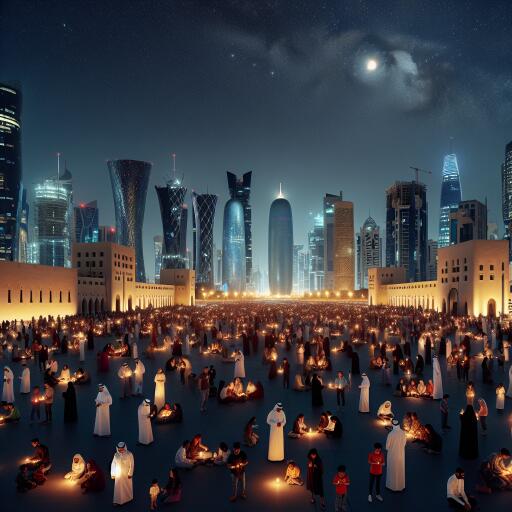
Earth Hour observed in Qatar
For one symbolic hour, the glow of Doha’s skyline softened as Qatar joined the global Earth Hour movement, inviting residents, businesses, and public institutions to switch off non‑essential lights and reflect on how everyday choices can safeguard the planet’s resources.
From cultural icons to hospitality venues and major office towers, many landmarks dimmed their façades in a coordinated gesture that underscored the power of collective action. Along the waterfront and across key districts, hotels, commercial buildings, and the Museum of Islamic Art participated, signaling a shared commitment to energy efficiency and environmental stewardship.
A nationwide show of solidarity
Public agencies played a visible role. The Ministry of Municipality and the Qatar General Electricity and Water Corporation (Kahramaa) took part, aligning with private-sector partners to highlight practical conservation steps. The Ministry of Environment and Climate Change switched off lights at its headquarters in Al‑Adeed Tower and across affiliated facilities, reinforcing the message that meaningful progress begins with consistent, small actions.
In the lead-up to the event, authorities encouraged households, offices, and community spaces to switch off lights and non‑essential devices from 8:30 pm to 9:30 pm. The call emphasized that individuals and organizations are both central to reducing energy demand and curbing emissions—key ingredients in limiting the worst impacts of climate change. Responsible consumption, they noted, can ripple outward, inspiring broader change throughout society.
More than a symbolic hour
While the switch-off is brief, Earth Hour functions as an annual checkpoint: a moment to reassess habits, identify energy savings, and commit to long‑term improvements. In hot climates where cooling and lighting can dominate electricity use, simple measures—like upgrading to efficient bulbs, tuning thermostat settings, sealing air leaks, or minimizing unnecessary outdoor lighting—can cut consumption and reduce both costs and pollution.
Qatar’s visible participation highlights a growing awareness of the connection between energy choices and environmental health. Beyond the hour itself, the message is clear: sustained, incremental changes across homes, workplaces, and public infrastructure can substantially shrink a community’s environmental footprint.
A global movement with local meaning
Earth Hour began as a worldwide call by conservation advocates to turn off non‑essential lights for 60 minutes, focusing attention on climate change and the loss of biodiversity. It has since evolved into a broad civic ritual observed in cities around the world, reminding participants that action on sustainability is both urgent and achievable.
For Qatar, the event offers a platform to amplify ongoing conversations about responsible resource use and to encourage practical steps that resonate with daily life. Whether through energy audits in offices, retrofits in residential buildings, or behavior shifts that prioritize efficiency, each decision contributes to a larger goal: lowering emissions and protecting ecosystems for future generations.
As the lights returned across Doha, the broader challenge remained: to carry the spirit of Earth Hour into the other 8,759 hours of the year. Every kilowatt-hour saved, every unnecessary light left off, and every thoughtful choice about energy use adds up—illuminating a path toward cleaner air, a safer climate, and a more resilient future.



Leave a Reply