

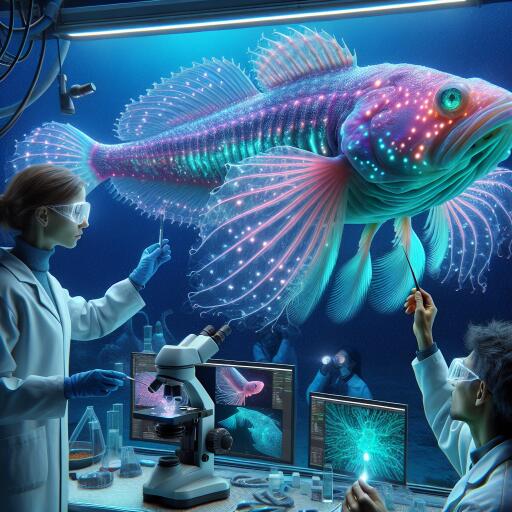
Scientists Discover Strange New Deep-Sea Fish Species
Far below the sunlit surface, where pressure crushes and temperatures hover near freezing, a camera glimpsed something that didn’t fit any field guide: a pink, bumpy snailfish skimming just above the abyssal plain. Years of detective work have now confirmed not one but three new species of deep-sea snailfish from the eastern Pacific, expanding our picture of life in Earth’s largest habitat.
A chance encounter at 3,268 meters
The story begins in 2019, when a remotely operated vehicle (ROV) exploring a major submarine canyon off Central California, roughly 100 kilometers from shore, recorded a small pink fish at a depth of 3,268 meters. The animal’s rounded head, large eyes, and textured skin stood out immediately. A carefully collected specimen—an adult female measuring just 9.2 centimeters—later revealed a suite of traits that did not match any cataloged species. The newcomer has now been described as the bumpy snailfish (Careproctus colliculi).
Meet the trio
Two additional species were described alongside the bumpy snailfish, each adapted to life where the sun never shines:
- Bumpy snailfish (Careproctus colliculi): A distinctive pink hue, a rounded head with large eyes, broad pectoral fins with elongated upper rays, and a subtly knobby, “bumpy” texture set it apart.
- Dark snailfish (Careproctus yanceyi): Jet-black from snout to tail, with a rounded head and a horizontal mouth, this fish blends seamlessly into the abyssal backdrop.
- Sleek snailfish (Paraliparis em): Long, laterally compressed, and noticeably streamlined, it lacks the suction disk common in many relatives and sports a sharply angled jaw.
While the pink bumpy snailfish was observed by ROV above the seafloor, the dark and sleek species were collected during dives with a crewed submersible at around 4,000 meters depth, near a long-running abyssal research station off Central California. The sleek species’ scientific name nods to this unique time-series site and the teams that have maintained it over decades.
How scientists confirmed the newcomers
Snailfishes (family Liparidae) are a remarkably adaptable group, found everywhere from tide pools to the deepest trenches. Many have soft, gelatinous bodies, outsized heads, and slender tails. A specialized adhesive disk on the belly, present in many species, helps them cling to rocks, sediment, or even hitch rides on larger animals like deep-sea crabs. In the deep, these fishes must contend with crushing pressure, scarce food, and perpetual darkness—pressures that sculpt unusual bodies and behaviors.
To determine whether the three Californian specimens represented species new to science, researchers combined multiple lines of evidence. Microscopy and micro-computed tomography (micro-CT) revealed skeletal architecture; careful measurements captured subtle differences in fin rays, vertebrae, and body proportions; and DNA sequencing placed each fish on the liparid family tree. Together, these data confirmed they were distinct from all known species.
Where do they live?
So far, only one confirmed observation exists for the bumpy snailfish, so its full range remains uncertain. However, archival footage hints that a similar fish filmed off Oregon in 2009 may have been the same species, then mistaken for the closely related bigtail snailfish (Osteodiscus cascadiae). As deep-sea image libraries grow and more expeditions revisit abyssal plains, researchers will likely uncover additional sightings—and perhaps entirely new species hiding in the footage.
Why this discovery matters
The deep sea is Earth’s largest living space, and yet it remains one of the least explored. Every new species is a datapoint in a vast, under-sampled ecosystem. Baseline information on who lives where—and how they are built to survive—helps scientists detect change in a time of accelerating stressors, from climate-driven shifts in food supply to the looming prospect of industrial activity on the seafloor.
These three snailfishes underscore how much biodiversity lies hidden in abyssal habitats, and how advanced tools like ROVs, submersibles, micro-CT, and genetic analyses are accelerating discovery. The work also highlights the value of long-term observing sites that quietly track the pulse of the deep ocean over decades. By pairing such records with careful taxonomy, researchers can begin to map not just the residents of the deep, but the dynamics that sustain them.
A window into extreme life
Snailfishes push the limits of vertebrate life. Their tissues are tuned to high pressure; their bodies often trade heavy armor for light, flexible structures that conserve energy; and their feeding strategies make the most of sparse meals drifting down from above. Understanding their physiology and evolution may reveal how life adapts to extremes—and how those adaptations might fare as conditions change.
What’s next beneath the waves
As robots range farther and data pipelines grow, deep-sea biodiversity is coming into sharper focus. Yet the ocean’s vastness guarantees surprises ahead. Today’s trio of new snailfishes is likely a preview of many more species awaiting names and descriptions. Each find refines our map of the abyss and strengthens the scientific foundation needed to safeguard it. In the dark, there is still so much to see.



Leave a Reply