

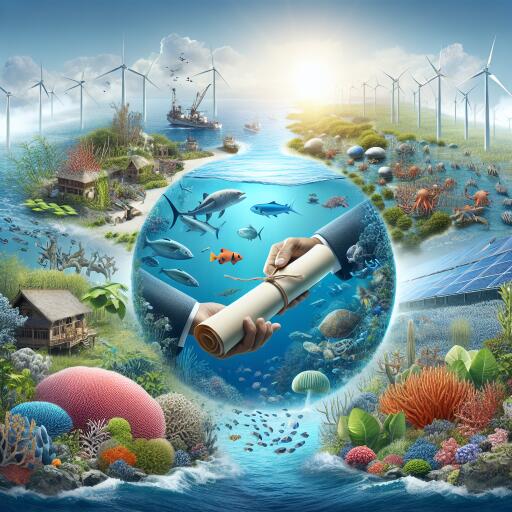
Alberto Pacheco Capella | The Caribbean Sea’s new compact for survival
United Nations Day is meant to look ahead—to the institutions we need and the future we want. For the Wider Caribbean, that forward gaze sharpened this month in Kingston, where governments agreed on an ambitious new compact to safeguard the region’s most essential shared resource: the Caribbean Sea.
At the Eighteenth Meeting of the Contracting Parties to the Cartagena Convention (COP18), delegates representing 20 countries and multiple observer groups—including youth voices—sent a clear signal: the well-being of Caribbean people and the health of their sea are inseparable. Collective action is no longer optional; it is urgent.
The session broke new ground by convening the main Convention alongside the Conferences of the Parties to both its Protocols—on Specially Protected Areas and Wildlife (SPAW) and on Land-Based Sources of Marine Pollution (LBS). This synchronized approach turned what are usually parallel tracks into a single, coherent agenda, enabling countries to tackle intertwined challenges—from curbing land-sourced pollution to restoring coral reefs and protecting threatened species—through one integrated frame.
A roadmap for a living sea
Decisions taken in Kingston align with the Regional Seas Strategic Direction for 2026–2029, a vision centered on healthy, productive coastal and marine ecosystems that underpin a sustainable ocean economy, support human well-being, and confront the converging crises of biodiversity loss, pollution, and climate change. The Caribbean Workplan and Budget for 2026–2027 translate that vision into action under three pillars:
- Resilient ecosystems: Adoption of a regional Action Plan on Sargassum Inundation to manage recurring beach and nearshore impacts; initiation of conservation management plans for species including the silky shark and oceanic whitetip shark.
- Knowledge to policy: Strengthened science-policy dialogue and data systems to guide decisions, monitor progress, and adapt responses as conditions change.
- Visibility and resources: A new knowledge management strategy and a resource mobilization approach to elevate the Regional Seas Programme and catalyze partnerships and financing.
Partnerships with teeth
Commitments made on paper are being backed by practical collaboration. Work with the International Maritime Organization on oil spill preparedness through RAC/REMPEITIC builds response capacity across the basin. Wildlife protection efforts are reinforced through the Caribbean Wildlife Enforcement Network, while cooperative initiatives such as the Neotropical Songbirds Collaborative extend conservation benefits from ridge to reef. This web of partnerships underscores a simple truth: environmental challenges cross borders and sectors, so solutions must, too.
Racing the clock
Scientific updates delivered in Kingston were sobering. Coral reefs—cornerstones of tourism, coastal protection, and fisheries—are undergoing unprecedented stress from marine heatwaves and disease. Mass bleaching and ocean acidification are eroding reef resilience, threatening biodiversity and livelihoods alike. Against this backdrop, the shift evident at COP18—from reactive protection to proactive restoration—is more than policy nuance; it is a survival strategy.
What COP18 delivered
- Stronger national and regional frameworks to manage coasts and nearshore waters, with emphasis on climate resilience and community benefits.
- Expanded and reinforced SPAW protected areas, supporting connectivity and ecological integrity across the Wider Caribbean.
- Acceleration of the Regional Action Plan on Marine Litter, targeting plastics and other debris that smother habitats and harm wildlife.
- Species management measures, including steps for vulnerable sharks, to begin turning the tide on overexploitation and ecosystem imbalance.
- Scaled-up restoration—particularly for coral reefs and associated habitats—guided by standardized methods and shared monitoring.
- Pathways to mobilize finance and technical support, aligning donors, governments, and civil society around prioritized outcomes.
From commitments to coastlines
The test now is delivery. Translating regional agreements into local results means equipping fisheries cooperatives, coastal planners, protected area managers, researchers, and community groups with the tools to act. It means improving early warning systems for heat stress and sargassum influxes; mainstreaming nature-based solutions for shorelines; and ensuring that environmental enforcement is matched by education and alternatives that keep livelihoods intact.
There is also a justice dimension. Communities that depend most directly on reefs and mangroves are often the least responsible for global emissions or upstream pollution. Implementing the Cartagena Convention’s decisions with equity in mind—fair access to funding, inclusive participation, and benefits that flow to those on the front lines—will determine whether this compact secures durable public support.
The path ahead demands persistence: aligning national policies with regional goals, sustaining cross-border cooperation, and tracking progress with transparency. If that happens, the Caribbean Sea can remain a living engine of culture, economy, and biodiversity rather than a casualty of the climate and pollution crises.
What emerged in Kingston is more than a workplan. It is a pact to protect the region’s lifeblood—through restoration where damage is greatest, prevention where risks are rising, and partnership everywhere. The message is as simple as it is uncompromising: safeguarding the Caribbean Sea is safeguarding the Caribbean future.



Leave a Reply