

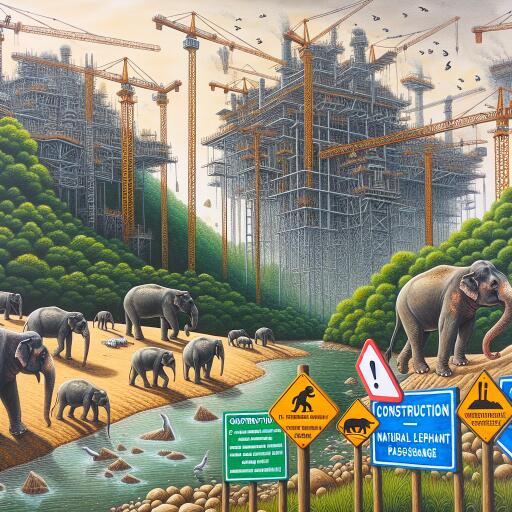
Wildlife Institute Warnings Overlooked as Subansiri Project Endangers Elephant Passage
The critical passageway for elephants, linking ecosystems between Assam and Arunachal Pradesh, faces the threat of obliteration. The recommendations by the Wildlife Institute of India (WII) concerning the Subansiri Lower Hydroelectric Project (SLHEP) have been disregarded completely, raising serious ecological concerns.
A vital hydrological study suggested by WII has remained untouched for over a year, despite the pressing risk of flash floods threatening elephants in the Dulung-Subansiri corridor caused by the project’s operational conditions once fully commissioned. This 2,000-MW hydropower project, initially set for partial commission in May of this year, with full completion anticipated in 2026, appears unlikely to meet these deadlines.
Murmurs within governmental circles hint that both the Standing Committee of the National Board for Wildlife (NBWL) and the Assam government have, for over a year, failed to act upon this significant recommendation.
In 2023, a site inspection committee, led by Professor Raman Sukumar following the Standing Committee’s guidance, urged for an in-depth analysis by WII and regional scientific bodies. The study was suggested to assess ecological impacts induced by SLHEP’s hydro-peaking operations, proposing that NHPC should undertake compensatory measures to offset these impacts.
Moreover, January 2024 saw WII produce a report that highlighted the severe risks to elephants. Flash floods could notably jeopardize the safety of elephants, especially calves and younger individuals, potentially causing them to be swept away, separated from herds, or drowned. The corridor’s functionality stands at risk of being critically impaired.
The NHPC’s hydro-peaking scenarios revealed a potential rise in water levels by approximately 2 meters, with a simultaneous surge in water speed around the corridor. These factors present double-edged threats: elephants, despite their swimming proficiency, particularly the calves, are vulnerable to flash flood conditions. Constant exposure could encourage behavioral shifts, leading to the corridor’s abandonment.
Upon inquiry, an official from NHPC stated the issue was resolved with NBWL’s disregard of the recommendation. Examination of internal documents indicates that NHPC’s request during a meeting on January 29, 2024, led to the suggestion being sidelined.
The report also noted the unknown effects of hydro-peaking on river islets, especially regarding their vegetation dynamics. Extensive evaluations employing experimental methodologies, encompassing high-resolution hydrological models and various flow modulation scenarios, are crucial. These would facilitate informed decisions concerning critical habitats of elephants, dolphins, and other keystone species.
Findings emphasize that any sudden changes in river flow could detrimentally affect the Dulung-Subansiri elephant corridor, an indispensable link for elephants along the northeastern Himalayas’ foothills. For long-term conservation efforts, declaring the area as a Wildlife Sanctuary or Conservation Reserve under the WPA, 1972, is seen as vital.
Alarmingly, all concerned bodies, including NBWL, the Assam government, and NHPC, have turned a blind eye to these recommendations. Reports indicate that during peak hours, the project could utilize its full capacity, inducing river conditions akin to floods.
Significantly, historical precedents exist, such as the 2018 instance where the NBWL restricted hydro-peaking for the 1,750-MW Lower Demwe project due to potential ecological fallout, recommending a study by WII. However, the disregard for this in the 2,000-MW SLHEP project highlights a troubling pattern of development undermining crucial wildlife habitats, even when alternatives exist.
This dismissal of critical environmental considerations comes at a time when human-elephant conflicts are escalating, largely driven by the disruption of essential corridors and habitats. The long-standing neglect of these warnings is a disturbing testament to developmental priorities overshadowing ecological preservation.



Leave a Reply