

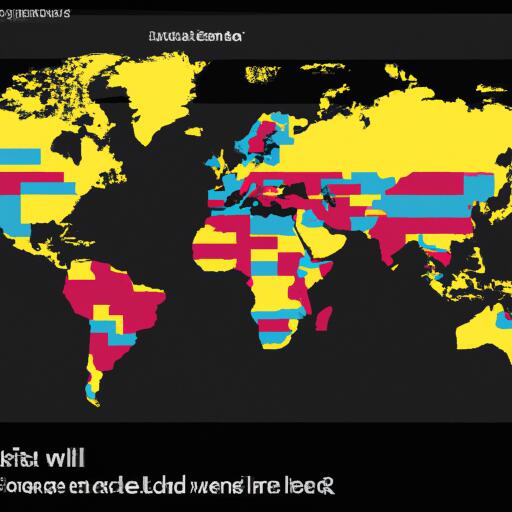
Visualizing All Of The World’s Oil Reserves By Country
Even as wind, solar, and storage sprint ahead, oil remains a cornerstone of the global energy system. It moves goods and people, feeds petrochemical supply chains, and still wields outsize influence over national budgets and foreign policy. Understanding where the biggest reserves sit helps explain both today’s market dynamics and tomorrow’s transition risks.
What’s being measured
The figures below reflect proven oil reserves as of year‑end 2024, compiled in OPEC’s 2025 Annual Statistical Bulletin. “Proven” means quantities recoverable with reasonable certainty under current economic and operating conditions. Totals are expressed in billions of barrels and include conventional crude as well as oil sands.
Where the barrels are concentrated
Global reserves are far from evenly distributed. A small group of countries holds the lion’s share, shaping global supply, price stability, and investment flows.
- Venezuela sits at the top with an estimated 303 billion barrels. Turning those barrels into reliable export revenues, however, is hampered by sanctions, limited access to capital, and infrastructure bottlenecks.
- Saudi Arabia follows with about 267 billion barrels, pairing large reservoirs with some of the lowest production costs in the world.
- Iran, Canada, and Iraq round out the top five. Canada’s total stands near 163 billion barrels, largely in oil sands deposits.
OPEC members—especially in the Middle East—anchor this map of abundance. Saudi Arabia, Iran, Iraq, Kuwait, and the United Arab Emirates combine favorable geology with mature export infrastructure and the capacity to adjust output, reinforcing their pivotal role even as long‑term demand growth slows.
The outliers: Oil sands and beyond
Canada’s position among the leaders is distinctive. The bulk of its reserves are in bitumen‑rich oil sands, which require energy‑intensive extraction and upgrading compared to conventional crude. That raises both costs and lifecycle emissions, sharpening scrutiny from investors and policymakers. Russia and the United States also appear among the top 10 holders of reserves, reflecting deep resource bases and decades of exploration, though with different profiles—conventional fields and offshore in Russia; a mix of offshore, conventional, and unconventional resources in the U.S.
Geopolitics, economics, and the energy transition
Reserves unlock bargaining power, but they are not destiny. Venezuela’s vast tally has yet to translate into stable export performance. Elsewhere, Middle Eastern producers pair scale with reliability and spare capacity, attributes that can calm markets during disruptions. For import‑reliant countries, the concentration of reserves underscores enduring energy‑security concerns, even as they diversify into renewables, electrification, and efficiency.
For oil‑rich nations, the transition introduces a new calculus. Low‑cost barrels are likeliest to be produced longest as global demand plateaus and declines. Higher‑cost, higher‑carbon sources face greater risk of becoming stranded. This heightens pressure to decarbonize operations—curbing methane, electrifying fields, deploying carbon capture—and to broaden economies beyond hydrocarbons. Fiscal reform, sovereign wealth strategies, and clean‑energy manufacturing are increasingly central to long‑term planning.
Why these numbers matter now
The distribution of reserves helps explain investment patterns, trade routes, and price sensitivity. Countries with ample, low‑cost reserves can influence benchmarks through capacity decisions and long‑term supply agreements. Importers, meanwhile, hedge with strategic stocks, diversify suppliers, and accelerate domestic clean energy to reduce exposure to volatility. For climate planners, the reserve map signals where greenhouse gas mitigation in the oil supply chain can deliver outsized impact, and where cooperation—technology transfer, methane reduction initiatives, and measurement transparency—could move the needle fastest.
A note on data and caveats
Reserve estimates evolve with prices, technology, regulation, and new geological information. Revisions occur as projects move through appraisal, as operators adopt new extraction methods, or as policies alter what is “commercial.” Comparisons between countries also reflect differing reporting practices. Still, taken together, the latest tally provides a clear picture: a handful of nations—led by Venezuela and Saudi Arabia—control the bulk of the world’s proven oil endowment, with OPEC members at the core and Canada the standout among non‑OPEC holders due to its oil sands.
In short, oil’s geographic concentration remains a defining feature of the energy landscape. It will continue to shape markets and geopolitics today, even as the trajectory of electrification and renewables rewrites the longer‑term script.



Leave a Reply