

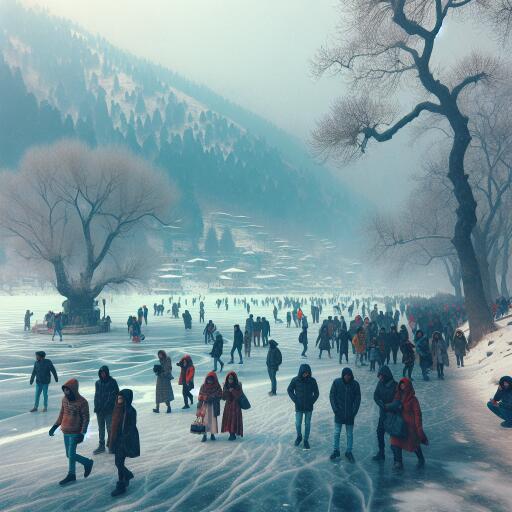
Jammu shivers under cold wave; Nathatop sees weekend tourist rush despite lack of snowfall
A severe cold wave gripped Jammu and Kashmir to start the week, with a thick blanket of fog cutting visibility to under 50 metres across stretches of the Jammu plains. Early commuters crept along highways and city roads as the chill deepened and the morning sun struggled to break through.
According to the meteorological forecast, Jammu city is set for a brisk day, peaking near 11°C and dipping to about 3°C overnight. The chill intensifies in the higher reaches: Gulmarg hovers around 5°C by day and slips to roughly -3°C after dusk. In the middle ranges, Batote is likely to see about 15°C/2°C, while Kathua remains relatively mild near 19°C/7°C.
Weekend crowds head to Nathatop—without the snow
Despite the dry spell, Nathatop—a breezy ridge roughly 10 kilometres ahead of Patnitop at around 8,900 feet—has turned into a magnet for weekenders. Many travellers detour here after visiting the shrine at Katra, hoping for snowy slopes and instead finding sunny skies, crisp air, and panoramic views of distant, glistening peaks.
On recent Saturdays and Sundays, the slopes were alive with music and laughter as small groups danced near bonfires, while others laced up for short treks along the ridgeline. Though snow remained elusive, the bright winter light and sweeping vistas offered their own draw.
“A single snowfall would change everything. Weekdays are lean, and we’re all waiting for fresh flakes,” said a local shopkeeper, eyeing a row of idle sledges.
“We came for the snow but stayed for the cool breeze and the views. It’s still worth the trip,” added a visitor from Delhi, warming hands over a cup of tea.
Dry spell strains livelihoods—and water
For hoteliers, vendors, guides, and taxi drivers, a sustained dry spell means fewer bookings and thinner margins. But the absence of precipitation is more than an economic worry. Winter snow acts as the region’s natural water bank—slowly releasing meltwater that replenishes springs, streams, and groundwater through spring and early summer. Without it, aquifers recharge more slowly and soils dry sooner, with knock-on effects for wheat and vegetable growers as well as orchards that rely on winter moisture and chill hours.
Hydropower also feels the pinch. Reduced inflows to rivers can curtail generation, a problem already reflected in the intermittent power supply reported in parts of the Union Territory in recent weeks. A timely spell of snow and rain would ease both household energy needs and agricultural demand as the season advances.
A changing winter rhythm
While individual cold snaps and dry spells come and go, erratic winter precipitation is becoming a recurring concern across the western Himalaya. Altered snowfall patterns—arriving late, falling as rain at elevations that once saw reliable snow, or skipping weeks entirely—can destabilize the delicate balance between tourism, water security, and rural livelihoods. For communities that depend on both pilgrim footfall and winter recreation, that volatility translates directly into uncertainty.
Local businesses at Nathatop are preparing for either scenario: ready to welcome visitors if snow finally arrives, but also pivoting to snow-free activities—day hikes, viewpoints, and sunlit picnic spots—whenever the slopes stay bare. For travellers, the advice is simple: carry layers, start early in fog-prone areas, and watch for slick patches where frost lingers even without snowfall.
Travel responsibly in fragile mountain habitats
Whether snow lines descend this week or not, the landscape remains vulnerable. Visitors are urged to keep to marked paths, minimize litter, and support local operators who prioritize low-impact practices. In a winter that swings between foggy mornings and bright, dry afternoons, the mountains still offer quiet rewards—so long as they are treated with care.



Leave a Reply