

Revolutionizing Ganga Conservation: A Tech-Driven Approach | Science-Environment
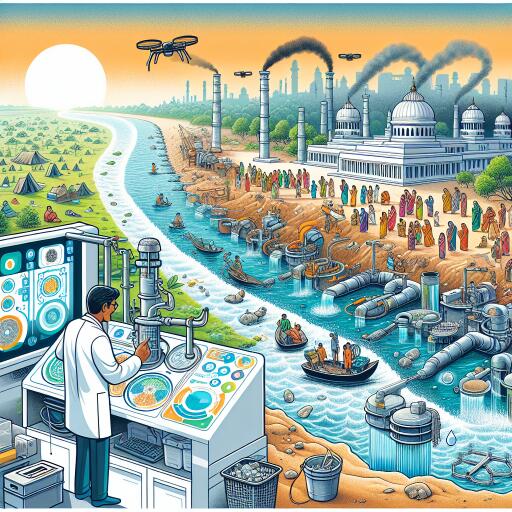
India’s flagship river-restoration program is entering a new phase where sensors, satellites, and analytics guide decisions on the ground. By blending real-time monitoring with digital habitat mapping, conservation teams are sharpening their ability to curb pollution, reverse habitat loss, and safeguard threatened species across the Ganga basin.
From intuition to instrumentation
Conservation once leaned heavily on sporadic surveys and paper logs. Today, field teams are equipped with live data streams that track river health hour by hour. Water-quality probes transmit readings on dissolved oxygen, temperature, and contaminants, while station networks flag sudden anomalies that could signal sewage inflows or industrial releases. Rapid alerts shrink response time from days to minutes, allowing enforcement and mitigation teams to act before damage spreads downstream.
SMART patrolling with an ecological edge
At the National Chambal Sanctuary in Uttar Pradesh—part of the wider Ganga basin—rangers are using SMART patrolling, a digital system that turns field observations into actionable intelligence. GPS-enabled patrols log sightings of gharials and Gangetic dolphins, nest locations, basking sites, and potential threats such as illegal sand mining or fishing nets. The data feeds into heat maps that reveal risk hotspots, helping managers deploy patrols strategically and measure the impact of interventions over time.
Beyond deterring crime, the platform standardizes how field notes, photos, and coordinates are captured. This builds a consistent record of species distribution and habitat quality, offering a powerful baseline to evaluate restoration efforts and seasonal shifts.
Wetlands, mapped with centimeter-level clarity
Wetlands are the lungs and kidneys of a river system, but their boundaries can shift and their degradation can be subtle. Using GIS and remote sensing, conservation planners are cataloguing wetlands, tracking land-use change, and detecting encroachments that fragment floodplains. High-resolution imagery, combined with topographic and hydrological models, helps pinpoint where channels have been cut off, where siltation is smothering habitat, and where reconnection could revive flows.
A digital wetland registry supports before-and-after assessments of restoration projects, ensuring that resources target sites with the highest ecological payoff—such as breeding grounds for gharials or feeding stretches for dolphins.
The new science toolkit
- Environmental DNA (eDNA): Water samples carry traces of species that have passed through. Lab analysis can detect elusive fauna, revealing the presence of dolphins or rare fish without intrusive surveys.
- Drones and thermal imaging: Aerial mapping identifies nesting banks, erosion hotspots, and vegetation cover, while thermal signatures can help locate animals and monitor microhabitats.
- Machine learning: Algorithms sift through satellite and sensor data to spot unusual patterns—like abrupt turbidity spikes—triggering early warnings for fish kills, toxic algal blooms, or illegal discharges.
- Integrated dashboards: Field data, satellite layers, and lab results are merged into decision portals that managers can query to plan patrols, schedule cleanups, or time flow releases.
Public participation, upgraded
Technology is not just for specialists. Citizen reports—photos of foam, dead fish, or dumping—can be geo-tagged and routed to the appropriate authority. Schools and local groups participate in bio-monitoring drives, measuring simple water metrics or logging species along riverbanks. This people-powered layer expands coverage and builds stewardship, while structured validation ensures credible inputs.
Why this matters for endangered species
The gharial and the Gangetic dolphin depend on clean, well-connected rivers. Habitat fragmentation, sand extraction, and low flows can decimate nesting success and disrupt breeding. A data-rich approach helps identify when and where interventions matter most—protecting nesting sandbars, enforcing no-go zones during breeding seasons, and managing flows to maintain deep pools essential for dolphins.
Crucially, the same system that protects charismatic species also improves river health for communities: safer drinking water, fewer fish kills, and more resilient floodplains that buffer extreme weather.
Turning insights into action
Real-time telemetry focuses enforcement and cleanup operations. Remote sensing guides restoration to the most strategic wetlands and floodplain corridors. SMART patrolling elevates field protection by tying every observation to location and time. Together, these tools create a feedback loop: monitor, act, measure, refine.
Scaling the model
The National Mission for Clean Ganga’s tech-forward methods are built to scale across tributaries, from the Chambal to the Yamuna and beyond. As climate pressures intensify—altering monsoon patterns, amplifying floods, and lengthening dry spells—data-driven management offers the agility needed to prepare and adapt. Future phases can deepen predictive modeling, integrate sediment budgets, and expand aquatic biodiversity indices to keep restoration aligned with changing realities.
The Ganga’s revival will not hinge on any single innovation, but on the disciplined use of many: continuous measurement, transparent reporting, and targeted action. By embedding technology at every step, India’s river conservation effort is moving from reactive cleanups to proactive care—protecting species, restoring habitats, and rebuilding the ecological foundation that hundreds of millions depend on.



Leave a Reply