

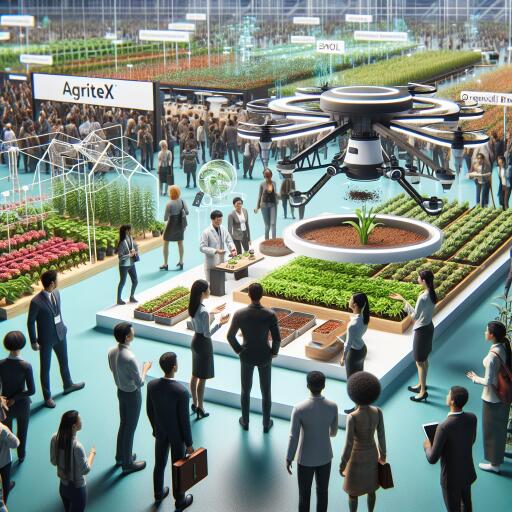
QU showcases innovative agricultural solutions at AgriteQ 2026 exhibition
Qatar University has brought a broad slate of climate-smart farming and conservation research to the 13th Qatar International Agricultural Exhibition (AgriteQ 2026), held from February 12–16 at Katara Cultural Village. Through the Agricultural Research Station (ARS) and the Center for Sustainable Development (CSD), the university is presenting technologies designed to bolster food security, conserve water, and protect biodiversity in arid environments.
Algae at the heart of a circular bioeconomy
The CSD, part of the College of Arts and Sciences, is spotlighting a suite of algae-based applications that convert locally cultivated strains into high-protein ingredients for aquaculture and livestock. By replacing a portion of imported feeds with homegrown biomass, the approach lowers supply risk and reduces the carbon footprint associated with long-distance transport.
Researchers are also demonstrating algae’s potential as a bio-fertilizer that builds soil health and as a source of nutritionally rich compounds suitable for human supplements. Together, these pathways outline an integrated model where one resource—microalgae—supports agriculture, nutrition, and environmental performance.
Immersive learning on land and sea
To connect research with community awareness, the Department of Biological and Environmental Sciences is engaging visitors through three educational threads:
- Qatar’s plant heritage, showcased via the university’s herbarium and seed bank, including medicinal and threatened species and materials on conservation practices.
- Desert wildlife and ecological balance, emphasizing how species interactions sustain fragile arid ecosystems.
- Marine conservation, featuring ongoing studies of whale sharks—an endangered species that gathers seasonally in local waters—highlighting how science informs protection efforts.
Arid-land farming, reimagined
The ARS pavilion offers an up-close look at innovations tailored to hot, dry climates. Through visual tours of research orchards, educational models, and a curated display of rare, premium date palm cultivars from its germplasm collection, the station illustrates how genetic diversity underpins resilient agriculture.
Post-harvest advances are a focal point, including an environmentally friendly, non-toxic system for controlling storage pests. Live demonstrations of crop physiology tools show how precise measurement of plant responses can guide better water and nutrient management, raising yields while cutting inputs.
Waste turned into worth
One project drawing attention is the transformation of tomato byproducts into useful, value-added materials. By converting agricultural waste into new resources, the work reduces disposal burdens and emissions while supporting a more circular, locally rooted food system.
Water-wise farming with hydrogels
Another highlight is hydrogel-assisted agriculture—materials that help soils retain moisture, reducing freshwater use and easing pressure on irrigation infrastructure. In water-scarce settings, this translates into more stable production, improved plant stress tolerance, and lower operating costs for farmers. The technology complements precision irrigation strategies and aligns with national goals to expand sustainable food production.
Leaders’ vision for sustainability
According to ARS leadership, participation in AgriteQ 2026 builds on a sustained effort to advance agricultural solutions that perform under Qatar’s arid and semi-arid conditions. The station is prioritizing research that moves quickly from lab to field—solutions that farmers and producers can adopt to strengthen local supply chains and environmental outcomes.
From the CSD, the strategic focus centers on food and water security in line with the university’s research priorities and the Qatar National Vision 2030. Efforts emphasize raising productivity while shrinking environmental impact, including the use of recycled organic residues and bioactive compounds sourced from the local environment to support sustainable production.
A blueprint for resilient food systems
Taken together, these exhibits present a cohesive blueprint: valorize local resources, close nutrient and water loops, and deploy technologies purpose-built for extreme climates. By bridging ecology and engineering—from microalgae biorefineries to hydrogels and post-harvest innovation—Qatar University’s showcase at AgriteQ 2026 signals a pragmatic path toward climate resilience, biodiversity protection, and reliable, homegrown food supplies.



Leave a Reply