

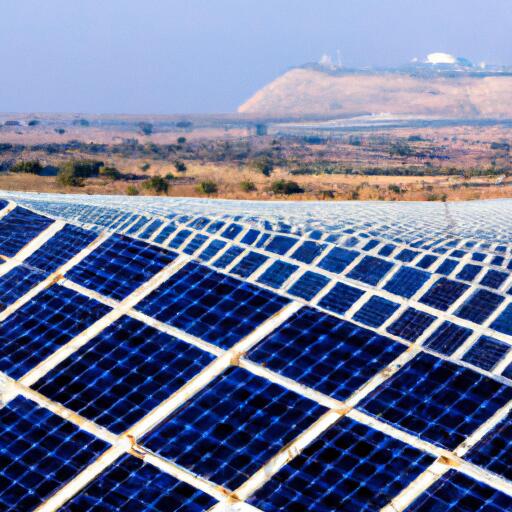
India’s solar-panel boom: full throttle today, uncertain tomorrow
India is racing to electrify its growth with cleaner power, and solar manufacturing has become its frontline strategy. Factories are running flat out to meet surging domestic demand and to cut reliance on Chinese imports. Yet the breakneck expansion carries an uneasy undertone: a looming risk of overcapacity, trade headwinds, and a supply chain still tethered to China.
Factories in overdrive
On India’s western coast, assembly lines produce photovoltaic modules around the clock, feeding mega-projects such as the vast solar park rising in Khavda, Gujarat. Similar scenes play out in the south, where highly automated plants employ thousands—many of them women—working continuous shifts to keep yields and throughput high. Executives describe a production pace where stopping the line is not an option and utilization must be squeezed to the last percentage point.
The manufacturing buildout is happening at unprecedented scale across industrial giants. Longtime players have been joined by newer entrants, installing advanced equipment and emphasizing quality and reliability—crucial for multi-gigawatt projects that demand consistent, bankable modules delivered on time.
Targets soar, coal still dominates
India celebrates impressive strides: officials say roughly half of the country’s installed power capacity now comes from low-carbon sources, years ahead of earlier commitments. But generation tells a different story. About three-quarters of electricity still comes from coal, anchored by inflexible thermal plants and long-term supply contracts that make it hard to ramp renewables into the grid at speed. Even with occasional dips in coal output, overall dependence remains high, underscoring the need for storage, flexible demand, and reforms to grid operations.
‘Make in India’ raises the stakes
Policy has stacked the deck for local manufacturing. Public tenders favor domestically produced modules, backed by generous incentives that have pulled capital into new facilities from the country’s largest conglomerates. The aim is twofold: secure jobs and industrial capability at home, and reduce vulnerability to foreign supply shocks. Quality control and a stable supply chain are paramount as developers push toward ever-larger project sizes and tighter commissioning timelines.
Yet there is a paradox. While the assembly of modules is Indian, much of the underlying technology and critical inputs—wafers, cells, and polysilicon—still flow from China. New upstream investments are being explored, including potential silicon mining and in-house wafer production, to plug these gaps over time.
Trade tension meets scale ambition
China remains the world’s dominant solar supplier, and India’s push for self-reliance has not gone unnoticed. Beijing has challenged New Delhi’s subsidies and import rules at the World Trade Organization, even as global trade measures in the United States and elsewhere complicate export paths for Indian-made modules. The result is a volatile policy environment that can shift project economics overnight.
A capacity boom outpacing demand
Industry forecasts suggest India’s solar manufacturing capacity could soon exceed 125 gigawatts annually—far more than current domestic demand. While India targets 500 GW of renewable capacity by 2030, including around 280 GW of solar, installations in the near term will not absorb the flood of anticipated output. Analysts warn of rapid overcapacity: incentives have spurred factory announcements faster than markets can take the modules.
That makes exports essential to the sector’s long-term health. But competing globally means matching China’s sheer scale, low costs, and blistering innovation cycle—no small task. Private power executives bluntly note that imported modules can still land cheaper than local alternatives, even after accounting for logistics. Without cost parity and proven reliability, winning overseas orders will be difficult.
The competitiveness question
India’s manufacturers are racing to close the gap on several fronts:
- Upstream integration: Localizing wafers, cells, and polysilicon to reduce import dependence and price volatility.
- Technology curve: Rapidly adopting higher-efficiency formats—such as TOPCon and heterojunction—and building R&D depth to keep pace with global leaders.
- Scale and yield: Running lines 24/7, driving down defects, and pushing utilization to lower levelized costs.
- Finance and bankability: Delivering performance data and warranties that satisfy lenders and international buyers.
- Logistics and market access: Navigating tariffs and standards to open doors in key export markets while ensuring predictable delivery.
Transition at a crossroads
For India, solar is non-negotiable in the path to cleaner, more secure power. The challenge is synchronizing three moving parts: an industrial policy building factories at record speed, a power system still dominated by coal, and a global market roiled by trade disputes and price swings. If domestic demand, grid reforms, and export channels align, the current surge could seed a durable manufacturing ecosystem. If not, the sector risks a painful cycle of idle capacity and squeezed margins.
Even so, the mood inside plants remains confident. Developers and manufacturers alike see solar becoming the backbone of new generation—complemented by storage, flexible transmission, and smarter demand. India’s solar buildout is undeniably at full throttle today. Whether it can sustain the pace tomorrow will depend on how quickly the country can couple factory momentum with grid readiness and true supply-chain independence.



Leave a Reply