

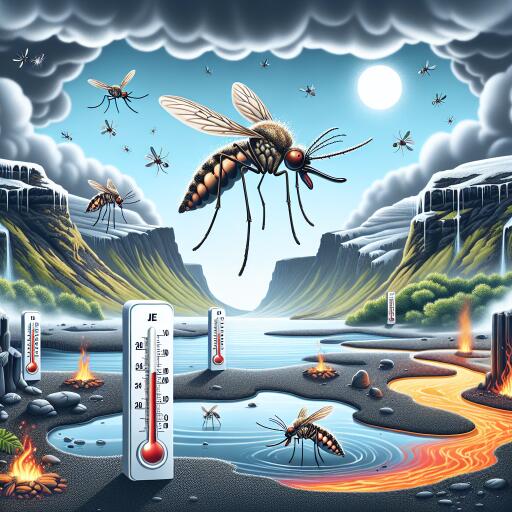
Iceland’s Unique Status Is Gone: Record Heat Brings First-Ever Mosquitoes
For generations, Iceland stood apart as one of the few places on Earth without mosquitoes. That distinction has now vanished. After a spring that broke temperature records and prolonged the warmth far beyond the norm, the country has confirmed the presence of mosquitoes for the first time.
The discovery came in a glacial valley west of Reykjavík, where a local naturalist surveying moths with fermented bait captured three mosquitoes over several nights—two females and one male. Specialists later identified the insects as Culiseta annulata, a hardy, cold-tolerant species widespread across Europe and capable of withstanding frosty winters.
Iceland’s historical mosquito-free status wasn’t a myth; it was the product of climate and water. Long, cold seasons limit the time larvae can develop, and the availability of stable, shallow pools—prime nursery habitat—has been scarce and short-lived. This spring upended that pattern. May rarely sustains warmth above 20°C, and when it does, it’s usually fleeting. This year the heat held for ten consecutive days, and the country notched a new May record of 26.6°C. Extended warmth can accelerate mosquito life cycles and increase the odds that adults survive and reproduce.
How Culiseta annulata reached Iceland remains uncertain. Windborne dispersal over the North Atlantic is plausible for some insects, as is accidental transport via cargo, vehicles, or travelers. What matters most for establishment, however, is not a single arrival but whether conditions now allow this cold-adapted species to complete its life cycle here. A warming climate increases that probability by lengthening the growing season, stabilizing meltwater pools, and reducing freeze–thaw shocks that can kill eggs and larvae.
While the appearance of mosquitoes is an unwelcome novelty for residents, it’s also a clear ecological signal. High-latitude regions are witnessing rapid biological shifts as warmer spells arrive earlier, last longer, and occur more frequently. Species that once struggled to gain a foothold are testing—and sometimes crossing—previous climatic boundaries. Iceland’s mosquitoes are a small but telling example of that trend.
What does this mean in practical terms? Culiseta annulata is primarily a nuisance biter and is not known as a major vector for the kinds of diseases associated with tropical mosquitoes. Even so, its establishment would mark a significant change for local ecosystems, wildlife, and public comfort. The coming seasons will determine whether this was an isolated incursion or the beginning of a recurring presence.
Why this spring tipped the balance
- Prolonged warmth: Ten days above 20°C in May—far beyond typical variability—likely improved survival from egg to adult.
- Water availability: Stable, shallow water bodies created by snowmelt and rainfall can persist longer in milder weather, providing larval habitat.
- Cold tolerance: Culiseta annulata is among the few mosquito species adapted to cooler climates, increasing its odds in northern environments.
What to watch next
- Surveys and trapping: Systematic monitoring will reveal whether breeding populations are forming or if arrivals are sporadic.
- Overwintering checks: Finding larvae or pupae late in the season—or discovering adults early in spring—would indicate persistence.
- Habitat mapping: Identifying and managing small, stagnant water sources near settlements can reduce nuisance pressure.
How households can reduce bites
- Eliminate standing water in buckets, pots, and gutters.
- Use fine-mesh window screens and, where needed, bed nets.
- Apply repellents according to label guidance when conditions are buggy.
The arrival of mosquitoes doesn’t erase Iceland’s unique natural character, but it does underscore how swiftly climate thresholds are shifting. A place long defined by glaciers, bracing winds, and auroral skies now faces a new seasonal reality: the soft buzz of an insect once thought unable to make it here. As monitoring expands and adaptation measures kick in, one thing is clear—climate change is not a distant abstraction. It is altering everyday life, even in the world’s cold corners.



Leave a Reply