

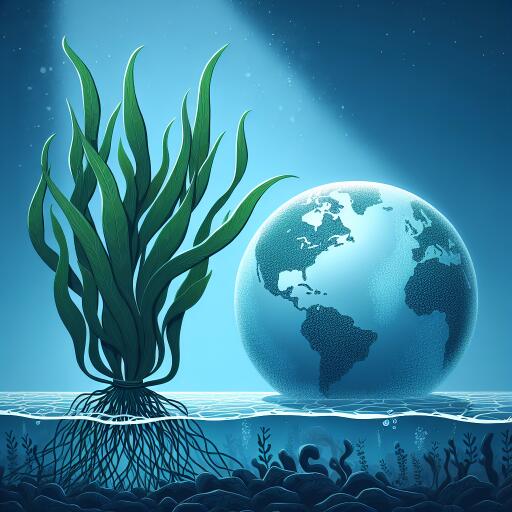
Seaweed: Saving the World?
In the heart of Brittany’s charming fishing port of Lesconil, a compelling narrative unfolds about seaweed—a versatile marine plant deemed vital for solving a host of global adversities. As a prominent advocate for the use of seaweed, a senior advisor within global organizations asserts its tremendous potential in feeding the world’s population, rejuvenating marine environments, tackling climate change, and providing a viable substitute for plastics.
For the proponents of what can best be described as a “seaweed revolution,” the belief persists that this ancient marine algae is an immensely undervalued resource. Dating back over a billion years, seaweed was instrumental in oxygenating Earth’s early atmosphere. It all began with a transformative journey to Okinawa, Japan, where the inhabitants’ regular consumption of seaweed coincided with remarkable longevity, likely due to its rich composition of essential nutrients, vitamins, fibers, and proteins.
Unlike traditional agriculture, which significantly contributes to greenhouse gas emissions, the cultivation of seaweed stands apart. Requiring no terrestrial soil, fertilizers, nor freshwater irrigation, its farming is sustainable and efficient. Some studies notably indicate that introducing red seaweed into cattle diets could dramatically curtail methane emissions by up to 90 percent. Moreover, per acre, seaweed sequesters more carbon than terrestrial plants and finds incredible versatility in being transformed into bioplastics, biofuels, textiles, and pharmaceuticals.
In an endeavor to share this passion worldwide, a comic book titled The Seaweed Revolution has been launched, serving as an animated testament to this real-world advocacy. This initiative highlights an array of innovative seaweed-derived products, ranging from plankton-based sunglasses to biodegradable trash bags and T-shirts manufactured from algae-spun fibers.
The seaweed industry, showing remarkable growth, has trebled since the year 2000, with an output escalating to 39 million tonnes annually. It currently boasts a market valuation of $17 billion and is poised for a further $12 billion increase by 2030, fueled by investments in its myriad applications. Despite these promising statistics, the industry presently contends with a lack of cohesive legislative frameworks.
Notably, the rise of this industry is also a beacon for gender equality. It is inspiring to see that around 40 percent of the world’s seaweed start-ups are spearheaded by women. For instance, in Tanzania, women’s involvement in the seaweed trade has revolutionized their economic standing, allowing them to retain a substantial share of profits. This empowerment has driven them to establish schools and uplift community lives. Initiatives are underway to bolster women’s maritime skills, further enabling them to navigate and combat the challenges posed by a rapidly changing climate.
However, climate change itself still presents substantial threats to seaweed habitats, with drastic declines evident in areas such as California, Norway, and Tasmania. The urgency to conserve these critical “sea forests” cannot be overstated. This sense of urgency has prompted discussions at major global forums, leading to the forthcoming launch of a UN Seaweed Task Force. This initiative seeks to integrate global efforts aimed at regulating, researching, and sustainably developing the seaweed industry.
The proposal for this task force has already gained backing from several countries, with the prospects of a draft resolution being presented during the upcoming assemblies, and a vote expected in the not so distant future. This initiative represents a monumental stride towards harvesting oceanic superfluous algae blooms like sargassum, transforming them into eco-friendly products such as fertilizers, construction materials, and fabrics.
The vision driving the UN Seaweed Task Force revolves around establishing global standards and centralizing knowledge dissemination. This framework is intended to nurture responsible and sustainable expansion within the seaweed industry, unlocking what is perceived as its boundless potential to significantly contribute to solving the world’s pressing ecological and economic issues.
The concerted aim champions a strategy to shift from the ancient practice of hunting marine resources to more sustainable and restorative ocean farming practices, offering hope for a more resilient future.



Leave a Reply