

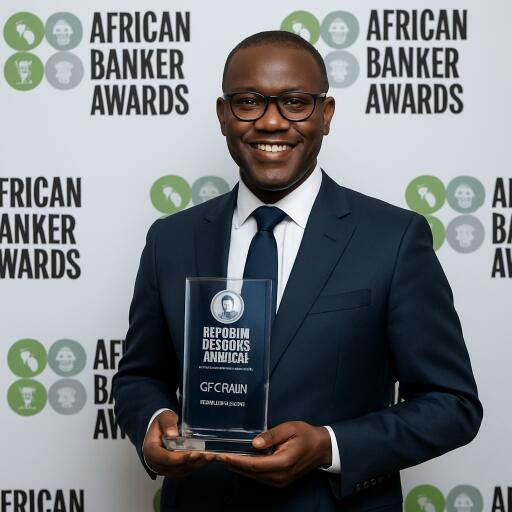
GCB Bank Recognized at African Banker Awards in West Africa
A milestone for Ghana’s banking sector and a signal of growing momentum for sustainable finance
Ghana’s GCB Bank PLC has been named Best Regional Bank in West Africa at the 20th African Banker Awards held in Brazzaville, Congo, an event aligned with the African Development Bank’s annual meetings. The recognition underscores the resilience of African financial institutions and their expanding role in financing inclusive growth, infrastructure, and the energy transition across the continent.
The ceremony spotlighted 18 winners from across the region, reflecting a financial ecosystem increasingly willing to tackle complex development challenges—from modernizing power systems to scaling industrial capacity and supporting women-led enterprises. Attendees included senior policymakers and industry leaders, with the evening punctuated by a performance from Congolese music icon Koffi Olomide.
Award organizers emphasized that Africa’s next chapter depends on stronger financial sovereignty and the courage of banks to venture into new markets and technologies. That imperative is visible in the deals and institutions honored this year, many of which sit at the intersection of climate action, regional value chains, and digital innovation.
Regional standouts
GCB Bank’s West Africa accolade was part of a broader slate of regional honors that spotlighted transformative banking across the continent:
- North Africa: Bank of Africa (Morocco)
- Southern Africa: Zanaco
- East Africa: CRDB
- Central Africa: Trust Merchant Bank
Two Congolese institutions were celebrated on home ground: Trust Merchant Bank as Best Regional Bank in Central Africa, and Rawbank for the AFAWA Bank Award, highlighting leadership in expanding finance for businesses led by women—an essential lever for equitable, climate-resilient growth.
Top honors and a pivot toward sustainable, inclusive growth
- Bank of the Year: Ecobank, marking a return to growth and profitability.
- African Banker of the Year: Serge Ekué (BOAD), reflecting a broader push to mobilize long-term capital for development.
- Central Bank Governor of the Year: André Wameso (Congo), recognized for enabling sector growth and facilitating market access.
- Minister of Finance of the Year: Situmbeko Musokotwane (Zambia), for steering recovery efforts.
- Sustainable Bank of the Year: Bank of Industry, underscoring the mainstreaming of sustainability in African finance.
- DFI of the Year: Afreximbank, for catalytic cross-border financing.
- Fintech of the Year: ZiidiTrader, signaling the continued rise of digital financial solutions.
- SME Bank of the Year: Co-operative Bank of Kenya, recognizing a critical engine of jobs and innovation.
- Lifetime Achievement: Henri-Claude Oyima, honoring decades of sector leadership.
Deals shaping the energy transition and industrial base
Several standout transactions highlighted how African finance is leaning into clean energy and resilient infrastructure:
- Infrastructure Deal of the Year: Red Rocket Holdco’s renewable energy investment in South Africa, a vote of confidence in utility-scale clean power that can cut emissions and stabilize grids.
- Debt Deal of the Year: NBET Finance Company PLC’s bond issuance in Nigeria, strengthening the market architecture around electricity payments and helping de-risk power sector investments.
- Equity Deal of the Year: Arise IIP Exit/Equity Raise by the African Finance Corporation, backing industrial platforms that can localize manufacturing and create climate-smart value chains.
These transactions point to a clearer pipeline for bankable low-carbon projects: renewable generation, grid reinforcement, and industrial facilities designed for efficiency and circularity. Together, they illustrate how financial institutions are operationalizing climate goals while targeting economic diversification and energy security.
Why GCB Bank’s win matters for West Africa
For Ghana and its neighbors, GCB Bank’s regional victory reflects deepening capacity to intermediate savings into productive investments—from small and medium-sized enterprises to large infrastructure and energy assets. As West Africa accelerates renewable deployment and seeks to enhance grid reliability, banks that can structure long-dated financing, crowd in partners, and manage risk across borders will be pivotal.
The award also sends a strong signal to international investors: robust African lenders are ready to co-finance complex, climate-aligned projects. With the right policy frameworks and blended finance instruments, this momentum can translate into faster electrification, greener transport and industry, and broader access to affordable capital for local businesses, including those led by women and youth.
A broader platform for African-led solutions
The awards, organized in partnership with industry stakeholders and under the high patronage of continental development institutions, serve as an annual barometer of where capital is flowing—and where it is needed next. This year’s cohort points to an increasingly confident banking sector steering resources toward transformative outcomes: cleaner power, stronger grids, resilient supply chains, and inclusive entrepreneurship.
As countries across the continent work to meet climate commitments while expanding access to energy and opportunity, the role of homegrown banks becomes even more central. GCB Bank’s achievement in West Africa is a reminder that scalable, sustainable finance is not a distant goal; it is already taking shape within Africa’s own financial ecosystem.



Leave a Reply