

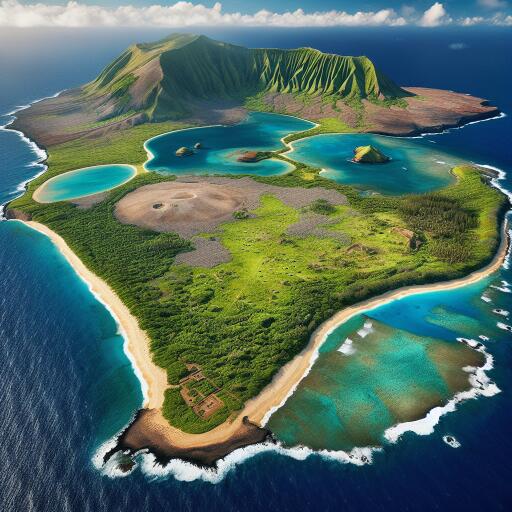
Which Hawaiian Island is Uninhabitable?
The mysterious allure of Hawaii extends beyond its famous sandy beaches and lush landscapes. Among the archipelago’s diverse islands, Nihoa stands out not merely for its rugged beauty, but also for being uninhabitable by humans. While most of the Hawaiian islands offer a rich mix of culture, leisure, and vibrant ecosystems, Nihoa is a testament to the raw, untouched splendor of nature.
Nihoa, known as Moku Manu or Bird Island, presents a dramatic landscape with steep escarpments and minimal plant life. As the northwesternmost of the central Hawaiian islands, this rocky islet rises dramatically from the ocean, captivating any adventurer at heart. Yet, its geographic and ecological characteristics render it inhospitable. The reasons are deeply rooted in its natural composition and significance.
The challenge of sustaining life on Nihoa is primarily due to its lack of freshwater resources. With rainwater rapidly absorbed by its porous volcanic terrain, or cascading into the vast Pacific, a stable supply of fresh water is unattainable. This shortage of water, coupled with the island’s uneven terrain, makes agriculture or the establishment of any substantial human infrastructure simply impractical. Furthermore, the challenging topography poses logistical obstacles to accessing essential supplies or emergency services, making any form of permanent settlement unfeasible.
However, what Nihoa lacks in human utility, it makes up for with its invaluable ecological importance. The island acts as a sanctuary for endangered species like the Nihoa finch, various seabird colonies, and was once home to the now-extinct Nihoa millerbird. Recognizing its biodiversity and the need for its preservation, Nihoa falls under the protection of the Papahānaumokuākea Marine National Monument, a recognized UNESCO World Heritage Site. This status enforces stringent measures to shield its delicate ecosystem from potential threats.
While today Nihoa remains uninhabited, it holds echoes of ancestral Hawaiian life. Archeological artifacts, including terraces, agricultural plots, and temple remnants (or heiau), show that ancient Hawaiians utilized the island temporarily, most likely for resources and spiritual rituals. These historical markings help provide insights into Hawaiian cultural practices and highlight the intricate balance between human activity and environmental stewardship.
Hawaii is a sprawling archipelago with 137 distinctive formations including islands, islets, reefs, and shoals, stretching over a vast expanse of 1,500 miles. Of these, only eight are considered main islands, with Nihoa being the smallest and among the most remote.
There are indeed more islands within this vast archipelago that remain uninhabited. Some, like Ka’ula Rock and islands within the Papahānaumokuākea Marine National Monument, are similarly devoid of human settlement due to their lack of resources, formidable terrains, and their status as protected territories.
Even though Ni’ihau, another Hawaiian island, is remote and has maintained aspects of traditional Hawaiian life, it differs starkly from Nihoa. Ni’ihau supports a small population due to its access to limited freshwater and slightly more hospitable terrain, which makes minimal agriculture feasible and allows for continued settlement.
Human access to Nihoa today is strictly controlled and limited to researchers, scientists, and cultural practitioners who hold special permits. The goal is to conduct studies that align with conservation efforts, ensuring that its unique biodiversity and archaeological heritage remain intact.
The stewardship of these islands is a cooperative endeavor, managed through agencies like the National Oceanic and Atmospheric Administration (NOAA), the U.S. Fish and Wildlife Service, and the State of Hawaii. The government enforces strict regulations on activities like fishing, ensuring minimal human impact. Continuous monitoring helps gauge the ecosystem’s health and informs broader conservation strategies.
Modern technological advances, like desalination, could theoretically provide solutions for water scarcity; however, the ecological ramifications of such infrastructure on Nihoa are immense. Any such undertaking would likely disrupt its ecosystem and may undermine the island’s protected status. Additionally, logistical challenges surrounding the transport and maintenance of desalination systems in such isolated settings present considerable hurdles.
For indigenous Hawaiians, the stewardship of these lands goes beyond regulatory measures. Integrating traditional knowledge and practices into management plans fortifies cultural respect and ecological balance, reflecting the deep spiritual connection they maintain with these islands.
The uninhabited Hawaiian islands serve as vital natural laboratories for researchers, offering a unique glimpse into isolated ecosystems and the impact of environmental changes, free from human disturbances. Studies on these islands contribute significantly to understanding seabird populations, coral reefs, and other marine life aspects, influencing conservation efforts throughout the Pacific.
Individuals can support these conservation initiatives by adopting habits that reduce plastic use, championing sustainable seafood options, and advocating for protective marine policies. Awareness and education about the importance and threats these islands face are crucial. Moreover, supporting organizations dedicated to Pacific conservation and research can also play a pivotal role in preserving these ecological treasures.



Leave a Reply