

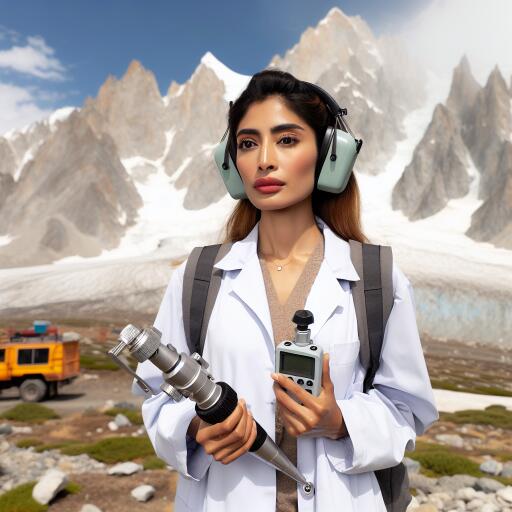
Nevada Climatologist Leads Study on Climate Change Impacts in High-Altitude Environments
A groundbreaking initiative led by climatologist Dr. Baker Perry is unfolding, aimed at uncovering the profound effects of climate change in some of the world’s most challenging terrains. The project ventures into the forbidding altitudes of the Himalayas, including the summit of Mount Everest, to gather critical data about our planet’s changing climate.
This endeavor is part of the pioneering National Geographic and Rolex Perpetual Planet Everest Expedition, which seeks to shed light on the implications of a swiftly transforming environment at high altitudes. Dr. Perry, known for his extensive climate research, highlights the mission’s significance by pointing out, “Our understanding of weather patterns on Mars surpasses our knowledge of the highest peaks of the Himalaya on our own planet.” He underscores the importance of positioning monitoring stations on the glaciers themselves.
Since the expedition’s inception in 2019, the team has amassed invaluable data, particularly focusing on solar radiation and precipitation. These insights are crucial for comprehending the resulting effects on meltwater and the availability of freshwater resources which are pivotal to the livelihoods of communities residing in these regions.
The mission’s drive to install a climate station at such altitudes aims to bridge the knowledge gap and provide critical information that could inform global strategies to manage and mitigate the impacts of climate change. By understanding the dynamics in these extreme environments, scientists hope to predict changes that could have significant downstream effects, stretching far beyond the mountainous terrains.
The data collected not only adds a layer of critical insight into high-altitude climatology but also informs wider environmental strategies that may impact global water security. As the planet continues to grapple with climatic changes, this kind of research is integral to both science and policy, offering clues and evidence that can drive effective international action to address these global challenges.



Leave a Reply