

World Environment Day Seminar Unveils Empowering Climate-Resilient Technologies for Farmers
In recognition of World Environment Day, the Federation of All India Farmer Associations (FAIFA), a non-profit organization dedicated to supporting farmers cultivating commercial crops across numerous Indian states including Uttar Pradesh, Gujarat, Maharashtra, Andhra Pradesh, Telangana, and Karnataka, hosted a national seminar. Held at the Constitution Club of India in New Delhi, the event revolved around the theme “Supplementing Farmer Income through Sustainable Farming Practices”. Through this initiative, vital discussions on employing sustainable approaches and proven climate-resilient technologies to empower farmers were brought to light.
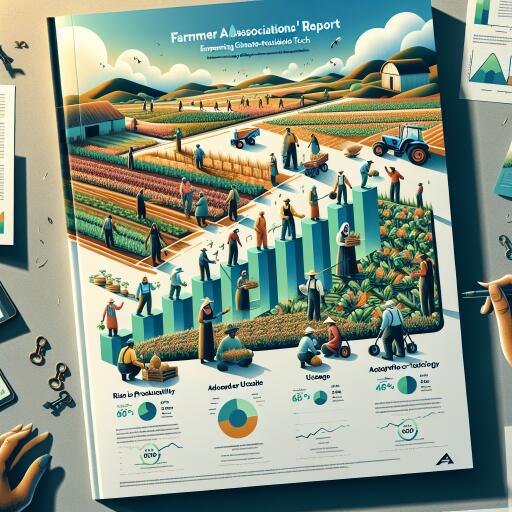
Coinciding with the seminar was the launch of a white paper titled “Nourishing the Future: A Report on Climate-Resilient Agriculture”. This comprehensive report commended the achievements of the Indian Council of Agricultural Research’s (ICAR) National Innovations in Climate Resilient Agriculture (NICRA) program. As of early 2025, NICRA has reached out to about 6.93 lakh farmers, showcasing effective technology demonstrations and training approximately 6.47 lakh stakeholders through a myriad of capacity-building initiatives. In tandem with these efforts, 448 Climate Resilient Villages have been established, and detailed district-level agricultural contingency plans have been realized across 650 districts.
The report aligns well with current government initiatives aimed at enhancing agriculture, including the Digital Agriculture Mission, the continuation of Pradhan Mantri Fasal Bima Yojana, and the National Mission on Natural Farming. However, there are pressing concerns about climate change’s projected impacts. Experts, including policymakers and scientists, highlighted forecasts by the Indian Network for Climate Change Assessment (INCCA) predicting a potential decline of up to 25% in wheat yields and up to 15% in rice yields by 2050. Additionally, caution was raised over findings from the International Crops Research Institute for the Semi-Arid Tropics (ICRISAT), predicting that rain-fed crop yields in semi-arid areas may diminish by as much as 30%.
Erratic Climate Patterns: A Present Threat to Farming
The report emphasizes that climate change is increasingly affecting agriculture with incidents of irregular rainfall, unexpected droughts, temperature spikes, and increased pest and disease prevalence disrupting crop cycles. These factors significantly decrease productivity while inflating input costs and diminishing farmers’ incomes. The repercussions of these climate impacts are disproportionately felt by small and marginal farmers, who represent over 80% of India’s agrarian workforce yet lack substantial adaptive capacity.
Government schemes such as the Pradhan Mantri Fasal Bima Yojana, which provides insurance against weather-induced crop losses, and initiatives enhancing micro-irrigation through the Per Drop More Crop component, are vital measures of assistance. Additionally, the Soil Health Card initiative alongside the Paramparagat Krishi Vikas Yojana are significant in promoting balanced nutrient management and organic farming. Nonetheless, barriers such as high initial costs, fragmented infrastructure, and low awareness impede the widespread adoption of climate-resilient technologies. To tackle these obstacles, FAIFA proposes an integrated strategy encompassing scaled research outreach, expanded digital platforms, and incentivization of sustainable farming practices.
“States like Andhra Pradesh, Karnataka, Maharashtra, and Uttar Pradesh see profound impacts of climate variability,” expressed Murali Babu, General Secretary of FAIFA. Declining soil quality, increasing input expenses, and dropping water tables are exacerbating pressures on productivity and incomes, especially for small and marginal farmers. Yet, projects like NICRA inspire hope through practical, climate-resilient measures such as solar-powered irrigation, drought-resistant seed varieties, and grassroots capacity-building. Transitioning to sustainable agriculture is urgent and beneficial,” he added.
Ground-Level Innovation: Success Stories from the Field
The report outlines existing successful examples of climate-smart agriculture practices that are proving beneficial:
- Precision farming utilizing IoT, sensors, and mobile advisories for proactive management of soil moisture and stress optimization.
- Regenerative agriculture practices, such as crop rotation and cover cropping, are boosting long-term soil health.
- Integrated Nutrient Management (INM) focuses on reducing fertilizer dependence while maintaining yield levels.
- The deployment of NICRA’s flood and drought-tolerant crop varieties is vital for farmers in climate-vulnerable regions.
These sustainability-driven soil conservation methods also contribute to carbon sequestration, aligning with India’s broader climate action goals.
“Sustainable agriculture stands as a key economic strategy for Indian farmers,” said Ather Matheen, Vice-President of FAIFA. “Adopting climate-resilient models offers financial advantages by reducing input costs, unveiling new markets, and cutting weather-induced disruptions. Platforms like e-NAM are beginning to streamline market access and pricing accuracy through digital trade, showing tremendous transformative potential for farmers globally,” he added.
FAIFA’s Forward-thinking Roadmap: Resilience through Policy and Practice
The report outlines recommendations for an effective strategy to address systemic challenges:
- Increase public investment in research and development for climate-resilient crop systems.
- Expand farmer training programs through participatory and grassroots models.
- Promote ICT tools for precision agriculture and timely advisories to farmers.
- Enhance market access for sustainably produced goods by linking incentives.
- Provide targeted subsidies for renewable energy, efficient irrigation, and organic inputs.
- Incorporate conservation agriculture and integrated farming into national/state programs.
Climate-Resilient Agriculture: The Future Path
FAIFA’s report vigorously calls for collaboration among policymakers, research bodies, and private sectors to boost climate-smart agriculture. By integrating modern sciences with traditional knowledge, empowering grassroots, and aligning economic incentives, the agricultural sector can be fortified to withstand climatic extremes while securing a sustainable future.
As India progresses in its dual mission of ensuring food security and addressing climate change, FAIFA’s comprehensive roadmap offers actionable insights into achieving a resilient agricultural economy. With substantial institutional support, strategic investment, and a farmer-focused execution model, India’s agricultural sector can thrive productively while becoming climate-resilient.



Leave a Reply