

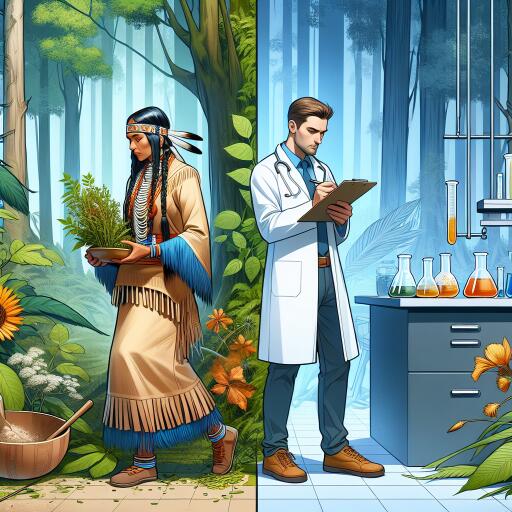
How indigenous expertise and Western science are converging
Across coasts, forests, and marshlands, Indigenous stewardship and academic research are building a shared evidence base—retooling conservation, revitalizing food systems, and reshaping how knowledge is governed.
Rebuilding beaches, restoring sovereignty
On the wave-washed edges of the Pacific Northwest, rock-walled terraces known as clam gardens are coming back to life. Marine ecologist Marco Hatch, a member of the Samish Indian Nation, works alongside seven Indigenous communities to monitor shellfish populations and reawaken these ancient mariculture systems. The measurements are classic ecology—transects, counts, and sediment assessments—but their purpose is broader: inform restoration, support permit applications, and return decision-making power to the nations whose ancestors engineered these shorelines.
Clam gardens, established at least 4,000 years ago from Washington through British Columbia and into southeast Alaska, are living infrastructure. By reshaping the intertidal zone, they expand habitat for butter clams and a suite of coastal foods—red rock crab, basket cockles, limpets, sea cucumbers, sea snails, and seaweeds—benefiting people and marine mammals alike. Research shows that productivity and species abundance outpace neighboring, unmodified beaches. The gardens also influence sediment movement in ways that can blunt erosion—a climate-era bonus layered atop food and cultural value.
For communities that were pushed off harvesting beaches through privatization, restrictive policies, and cultural interruption, rebuilding terraces does more than restore a food source. It reactivates memory. As gardens are tended again, stories resurface, elders teach, and youth learn on the shore.
A paradigm shifts toward “two ways of knowing”
For generations, Western institutions cast Indigenous knowledge as anecdotal or spiritual while claiming empiricism for themselves. That boundary is eroding. Environmental justice scholar Kyle Whyte describes a decisive turn: more scientists are recognizing Indigenous expertise as systematic, tested, and field-proven—while more Indigenous scholars shape research agendas from within universities and tribal governments. Botanical collections are relabeling plants with Indigenous names and uses. Funding streams are emerging to support projects that intentionally weave, but do not dilute, distinct knowledge systems.
Archaeologist Kisha Supernant emphasizes that Indigenous knowledge carries its own rigor—derived from long observation and experimentation—but operates through a different logic: relationships. Where Western science tends to segment ecology, geology, and biology, Indigenous frameworks examine water, land, plants, animals, and people as co-constituting a single system. When braided, each side sharpens the other: community priorities guide questions, and scientific tools help test and scale solutions.
Harvest lessons from the marsh
The Wabanaki experience in Maine’s salt marshes captures what this convergence looks like in practice. After a century of exclusion from ancestral gathering grounds in and around a national park, Wabanaki harvesters and allied researchers set out to measure how sweetgrass responds to traditional picking. Initial study designs, drafted without community guidance, missed crucial ecological context. When Wabanaki practitioners selected sites and methods aligned with their harvesting protocols, the work showed how and where to cut so plants rebound robustly—evidence now informing efforts to re-establish gathering rights.
That same team is helping interpret freshwater marsh histories—cattails, groundnuts, and other ancestral foods—by analyzing pollen in core samples alongside fragmented government monitoring datasets. The aim is food sovereignty: deciding which species to restore and how to steward them. Yet a central policy question remains unresolved: Will communities be required to secure piecemeal permits species by species, or can harvest rights be recognized at the habitat scale?
Data sovereignty and consent
As collaborations proliferate, who controls knowledge—and how it is used—matters as much as the science itself. Communities stress that research must begin with their priorities, protect sensitive information, and keep Indigenous people as decision-makers from scoping through publication and application. This is not only corrective to a long history of extraction; it is also practical. When Indigenous governance anchors a project, results are more likely to translate into durable management on the ground.
Fire returns as technology
In the northern Great Lakes, Whyte collaborates with the Sault Ste. Marie Tribe of Chippewa Indians and federal scientists to rebuild a tool suppressed for more than a century: cultural burning. Controlled, seasonal fire supports habitat for sharp-tailed grouse, snowshoe hare, and deer—species that declined after burning bans took hold in 1911. Through dozens of ecology surveys and co-produced plans, the partners are reopening space for fire as a living technology. The broader lesson is humbling: vast sums are often spent to confirm results that Indigenous practitioners already understand. Start together, and the science can move further, faster.
Policy is catching up—slowly
Some governments have begun to formalize this convergence. Canada, for example, now requires regulators to consider Indigenous knowledge in decisions touching fisheries and other sectors. Global science bodies assessing biodiversity have carved out chapters to synthesize Indigenous insights alongside conventional literature. Yet process matters as much as policy: the most successful projects bring Indigenous partners in at the earliest moment—before questions congeal and funding locks in—so that shared curiosity, not retrofitted consultation, sets the course.
Indigenous-led research centers are multiplying, reversing the old dynamic. The Center for Cooperative Ecological Resilience, established by the Sault Ste. Marie Tribe, now invites universities to the table on tribal terms. Along the Pacific, clam garden partnerships have become convening points for park staff, neighbors, students, and local businesses. When the goal is reconnection to place, technical plans and community ties tend to advance together.
Forest gardens and living archives
Evidence continues to mount that Indigenous-managed food systems enrich biodiversity and ecosystem function. Work in British Columbia shows that long-tended forest gardens—once hubs for crabapple, hazelnut, wild plum, cranberries, wild rice, and more—still carry elevated diversity and soil health compared to surrounding forests. These living archives complicate any notion that “untouched” equals optimal, and they point toward restoration strategies that center care, continuity, and harvest.
The path forward
Convergence is not about subsuming one way of knowing into another. It is about reciprocity: designing research that answers community-defined needs; using scientific tools to strengthen land- and water-based practices; and recognizing Indigenous governance over the knowledge produced. Measured by that standard, progress looks like more co-management agreements, more Indigenous-initiated projects, more permits that enable traditional harvest, and more ecosystems that respond with abundance.
On a restored beach at low tide, the future can look simple: hands in the sand, counting clams and noticing everything else that thrives when people and places are allowed to remember each other.



Leave a Reply