

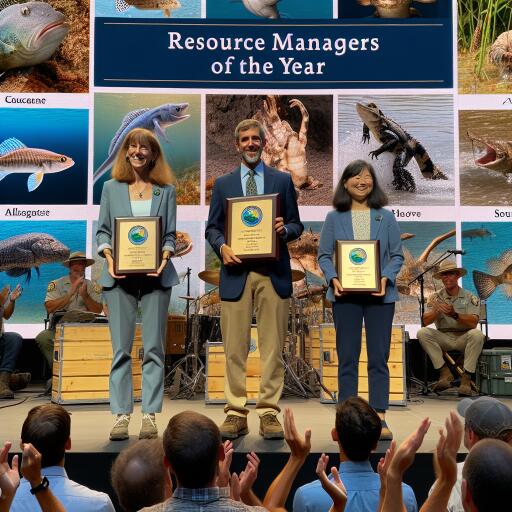
Florida Fish and Wildlife Names 3 Biologists Its Resource Managers of the Year
Three of Florida’s leading conservation professionals have been recognized for exemplary stewardship of public lands and wildlife. Selected from the Florida Park Service, the Florida Forest Service, and the Florida Fish and Wildlife Conservation Commission, this year’s honorees embody a forward-looking approach that blends ecological science with practical fieldwork and modern tools. Their projects show how methodical restoration, strategic fire use, and targeted species management can safeguard biodiversity while keeping natural areas resilient and accessible.
Patricia “Patty” Wilbur, Florida Park Service
As a Biological Scientist II at Edward Ball Wakulla Springs State Park, Patty Wilbur has spent more than two decades restoring and defending one of North Florida’s ecological gems. In 2018, she helped lead one of the region’s largest upland pine restorations, returning 1,005 acres of flatwoods to a healthier, more natural condition. The scale and pace of that work have improved habitat for native wildlife and reestablished ecological processes that had been interrupted over time.
Wilbur is a seasoned leader in prescribed fire—an essential tool for Florida’s fire-adapted landscapes. Since becoming a certified prescribed burn manager in 2011, she has served as burn boss on 63 burns covering 5,964 acres. Over her career, she has taken part in 198 prescribed burns spanning more than 21,000 acres and responded to seven wildfires. That experience shows up in how she balances ecological targets with public safety: selecting burn windows that reduce hazardous fuels, encourage native groundcover, and support wildlife while minimizing smoke impacts on surrounding communities.
Her work also extends beyond fire. Wilbur has engaged in invasive plant control, cultural resource stewardship, and hydrological restoration—efforts that collectively stabilize the park’s natural systems. By pairing field observations with mapping and long-term monitoring, she has helped ensure Wakulla Springs and adjacent lands continue to function as a cohesive ecosystem.
Charlie Pedersen, Florida Forest Service
With 28 years in the Florida Forest Service, Biologist III Charlie Pedersen has managed diverse habitats across more than a dozen state forests. Since 2004, his leadership at the Waccasassa Forestry Center has been pivotal for the red-cockaded woodpecker at Goethe State Forest. The number of breeding pairs there more than doubled—from roughly 30 to 40 pairs to over 80—supporting the species’ broader recovery and its federal downlisting from endangered to threatened in 2024.
Pedersen’s work also bolstered the future of Etoniah rosemary, a federally listed plant with a highly restricted range. When he began, a single small population remained. Today, there are three robust subpopulations, with a fourth being established on private land through collaborative conservation. This progress reflects a mix of habitat management, careful propagation, and patient, multi-year planning.
Adopting new tools has been central to his approach. In 2024, Pedersen became one of the agency’s certified drone pilots, supporting forest monitoring, species surveys, and planning. Unmanned aerial systems can speed site assessments, reveal canopy or hydrologic changes, and help prioritize on-the-ground work—an increasingly valuable advantage as managers confront larger restoration footprints, climate stressors, and complex wildlife needs.
Matthew Koenig, Florida Fish and Wildlife Conservation Commission
As a Fisheries and Wildlife Biologist III with FWC’s Southwest Wildlife and Habitat Management Section, Matthew Koenig leads management for the Chinsegut, Perry Oldenburg, and Janet Butterfield Brooks Wildlife and Environmental Areas. He also supports education programs at the Chinsegut Conservation Center and assists with resource management across additional public lands, bridging field operations with public outreach.
Koenig’s team maintains a mosaic of habitats—upland pine, sandhill, and depression marsh—that are shaped by thoughtful use of prescribed fire. Since 2016, fire has been the primary tool guiding these areas toward conditions that benefit species like Bachman’s sparrows, bald eagles, and gopher tortoises. The work demands precision: choosing ignition patterns and timing that promote native plants, maintain open structure, and reduce fuel loads, while coordinating closely with nearby communities to address safety and smoke management.
His leadership has also been visible during high-stress moments. Following the 2024 hurricane season, Koenig coordinated storm recovery to keep public lands open and safe while protecting sensitive habitats. He and his team have safeguarded a federally designated endangered plant that persists at only a handful of locations, demonstrating how targeted, site-specific interventions can secure rare species in the wildland-urban interface.
Why these resource managers matter
Across Florida, conservation success increasingly relies on a blend of ecological insight and practical technology. Prescribed fire schedules are informed by data and experience; restoration designs integrate soils, hydrology, and historical vegetation; and tools such as drones, remote mapping, and structured monitoring help managers make faster, smarter decisions on complex landscapes. The three honorees illustrate how this synthesis translates into measurable outcomes—healthier forests, stronger wildlife populations, safer communities, and public lands that are better prepared for a changing climate.
The award’s legacy
The Resource Manager of the Year distinction honors the legacy of Jim Stevenson, whose leadership in ecosystem management helped shape modern conservation practice in Florida. His influence advanced prescribed fire, nonnative plant control, and springs protection—cornerstones of the work carried forward today. In recognizing these biologists, Florida’s land and wildlife agencies highlight a shared commitment to science-driven stewardship and the people who make it real on the ground.



Leave a Reply