

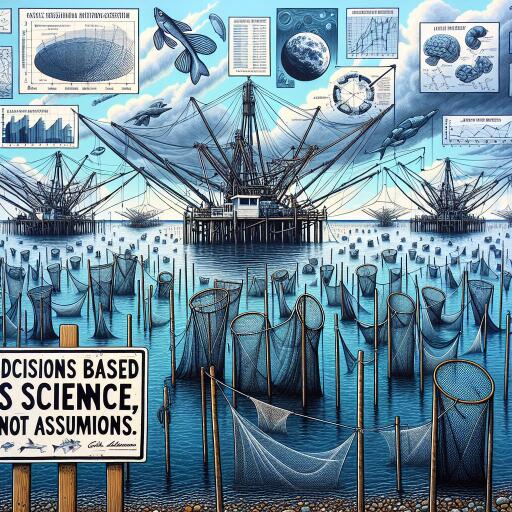
Sponsored: Louisiana’s Fisheries Are Complex. Let’s Base Decisions on Science, Not Assumptions.
Across Louisiana’s coast, what anglers brought to the dock in 2025 underscores a reality that too often gets lost in hot takes and blame games: fisheries are dynamic systems shaped by many forces at once. If we want abundant speckled trout, red drum, white trout, and the healthy ecosystems they depend on, we have to resist simple narratives and double down on verifiable science.
Speckled trout remain the state’s favorite recreational catch, with red drum and white trout anchoring our coastal identity. Yet long-term trends are being scrutinized by biologists and anglers alike, as environmental change, fishing pressure, and policy shifts intersect. The picture that emerges is not of a single culprit, but of a web of drivers that demand careful, data-informed management.
What the Evidence Shows
- Rapid coastal land loss eroding nursery habitats vital for juvenile fish.
- Storms, freezes, heat waves, and other environmental variability shaping survival and recruitment.
- Localized water quality issues affecting productivity and food webs.
- Declining angler participation, which can weaken funding streams and reduce the reliability of survey-based estimates.
- New management measures that need time and rigorous evaluation before drawing conclusions about their effects.
Notably, broad claims that the Gulf menhaden fishery is driving declines in speckled trout or red drum are not supported by the strongest available science. If clear evidence tied menhaden harvest to those outcomes, state and federal experts would act accordingly. Instead, the weight of analysis points most strongly to habitat loss, environmental stressors, and natural population cycles.
Data Quality Is the Foundation
Reliable fisheries management starts with transparent, verifiable data. Here, the commercial and recreational systems differ in important ways.
- Commercial menhaden vessels document every set with location and estimated catch. These records are verified and reported electronically on a strict schedule to oversight agencies, creating an audited accounting of actual harvest.
- Recreational harvest is estimated through surveys and sampling. These tools are essential, but they are still estimates, influenced by participation rates, regulatory changes, recall bias, and effort misreporting.
When policies affect multiple user groups, equity and effectiveness hinge on grounding decisions in audited, high-quality information instead of projections alone. Better data reduces conflict, clarifies trade-offs, and produces rules that are easier to defend and adapt.
Independent Review, Real Oversight
The Gulf menhaden fishery is one of the most closely scrutinized in the region. Annual assessments bring together state and federal scientists and undergo independent peer review. Recent analyses confirm the stock is healthy and fished at sustainable levels. The fishery has also earned an internationally recognized sustainability certification, and a state-funded bycatch study—backed by significant investment—validated compliance while showing that newer gear and practices are reducing unintended impacts.
This is not an industry avoiding accountability; it is one adapting under a bright light of monitoring and reporting. That transparency is the standard all sectors should strive to meet.
At the same time, assessments for certain gamefish, such as red drum, remain constrained by data limitations. That does not signal crisis so much as it underscores the need for caution, better information, and policy humility while datasets mature.
Aligning Rules With Reality
Recent adjustments proposed for the nearshore buffer governing where menhaden vessels operate reflect a science-first approach. After reviewing multiple years of data, operational experience, and the performance of new safeguards, regulators concluded that revising the buffer was warranted. Framed correctly, this is not a retreat from protection; it’s a calibration—keeping guardrails where they matter most while updating rules to match how the fishery and technologies actually function today.
Patience, Restoration, and Smart Investment
Agencies have been clear: it will take time to observe the full effect of recent regulatory changes and environmental variability on speckled trout and red drum. That patience is not complacency; it’s the discipline good management requires.
Meanwhile, the central challenge is hiding in plain sight. As wetlands disappear, the nurseries that raise our favorite sport fish vanish with them. No season change or bag limit can substitute for robust marsh and estuary habitat. Louisiana’s long-term fisheries health depends on accelerating coastal restoration, strengthening water quality efforts, and sustaining the scientific programs that track fish populations through time.
Technology can help close data gaps: electronic reporting in the for-hire fleet, refined recreational apps with privacy safeguards, better on-vessel sensors, and automated verification tools can sharpen estimates and reduce uncertainty. But tools are only as strong as the funding and commitment behind them. When budgets shrink, data quality suffers and the void gets filled by anecdote. That’s when policy drifts from science to politics—a risk coastal communities can’t afford.
Science Over Assumptions
Louisiana thrives when management is built on facts, respect for expertise, and fairness across all users. The way forward is clear: invest in coastal restoration, modernize and audit data systems across sectors, and adjust regulations as new evidence emerges. Do that consistently, and we protect our fisheries, our working coast, and the families and businesses that depend on both.
Complex problems don’t yield to simple answers. They yield to good data, honest oversight, and steady, science-based stewardship. That is how Louisiana keeps its lines tight, marshes healthy, and future secure.



Leave a Reply