

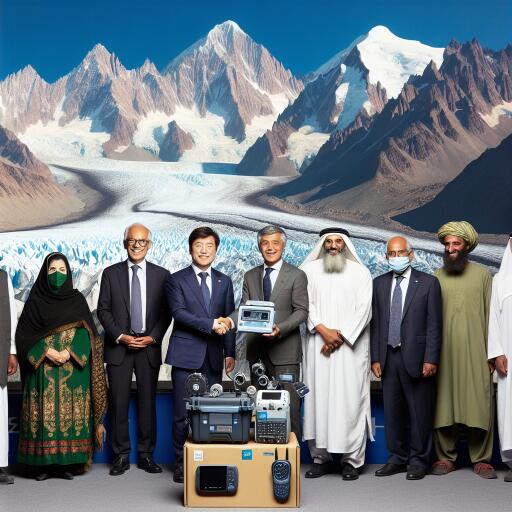
Aiyl Bank donates equipment for glacier research in Kyrgyzstan
At a high-level gathering in Bishkek focused on “Water, Mountains, and Glaciers of the Kyrgyz Republic: A Sustainable Future,” Aiyl Bank announced a targeted contribution to strengthen the country’s mountain science. The bank provided a Heucke Ice Drill steam auger valued at €4,473 to the Adygene High Mountain Research Station, bolstering year-round glacier monitoring in the Northern Tien Shan and aligning the institution’s Environmental, Social, and Governance (ESG) goals with climate resilience on the ground.
The conference convened government officials, researchers, and international partners to confront the dual challenge of safeguarding water resources while preserving fragile alpine ecosystems. With Central Asia’s water security closely tied to high-mountain snow and ice, participants underscored the urgency of investing in robust observation systems and long-term data for decision-making.
New tools for critical measurements
The Heucke steam auger will allow field teams to drill through seasonal snow and near-surface ice, enabling precision surveys of accumulation and melt. These measurements underpin “mass balance” studies—the most direct way to track whether a glacier is gaining or losing ice over time. Reliable, continuous data series are essential to detect trends, calibrate satellite observations, and refine hydrological models that inform water planning and disaster risk reduction.
With the new equipment, the Adygene station can expand systematic observations on the Adygene, Panfilov, and Ak-Sai glaciers. Previously, limited access to specialized instruments curtailed the frequency and geographic reach of fieldwork, leaving gaps in baseline records and constraining efforts to monitor newly exposed or rapidly changing areas.
Private sector backing for mountain science
Tilek Alijanov, Chair of the Board at Aiyl Bank, framed the donation as part of the institution’s broader responsibility to the environment and communities that depend on glacier-fed water sources. He emphasized that strengthening scientific capacity today is an investment in the country’s future: research-driven insights help protect ecosystems, inform water management, and support climate adaptation across sectors.
Such partnerships are increasingly seen as pivotal: public agencies and academic teams bring expertise and continuity, while businesses can accelerate progress with targeted resources and equipment. Together, they can build resilient monitoring networks that stand up to the logistical and climatic challenges of high-altitude fieldwork.
Why glacier monitoring in Kyrgyzstan matters
Glaciers store and release water that sustains agriculture, hydropower, and urban supplies across the region. As temperatures rise, shifts in snow and ice dynamics can alter the timing and quantity of runoff, with knock-on effects downstream. Better data on glacier mass balance helps authorities forecast seasonal water availability, plan infrastructure, and identify hotspots where meltwater lakes or unstable slopes may pose risks.
Enhanced field measurements also complement satellite data, providing ground truth for regional assessments. This synergy strengthens early-warning systems, improves climate models, and supports evidence-based policy decisions.
A platform for joint action
The Bishkek conference spotlighted a pragmatic agenda: improve data sharing, invest in training and field logistics, and build durable collaborations between government, science, and the private sector. Participants stressed that sustained, high-quality observations are the bedrock of effective climate adaptation—and that filling equipment and capacity gaps is one of the most direct ways to accelerate progress.
Aiyl Bank’s contribution is a concrete step in that direction, enabling more frequent and precise surveys on key glaciers. As the observation network grows, Kyrgyzstan’s mountain scientists will be better positioned to track change, inform water strategies, and safeguard the ecosystems and communities that depend on them.



Leave a Reply