

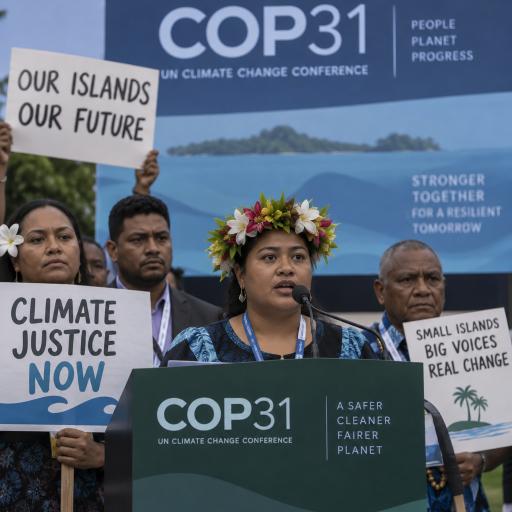
Small island nations turn up pressure at COP31, demand climate justice
Small island states are intensifying calls for deeper emissions cuts and greater financial support at COP31, arguing that the countries least responsible for global warming are being forced to bear some of its most destructive consequences.
As negotiations in Antalya, Turkey, move into their final phase, island governments are pressing major economies to replace broad promises with firm commitments. Their priorities include a faster transition away from fossil fuels, reliable climate finance and stronger protection against worsening disasters.
For communities already confronting coastal erosion, saltwater intrusion, extreme heat and increasingly powerful storms, the talks are about more than long-term policy. Leaders warn that climate change is threatening homes, food supplies, freshwater reserves, cultural heritage and, in some cases, the continued habitability of entire islands.
Tonga and other Pacific countries often describe themselves as “large ocean states” because their maritime territories vastly exceed their land areas. Yet the ocean that supports fisheries, tourism and cultural traditions is becoming warmer and more acidic. At the same time, rising seas are increasing the danger of flooding and steadily narrowing the amount of safe land available for housing and infrastructure.
The Alliance of Small Island States, a coalition of 39 members from the Pacific, Caribbean, Atlantic, Indian Ocean and African regions, has become a prominent negotiating force. Although its members have limited economic power individually, their coordinated position gives them greater influence in decisions that require broad international agreement.
The bloc is seeking $500 million for resilience initiatives and a further $200 million for disaster early-warning systems. Such funding could support stronger buildings, coastal protection, water security, climate-resilient agriculture and faster alerts before cyclones, floods and other hazards strike.
Island governments say this assistance should not be treated as charity. They frame it as climate justice: wealthy industrialized nations produced most of the historic greenhouse gas emissions, while vulnerable countries contributed comparatively little but face disproportionate losses.
Keeping 1.5°C at the centre
A central demand is the preservation of the goal to limit warming to 1.5°C above pre-industrial levels. Scientific assessments indicate that the world is not currently on a path consistent with that objective, but island representatives insist it must remain the benchmark guiding international action.
For low-lying nations, every fraction of a degree matters. Additional warming accelerates sea-level rise, damages coral reefs, intensifies marine heatwaves and raises the likelihood of severe weather. The 1.5°C limit is therefore viewed not simply as a technical target, but as a boundary tied directly to national survival.
Youth delegates from vulnerable countries are also demanding measurable outcomes. They say younger generations should not be asked to accept declarations of concern while emissions continue to climb and adaptation projects remain underfunded. Their message is that sympathy cannot substitute for justice, accountability and immediate implementation.
Pressure on the COP process
COP31 comes amid growing frustration with climate diplomacy. Many previous pledges have been voluntary, finance has often arrived slowly, and governments remain divided over the pace and wording of a global shift away from coal, oil and gas.
The continued absence of the United States from the negotiations has added to concerns about leadership. As one of the world’s largest economies and a major historic emitter, its participation is considered important to both emissions reduction and international climate finance.
Despite these shortcomings, island leaders are not calling for the UN process to be abandoned. They argue that collective negotiations have helped establish global temperature goals, created mechanisms for climate funding and given vulnerable nations a platform that would otherwise be difficult to secure. Their concern is that diplomatic progress remains far slower than the physical changes unfolding across oceans and coastlines.
This year’s talks are taking place against a difficult environmental and geopolitical backdrop. Exceptionally warm seas are placing marine ecosystems under stress, while a powerful El Niño pattern is worsening heat, drought and rainfall extremes in several regions. International conflicts and volatile energy prices are further complicating efforts to accelerate the clean-energy transition.
Australia’s role as joint host, alongside Turkey, and an earlier climate meeting in Fiji have helped place Pacific priorities higher on the COP31 agenda. Island representatives nevertheless stress that visibility alone is insufficient. They want final decisions that include accessible funding, stronger national emissions plans and clear systems for tracking delivery.
A test of international credibility
The effects highlighted by island states are increasingly visible far beyond their shores. Flooding, wildfires, water shortages, crop losses and dangerous heat are affecting communities across continents, turning climate policy into an immediate public concern rather than a distant diplomatic issue.
For COP31, the central test will be whether governments can narrow the gap between their statements and their actions. Small island nations want an agreement that recognizes responsibility, protects those on the front line and ensures that financial assistance reaches communities before more territory, livelihoods and lives are lost.
Their warning is direct: delaying emissions cuts and resilience investments will make future damage more severe and far more expensive. For the world’s most exposed islands, however, the cost of delay cannot be measured only in money. It may ultimately be measured in land, identity and the right of future generations to remain in their homelands.



Leave a Reply