

CIF names first countries for climate adaptation funding
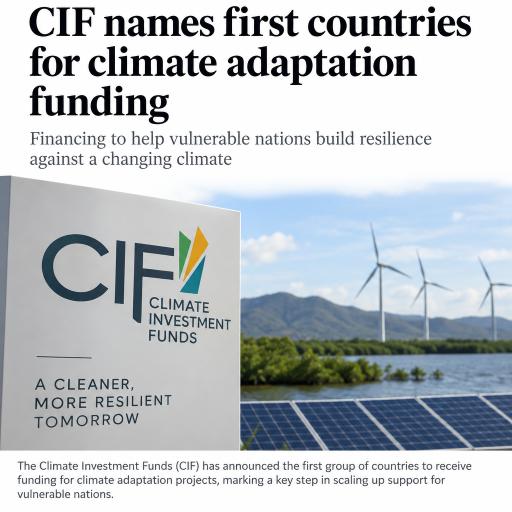
The Climate Investment Funds (CIF) has selected five countries and one cross-border initiative for the opening round of its ARISE adaptation program. The participants were announced at COP31 in Antalya on Nov. 12.
Bangladesh, Haiti, Kyrgyzstan, Morocco and Sierra Leone will each be eligible to develop investment proposals of up to $30 million. A joint program covering Malawi and Mozambique may seek as much as $40 million.
Germany, Ireland and Spain are providing financial support for the initial phase. CIF plans to direct 40% of the program’s resources toward private-sector projects, with six multilateral development banks involved in implementation.
The program attracted applications from 70 countries, highlighting the scale of unmet demand for adaptation finance. The 25 highest-ranked submissions alone represented approximately $700 million in projects considered ready for investment.
Projects tailored to local climate threats
Each participant will prepare an investment plan reflecting its most urgent environmental and economic risks. Bangladesh is expected to concentrate on climate-resilient coastal infrastructure and agriculture as rising seas, salinity and extreme weather threaten communities and food production.
Haiti and Sierra Leone will prioritize stronger coastal defenses and mangrove restoration. Healthy mangrove ecosystems can reduce wave energy, limit erosion, store carbon and provide habitats that support fisheries and local livelihoods.
In Kyrgyzstan, proposed measures will target water management and farming systems exposed to shifting rainfall, drought and other climate pressures. Morocco’s plan will emphasize water security through measures including renewable-energy-powered desalination and the reuse of treated wastewater.
The combined Malawi-Mozambique initiative will seek to protect economically important areas from floods, droughts and tropical cyclones. It is also intended to mobilize private capital for projects that strengthen resilience across the two neighboring countries.
The first group of participants illustrates the varied consequences of climate change, from coastal erosion and powerful storms to water shortages and agricultural disruption. The next step will be to turn these priorities into detailed, finance-ready plans capable of delivering long-term protection for vulnerable communities and ecosystems.



Leave a Reply