

Freshwater species are at risk. A new global threat map could help save some from brink of extinction
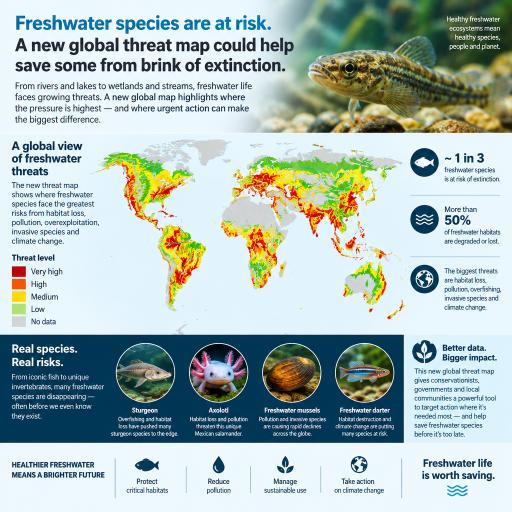
Rivers, lakes, marshes and wetlands are home to an enormous share of the planet’s wildlife, yet freshwater species are disappearing at an alarming pace. Fish, amphibians, reptiles, insects and mammals that depend on inland waters are being squeezed by dams, pollution, farming, overuse and habitat destruction. A new global threat map now offers conservationists a clearer picture of where those pressures are strongest and which dangers are doing the most damage.
The research, built from data on more than 2,100 threatened freshwater species, analyzes extinction risks across major groups of animals that live in or rely on freshwater ecosystems. Instead of treating all species the same, the map weighs how different pressures affect different kinds of wildlife. The result is a worldwide patchwork showing that the causes of biodiversity loss vary sharply from one watershed to the next.
That matters because freshwater habitats are declining faster than many forests, while the animals that live in them are often faring worse than species on land or at sea. Scientists have long known the broad categories of threats involved, but pinpointing their geography has been much harder. This new mapping effort is designed to close that gap and help target action where it is most urgently needed.
Globally, agriculture and aquaculture emerged as the leading threat to freshwater biodiversity, especially across parts of the Global South. Expanding farmland, livestock production and fish farming can alter waterways, strip away habitat and load ecosystems with sediment and nutrients. Pollution ranked close behind, with particularly severe impacts in densely populated and industrialized regions. Overexploitation, including fishing and other biological resource use, was another major driver, especially in northern regions and parts of Africa and Southeast Asia.
In Canada, the pattern is mixed. Freshwater wildlife faces pressure from river engineering such as dams and diversions, resource extraction, urban and industrial development, agricultural runoff, pollution, and harvesting. Invasive species and disease also appear as important hazards in several cross-border regions. The mosaic-like nature of these findings underscores a key lesson from the study: there is no universal conservation fix. Protecting sturgeon in a dam-altered river requires a different strategy than restoring amphibian habitat affected by toxic water or saving lake ecosystems destabilized by nutrient runoff and invasive mussels.
The map also highlights places where multiple threats stack up at once. Regions in northwestern Africa, Europe, the lower Himalayas and the Missouri River basin stand out for especially intense combinations of pressures. In areas where a large share of freshwater species already face extinction risk, threat levels are often even higher, suggesting that many ecosystems are being hit from several directions at once.
Climate change, however, remains harder to pin down. On the map, it appears as the primary threat in only limited areas, but that does not necessarily mean warming is less dangerous. Researchers caution that climate impacts are often under-recorded in biodiversity assessments because they can be difficult to isolate from other stressors.
Evidence from long-term lake studies suggests warming may already be reshaping freshwater life in profound ways. In northwestern Ontario, decades of monitoring in remote research lakes have documented rising air temperatures, shorter ice seasons and biological changes in cold-water fish. As winters shorten and ice cover disappears earlier, species such as lake trout may lose critical feeding opportunities in shallow nearshore waters. Over time, those shifts can reduce body size, alter food webs and make ecosystems less resilient.
This kind of long-running fieldwork is valuable because it strips away many of the confounding factors present in more developed landscapes. Where little else has changed, the fingerprint of warming becomes easier to see. Scientists say such records are among the clearest indicators that climate change is not a distant risk for freshwater biodiversity, but a force already reshaping habitats.
The new threat map could help policymakers decide where limited conservation money will have the greatest impact. That is especially important because environmental budgets are finite, and governments must constantly choose among competing priorities. A hotspot of intense threats may seem like an obvious place to invest, but conservation decisions are rarely so simple. Some species may be easier to recover than others, and some have outsized ecological importance.
That raises a deeper question in conservation: should resources go toward species that are closest to extinction, those that play the biggest role in supporting ecosystems, or those most likely to recover with intervention? Saving one species in isolation may not be enough if the broader habitat continues to unravel. Wetland engineers such as beavers, for example, can create and maintain habitat that supports fish, frogs, insects and waterfowl. In many freshwater systems, protecting ecological relationships may be just as important as rescuing individual species.
Freshwater wildlife has often received less public attention than forests, oceans or large land animals. Yet inland waters support remarkable biodiversity and provide essential services to people, from drinking water and flood control to food production and recreation. When these ecosystems degrade, both wildlife and human communities pay the price.
By showing where threats are concentrated and which ones matter most, the new global map offers a practical tool for action. It does not solve the freshwater extinction crisis on its own, but it gives conservation planners a far better chance of matching solutions to local realities. For species already near the edge, that precision could make the difference between decline and recovery.



Leave a Reply