

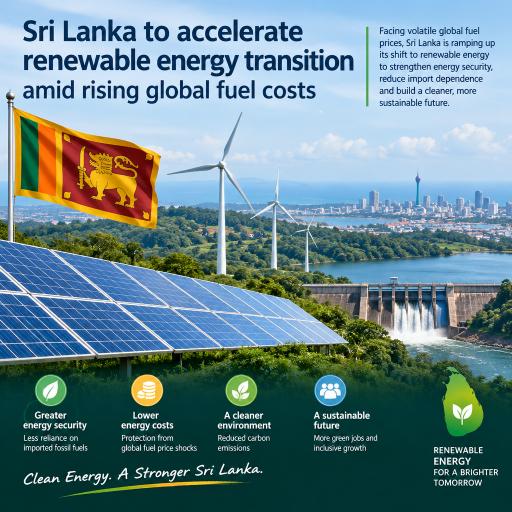
Sri Lanka to accelerate renewable energy transition amid rising global fuel costs
Sri Lanka is preparing to quicken its shift towards renewable electricity as higher global oil prices place growing pressure on the country’s energy finances.
Energy Minister Anura Karunathilaka said the nation could surpass its goal of generating 70% of its electricity from renewable sources by 2030. Reducing dependence on imported fossil fuels is becoming increasingly urgent as volatile international prices raise power-generation costs and strain foreign currency reserves.
Expanding domestic clean energy could strengthen Sri Lanka’s energy security while limiting its exposure to future fuel-price shocks. Solar, wind and other renewable resources are expected to play a larger role in the electricity system as the transition gathers pace.
However, achieving the government’s ambitions will require more than adding new generation capacity. Sri Lanka must address technical constraints within the power grid, secure sufficient investment and ensure that new energy projects receive support from affected communities.
Modernising transmission infrastructure and improving the grid’s ability to manage variable solar and wind output will be particularly important. Financing also remains a major challenge, especially where large projects require substantial initial investment despite offering lower operating costs over time.
The government’s accelerated approach reflects both environmental priorities and economic necessity. If the obstacles can be managed effectively, a larger share of locally produced renewable electricity could reduce import expenses, improve resilience and support Sri Lanka’s longer-term climate goals.



Leave a Reply